Ssangyong Exercise Called Off Due to Middle East Pressures
South Korea has confirmed that the United States cancelled a planned large-scale joint amphibious military exercise that had been scheduled for September, attributing the decision to force availability limitations arising from American military involvement in the Iran conflict.
A spokesman for the South Korean Marine Corps, Han Seung-jeon, made the announcement during a news briefing on Monday, stating that formal notification had been received well in advance of the cancellation.
"The US Marine Corps formally notified our forces in June that its ability to deploy forces during this year's Ssangyong exercise would be constrained due to the situation in the Middle East," Han told reporters.
The Pentagon had not issued any immediate statement in response to the announcement at the time of reporting.
What Is the Ssangyong Exercise?
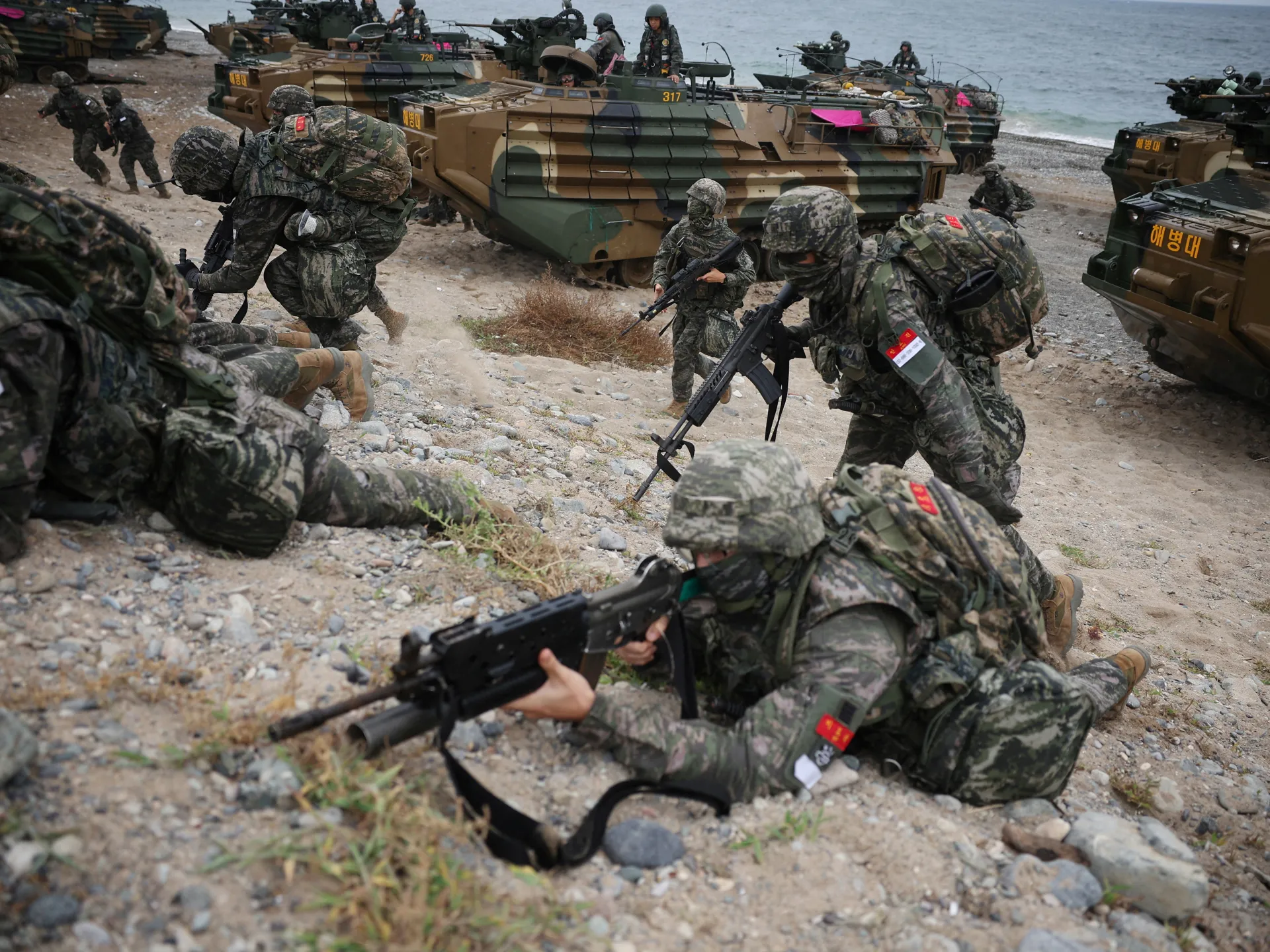
The Ssangyong drills are a biennial joint military exercise involving marine forces from both South Korea and the United States. The exercises are designed to strengthen combined operational capabilities and typically feature a broad range of assets, including warships, military aircraft, and ground troops conducting rehearsals for amphibious landings along coastlines.
South Korean and American officials indicated that consultations regarding the potential resumption of the amphibious exercise were ongoing, though no specific timeline or details were provided by the South Korean Marine Corps spokesman.
Part of a Broader Pattern of Exercise Reductions
The cancellation of the Ssangyong drills follows a separate and notable development from the previous week, when US President Donald Trump unexpectedly ordered a significant reduction in the scope of another annual joint military exercise. The Ulchi Freedom Shield drills, which concluded last Friday, were cut from their standard duration of 11 days down to just five days.
Trump justified the decision by citing the financial cost of the exercises and expressing displeasure with South Korea's refusal to participate in American military operations against Iran. The decision underscored growing tensions in the alliance dynamic between Washington and Seoul, as the two countries navigate differing strategic priorities in the region.
Trump's Stance on North Korea
Separately, President Trump has been vocal about his desire to restore the diplomatic rapport he cultivated with North Korean leader Kim Jong Un during his first term in office. On his Truth Social platform, Trump suggested that the Ulchi Freedom Shield exercises were counterproductive to those ambitions, describing the drills as sending a signal that was, in his words, "totally inappropriate and hostile" toward a country he characterized as currently non-threatening and respectful under his presidency.
Despite Trump's conciliatory rhetoric toward Pyongyang, North Korea responded to the reduced exercises by firing ten short-range ballistic missiles and issuing an official statement denouncing the drills. North Korea has consistently condemned US-South Korean joint military exercises, framing them as rehearsals for a potential invasion of its territory.
Nuclear Concerns Remain Central
Trump also addressed North Korea's nuclear capabilities last week, stating publicly that Pyongyang now possesses 57 "very powerful" nuclear weapons. That figure differs notably from South Korean government estimates, which place North Korea's nuclear arsenal at somewhere between 80 and 120 weapons, reflecting ongoing uncertainty about the true scope of the country's nuclear programme.
Trump held three meetings with Kim Jong Un during his first term, a period marked by diplomatic optimism that ultimately yielded little concrete progress. The most significant of those summits, held in Hanoi in 2019, ended without an agreement after talks broke down over the question of North Korea's denuclearisation. Following the collapse of that meeting, Pyongyang accelerated its development of nuclear and missile technologies rather than scaling back.
Alliance Dynamics Under Scrutiny
The series of decisions — cancelling the Ssangyong exercise, shortening the Ulchi Freedom Shield drills, and framing joint exercises as diplomatically harmful — has raised questions about the future of the US-South Korea military alliance and the extent to which the ongoing conflict with Iran is reshaping American defence priorities in the Asia-Pacific region.
South Korea, which faces its own complex security environment with a nuclear-armed neighbour to the north, has maintained that joint exercises with the United States are essential to its defence posture. How the two allies reconcile their differing positions in the months ahead remains to be seen, particularly as Washington continues to manage the demands of its military engagement in the Middle East.