World Athletics Maintains Stance on Russian Ban
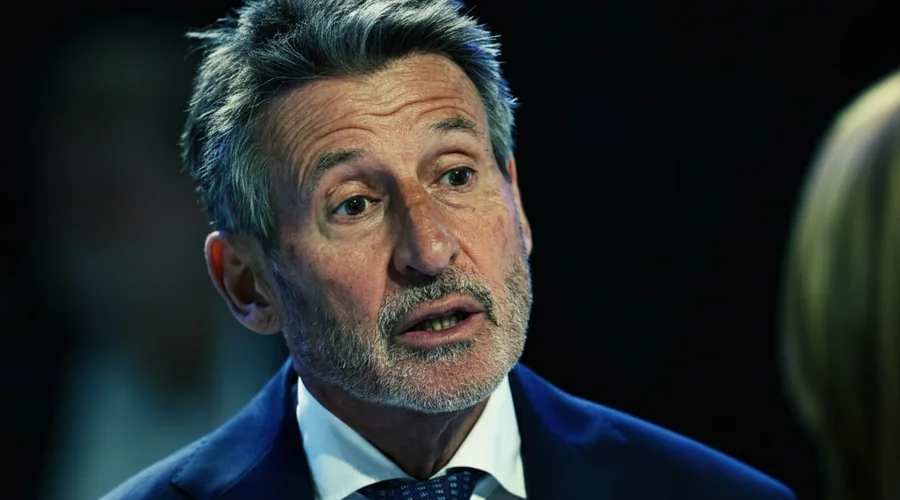
World Athletics President Sebastian Coe has affirmed his intention to personally appear in court to defend the governing body's sanctions against Russia. This commitment comes after the Russian Athletics Federation initiated a new legal challenge at the Court of Arbitration for Sport (CAS), contesting the ongoing restrictions.
In July, the global authority for track and field confirmed its decision to uphold the ban on Russian and Belarusian athletes, originally implemented in March 2022 subsequent to Russia's military actions in Ukraine. The Russian Athletics Federation, in response, has characterized these sanctions as 'selective and politicized,' arguing that they 'infringe on the organization's rights and prevent it from fully representing the interests of Russian athletes on an international level.'
Divergent Approaches Among Sporting Bodies
The position taken by World Athletics, under the leadership of Coe, a two-time Olympic 1,500-meter gold medalist for Britain, stands in contrast to the decisions made by other international Olympic sports federations. For instance, both World Gymnastics and the International Skating Union have opted to ease restrictions on Russian competitors, allowing their participation in certain events.
This divergence highlights a broader debate within the international sports community regarding the appropriate response to geopolitical events. While some federations have moved towards reintegration, World Athletics has maintained a firm stance, prioritizing what it deems to be the integrity of its competitions.
IOC's Decision and Ukrainian Reaction
Adding another layer of complexity to the situation, the International Olympic Committee (IOC) recently announced that Russian athletes would be permitted to compete in team events and qualifying competitions for the 2028 Los Angeles Olympics. Kirsty Coventry, President of the IOC, stated that this decision aimed to 'ensure all athletes have the possibility to compete at the Olympic Games and not be held responsible for their government’s actions.'
However, this decision has not been universally welcomed. Ukraine, for example, criticized the IOC's move as 'premature' and 'unfounded,' particularly as the conflict continues into its fifth year. The differing policies among sports organizations underscore the challenging balancing act between athlete participation, political neutrality, and the broader implications of international conflicts.
Coe's Unwavering Resolve
Speaking to journalists at the European Athletics Championships in Birmingham, Coe expressed his unwavering conviction in World Athletics' policy. He declared, 'Well, I will be in the court of arbitration defending that position. That’s how I feel about it.' He emphasized the autonomy of international federations in determining eligibility within their respective sports, a principle he believes has been upheld in previous court proceedings.
Coe stressed that World Athletics' stance is not politically motivated. 'This is not about politics or passports. This is about the integrity of competition, and that is the position that we will be defending.' This assertion aims to frame the organization's actions as a matter of sporting principle rather than a political statement.
Impact on Ukrainian Athletes and Coe's Personal Perspective
The ongoing conflict has had a profound impact on Ukrainian athletes, whose ability to train and compete has been severely compromised. World Athletics established a dedicated fund in 2022 to provide support to these athletes, acknowledging the significant challenges they face.
While Coe has indicated that sport should not impede the return of Russian athletes if a peace agreement were to be reached, his personal experiences have shaped his perspective. A visit to Ukraine left a lasting impression on him, leading him to admit in a previous interview with AFP, 'So, sorry, it’s not something I could ever really be neutral about.' This personal sentiment highlights the human element behind the policy decisions and the difficulty of maintaining strict neutrality in the face of widespread human impact.
The upcoming legal battle at CAS will be a critical moment, testing the legal foundations of World Athletics' sanctions and potentially influencing the broader landscape of international sports policy concerning athlete eligibility during times of geopolitical conflict.