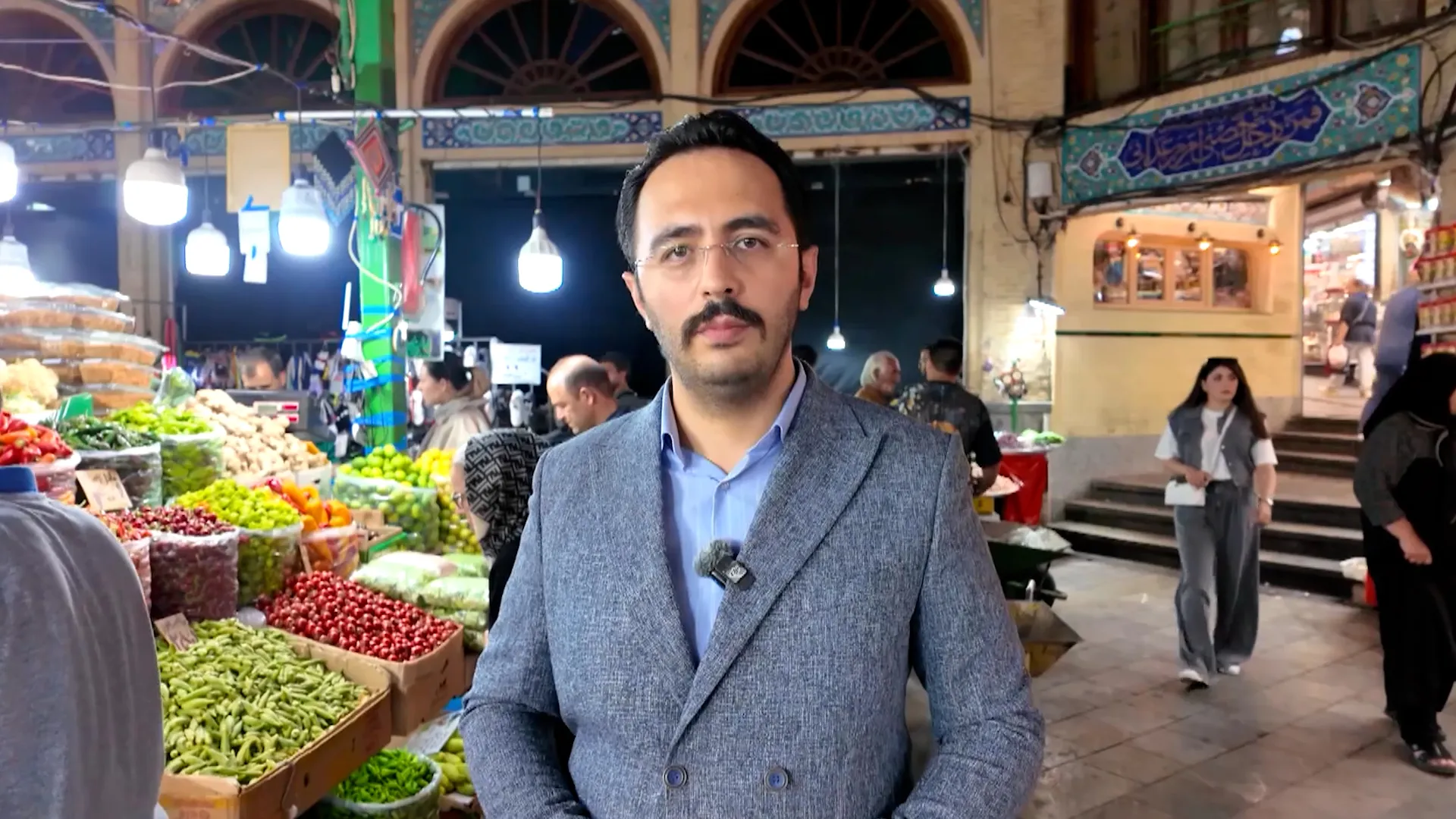
Everyday Life Under Economic Strain
For many Iranians, a simple trip to the market has become a source of anxiety. The cost of basic goods — from fresh produce to household staples — has surged in recent months, leaving families struggling to stretch their budgets. This economic pressure is not happening in isolation. It is unfolding against a backdrop of intensifying geopolitical tensions and a fresh round of punishing financial measures imposed by the United States.
Scenes from busy markets in Tehran tell a story of quiet hardship. Vendors adjust their prices almost daily, and shoppers weigh their options carefully before making purchases that once required little thought. For many households, especially those with fixed or low incomes, these are not minor inconveniences — they represent a fundamental challenge to daily survival.
Trump's 'Crushing Economic Operation'
United States President Donald Trump has announced what he describes as a "crushing economic operation" targeting Iran. The move represents a significant escalation in Washington's long-standing effort to use financial pressure as a tool to reshape Iran's behavior on the international stage, particularly regarding its nuclear program and its regional activities.
The announcement has sent fresh shockwaves through Iran's already fragile economy. Investors and traders reacted swiftly, with the Iranian rial losing further ground against major foreign currencies. For a country that has spent years navigating layers of international sanctions, the prospect of deeper economic isolation adds yet another layer of uncertainty to an already difficult situation.
A Currency in Freefall
The Iranian rial has been under severe pressure for several years, but recent developments have accelerated its decline. The currency's weakness has a direct and immediate impact on the purchasing power of ordinary citizens. Since Iran relies heavily on imports for a wide range of consumer goods and raw materials, a weaker rial means that nearly everything costs more.
Economists who observe Iran's economy note that currency depreciation of this magnitude tends to hit lower- and middle-income households hardest. Wealthier Iranians may have access to foreign currency savings or assets that offer some protection, but those living paycheck to paycheck have no such buffer. The result is a widening gap between those who can absorb the shock and those who cannot.
Markets Reflect the Broader Crisis
Visits to Tehran's markets reveal the human dimension of these macroeconomic forces. Traders report that customer footfall has declined as people become more selective about their spending. Some vendors have been forced to reduce their stock because they can no longer afford to replenish goods at current wholesale prices. Others have seen their regular customers simply disappear, unable to afford what they once bought without hesitation.
The range of affected goods is broad. Food prices, particularly for proteins such as meat and poultry, have risen sharply. Imported electronics and household appliances have become luxury items for many. Even clothing and footwear — items with significant import components — have seen substantial price hikes.
Conflict as an Economic Multiplier
Beyond the direct effects of sanctions, regional conflict adds another layer of economic disruption. Uncertainty driven by military tensions in the broader Middle East affects trade routes, insurance costs for shipping, and investor confidence. Each of these factors feeds back into the prices that consumers ultimately pay.
Iran's economy has demonstrated a degree of resilience over the years, adapting to successive rounds of pressure through informal trade networks and domestic production initiatives. However, analysts caution that there are limits to how much strain an economy can absorb before the social consequences become severe. Rising unemployment, reduced access to imported medicines, and deteriorating public services are among the concerns that observers continue to monitor closely.
Human Cost at the Center
Behind every economic statistic is a human story. In Iran today, those stories are increasingly defined by difficult choices: which meals to skip, which bills to leave unpaid, which aspirations to set aside. Parents worry about providing for their children. Small business owners wonder whether they can keep their doors open. Pensioners find that their fixed incomes cover less and less with each passing month.
International tensions and diplomatic standoffs may dominate the headlines, but it is the people navigating crowded Tehran markets — checking prices, calculating costs, and making do — who bear the most immediate consequences of decisions made far from their daily lives. Their experiences serve as a reminder that geopolitical conflicts are never purely abstract: they land, with full weight, on ordinary people simply trying to get by.