
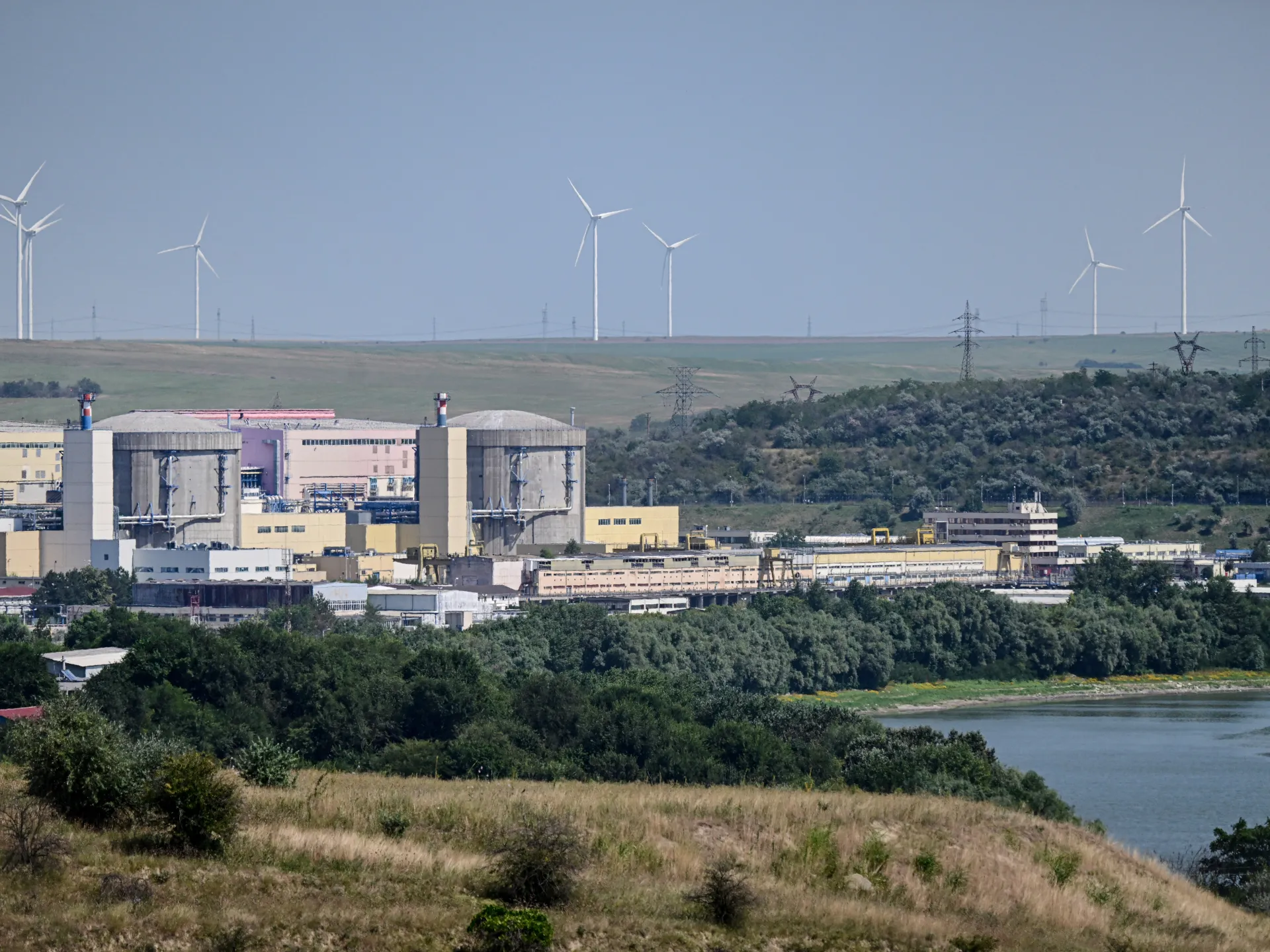
Romania's Nuclear Plant Idles Amidst Danube Drought
Romania's only nuclear power facility, the Cernavoda plant, has completely suspended its operations, a measure necessitated by unprecedented low water levels in the Danube River. The river's flow is crucial for cooling the plant's reactors. Nuclearelectrica, Romania's national nuclear energy company, announced on Thursday the initiation of a controlled shutdown for the second reactor, following the closure of the first reactor last month.
Widespread Drought Impacts Europe
This operational halt occurs as a severe and widespread drought grips substantial portions of the European continent. Analysis from the European climate change observatory, Copernicus, indicates that flow rates across nearly two-thirds of the Danube have plummeted to their lowest in over three decades. Romeo Urjan, the director of the Cernavoda plant, informed AFP that he anticipates the plant will remain offline for at least the next ten days.
The Cernavoda plant is a significant contributor to Romania's energy grid, typically supplying approximately one-fifth of the nation's electricity. Romanian authorities had made considerable efforts to prevent a complete shutdown. These endeavors included allocating over 2 million euros (equivalent to $2.3 million) towards initiatives aimed at maintaining sufficient water flow for reactor cooling. Such measures involved the controlled demolition of a large rock formation obstructing water flow and the strategic sinking of four barges laden with rocks into the river to redirect water.
Ensuring Energy Stability and Responsible Consumption
In response to the nuclear plant's closure, the Ministry of Energy stated on Wednesday that alternative power sources, including wind energy and imported electricity, are expected to adequately meet the country's energy demands. However, the ministry also reiterated a call for “responsible consumption” from the public. It issued a warning that, as a last resort, large industrial consumers might face restrictions on electricity usage during evening peak hours to conserve power.
Neighboring Hungary Faces Similar Challenges
Romania is not alone in facing these energy challenges. Neighboring Hungary has also contended with the impact of the Danube's reduced flow on its sole nuclear facility, the Paks plant. While Hungary has thus far managed to avoid a complete shutdown of its plant, which also relies on the Danube for cooling its four reactors, the situation remains precarious. Hungarian Prime Minister Peter Magyar announced on Wednesday that, in anticipation of further decreases in river depth, the government has ordered the construction of a submerged wall, or weir, to help regulate water flow near the plant. Additionally, two 80-meter barges are being positioned at Paks, ready to be submerged if necessary to elevate water levels. The Paks plant, which typically covers about one-third of Hungary's electricity requirements, has been operating under a partial shutdown since late last month.
Broader Implications for Danube Navigation
Beyond its critical role in power generation, the significantly reduced water levels in the Danube, Europe's second-longest river, have had substantial repercussions for shipping. The river, which stretches approximately 2,850 kilometers (1,770 miles) from western Germany to its mouth on the Black Sea, is a vital artery for cargo transport. The current low water conditions are severely impeding navigation, affecting trade and logistics across multiple European countries that rely on this major waterway.
The ongoing drought and its impact on the Danube underscore the increasing vulnerability of critical infrastructure, particularly energy and transport systems, to climate-related environmental changes. As water levels continue to fluctuate due to changing weather patterns, countries are compelled to re-evaluate their energy security strategies and invest in more resilient infrastructure to mitigate future disruptions.