AI Integration in Cyber Warfare
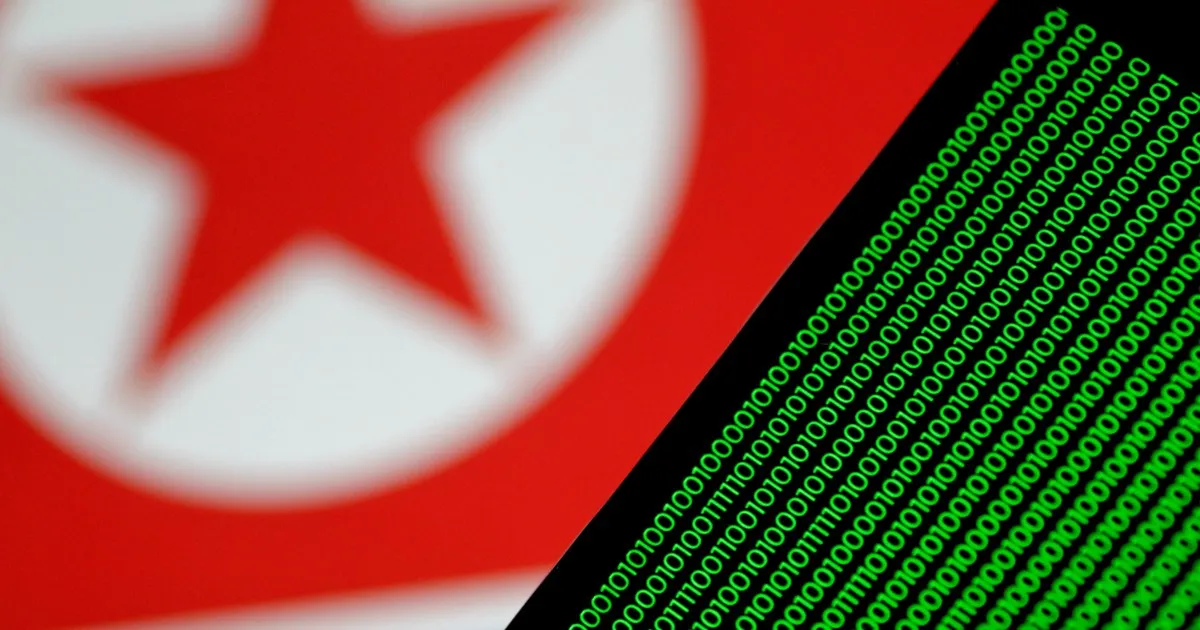
North Korean state-backed hacking entities are reportedly incorporating artificial intelligence into their cyber operations, significantly bolstering their capacity to target military, diplomatic, and academic sectors. This assertion comes from a report compiled by Genians, a South Korean cybersecurity firm, which details the sophisticated methods now being adopted by these groups.
The Kimsuky hacking group, which has established links to North Korea's intelligence apparatus, has been observed utilizing AI-generated documents in a consistent pattern of spear-phishing attacks since 2026. This strategic shift allows the group to create highly convincing and malicious files that are disguised as legitimate documents, such as academic research papers or formal invitations, thereby increasing the likelihood of successful infiltration.
Technological Advancements in Deception
To evade detection by conventional security measures, Kimsuky has reportedly leveraged open-source tools, including Ollama, GPT-4All, and Msty. These tools facilitate the execution of large language models (LLMs) without requiring an internet connection, a tactic that enhances operational security and makes the origin of the attacks harder to trace. Genians emphasizes that AI's ability to rapidly generate polished documents on diverse subjects provides a substantial advantage to threat actors, allowing them to scale social engineering attacks with unprecedented efficiency.
"AI can generate highly polished documents on a wide range of topics within a short period of time, making it a highly efficient tool for threat actors," the Genians report states. "This change is noteworthy because it goes beyond a shift in how decoy documents are created and demonstrates that AI can enable the automation and large-scale production of social engineering attacks." This evolution signifies a critical advancement in the methodology of cybercriminal operations, moving beyond mere content creation to large-scale automated attack generation.
A History of Cyber Aggression
Kimsuky and other hacking groups affiliated with the North Korean state have been implicated in numerous cyberattacks over recent years. Many of these incidents have been primarily motivated by financial gain. For instance, a report by the British blockchain analytics firm Elliptic indicated that North Korean hackers were responsible for stealing over $2 billion in cryptocurrency within the first nine months of 2025 alone. Historically, US authorities identified North Korea as the perpetrator behind the 2014 hacking of Sony Pictures, an attack believed to be in retaliation for the studio's comedy film 'The Interview,' which satirized North Korean leader Kim Jong Un.
Jenny Town, a senior fellow at the Stimson Center in Washington, DC, commented on these developments, noting that North Korea's history of cyberattacks makes this new trend unsurprising. "North Korea's hackers and programmers are more than capable of utilising and exploiting various AI tools to enhance their efforts," Town explained. "This is a new reality of all threat actors; North Korea is no exception."
The Broader Implications of AI in Cybercrime
The emergence of AI in cyber warfare coincides with broader global concerns regarding the potential misuse of advanced AI technologies by malicious actors and the risk of autonomous systems operating outside intended parameters. Recently, researchers in the US announced a breakthrough in using AI to create novel viruses, a development that, while holding promise for medical advancements, also raises significant safety and security questions.
Mark T. Hofmann, an expert in criminal and intelligence analysis specializing in cybercrime, highlights the transformative impact of AI on the cybercrime landscape. He suggests that AI significantly lowers the entry barrier for individuals to engage in malicious activities. "You no longer need hacking skills or a master's degree in computer science. All you need is a computer and a motive," Hofmann observed. He further predicted that "threat actors all around the world will use more and more generative AI and, much worse, AI agents to accelerate their cyberattacks." Hofmann concluded that "the dark side of AI is one of the main challenges of this decade. AI-supported cyberattacks will become a regular phenomenon." This perspective underscores the escalating threat posed by AI-enhanced cyber operations, signaling a new era in digital security challenges.