
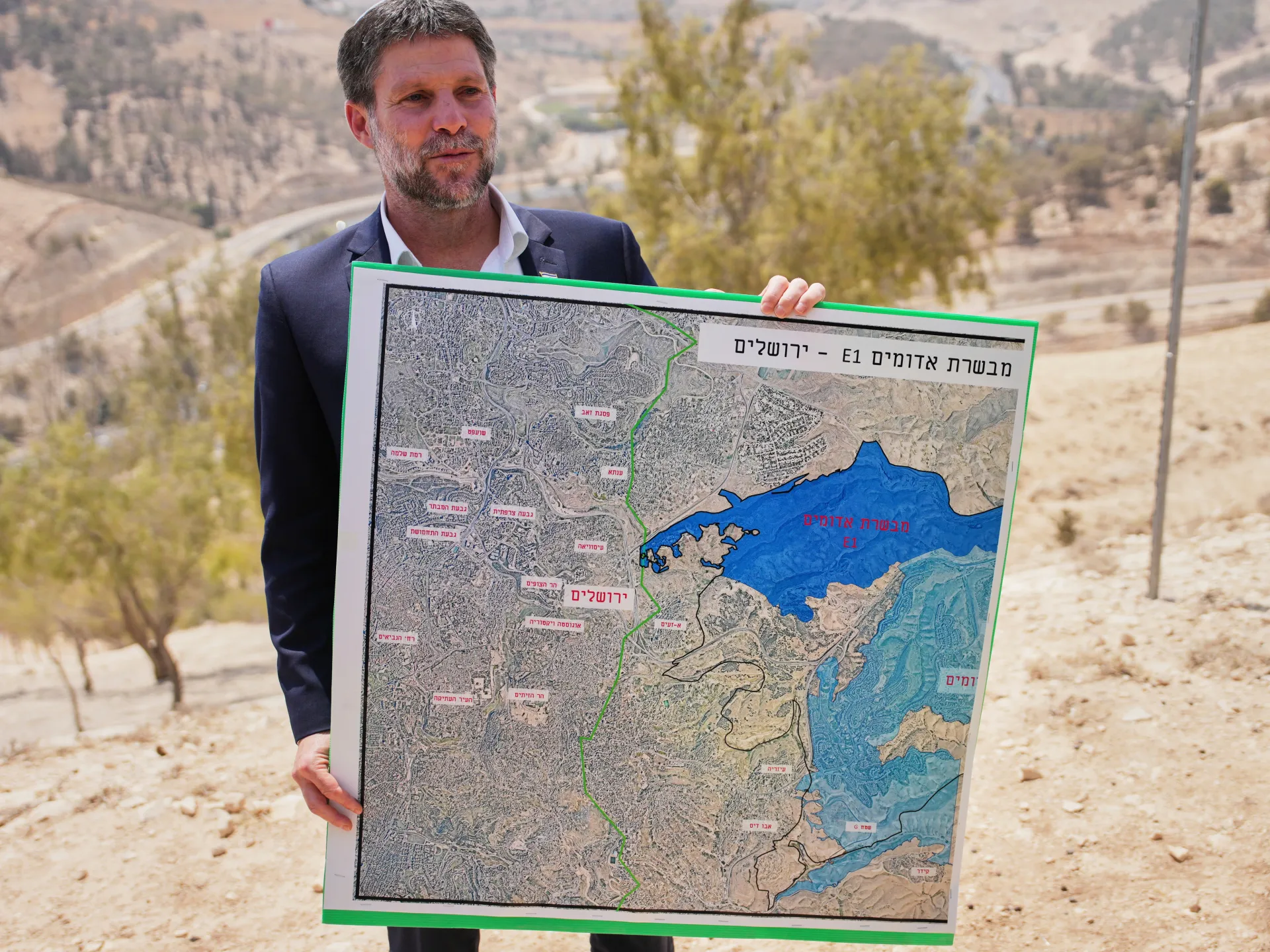
Context of the E1 Settlement Project
The Palestinian Authority (PA) has formally condemned a recent Israeli decision to issue a tender for over 1,200 new residential units in the occupied West Bank. This development is part of the controversial E1 settlement project, a plan that has long drawn international scrutiny and Palestinian opposition. The Colonization and Wall Resistance Commission (CRRC), a body affiliated with the Palestine Liberation Organization (PLO), issued a statement warning that the progression of these plans would effectively segregate Palestinian communities in the West Bank into isolated enclaves, surrounded by Israeli settlements.
The E1 plan, which reportedly received government approval last year, envisions the construction of more than 3,400 housing units across approximately 12 square kilometers (4.6 square miles) of land in the West Bank. Under international law, Israeli settlements and outposts in occupied territories are considered illegal. A primary objective of the E1 project is to forge a continuous link between numerous settlements in occupied East Jerusalem, which Israel has unilaterally annexed, and the Maale Adumim settlement bloc located in the West Bank. Critics argue that achieving this connection would effectively sever East Jerusalem, a city Palestinians envision as the capital of their future state, from the rest of the West Bank. Furthermore, it would physically bisect the West Bank, creating significant geographical and demographic challenges for a contiguous Palestinian state.
Implications for the Two-State Solution
The CRRC emphasized that the tender for these 1,200 units should be understood as a critical step in a broader geopolitical strategy aimed at fundamentally altering the spatial and demographic landscape between Jerusalem and the Jordan Valley. Nida Ibrahim, reporting from Hizma in the West Bank, underscored the gravity of the situation, stating that the realization of the E1 project would be the “last nail in the coffin” for the two-state solution, a long-standing framework for resolving the Israeli-Palestinian conflict. She noted that while the E1 project has faced delays in the past, its current advancement indicates a renewed push for its implementation. Ibrahim suggested that a long-term goal for the Israeli side is to encourage Palestinians to leave the area.
The Israeli Ministry of Construction and Housing initiated the bidding process for 1,234 housing units on Tuesday. This tender represents one of two construction plans that have been approved for the E1 area, according to reports from the Israeli human rights organization Ir Amim and the peace advocacy group Peace Now. Ir Amim released a statement on Tuesday explaining that even a partial implementation of the E1 plan would establish “irreversible facts on the ground,” fundamentally altering the geographical and strategic nature of the region. Such a development, they argue, would sever the northern West Bank from the south and further isolate East Jerusalem.
Political Context and Criticisms
The deadline for submitting bids for this project is October 19, just prior to the scheduled Israeli elections on October 27. These elections are anticipated to see a decline in support for the current government. Peace Now, in a statement posted on X, specifically criticized the “Netanyahu-Smotrich government,” accusing it of attempting to undermine the two-state solution through this settlement initiative. Israeli Finance Minister Bezalel Smotrich, himself a settler in the West Bank, has been a prominent figure in advocating for settlement expansion.
Peace Now's statement further asserted that during an election campaign, the government is endeavoring to implement the annexationist vision of the pro-settlement right wing, thereby potentially limiting the options available to a future government. The organization also highlighted that this move might be in violation of explicit commitments made by the state. Beyond the diplomatic ramifications, Peace Now warned that the implementation of the E1 project and the closure of the area to Palestinians pose a significant threat to dozens of Bedouin communities, including Khan al-Ahmar. This could lead to their displacement from their ancestral lands, adding a humanitarian dimension to the political and territorial dispute.
International Law and Local Impact
The international community largely views Israeli settlements in the West Bank as illegal under international law and as obstacles to peace. The E1 project, due to its strategic location and potential impact on Palestinian contiguity, has consistently been a focal point of international concern. Its advancement at this juncture suggests a determined effort to solidify Israeli control over key areas of the West Bank, with profound implications for the future of the region and any prospects for a viable, independent Palestinian state.