Two Waterways, Two Empires, One Question
History has a habit of repeating itself, and few arenas illustrate this more vividly than the world's most strategically critical waterways. Seventy years ago, a bold move by Egypt to take control of the Suez Canal sent shockwaves through the global order, effectively signaling the twilight of British imperial power. Today, analysts and historians are drawing uncomfortable parallels between that pivotal moment and the mounting tensions surrounding the Strait of Hormuz — a narrow passage through which a significant portion of the world's oil supply flows.
The central question is no longer merely academic: could control over a vital maritime chokepoint once again determine the fate of a dominant world power?
The Suez Crisis: A Turning Point in Modern History
In 1956, Egyptian President Gamal Abdel Nasser made a move that stunned the international community. Egypt nationalized the Suez Canal, one of the most commercially and strategically important waterways in the world, triggering a military response from Britain, France, and Israel. The three-pronged military campaign aimed to reverse Nasser's decision and reassert Western control over the canal.
What followed, however, was not a straightforward military victory for the attacking powers. Under enormous international pressure — particularly from the United States and the Soviet Union — Britain and its allies were forced to withdraw. Egypt retained control of the canal, and months after the crisis began, the waterway reopened under Egyptian administration.
The consequences were far-reaching. Britain's global prestige suffered an irreparable blow. The episode exposed the limits of British power in the post-World War II era and accelerated the decline of the British Empire. Meanwhile, Egypt emerged with its sovereignty intact, and the broader Middle East was transformed politically and economically.
Oil, Shipping, and the Architecture of Global Power
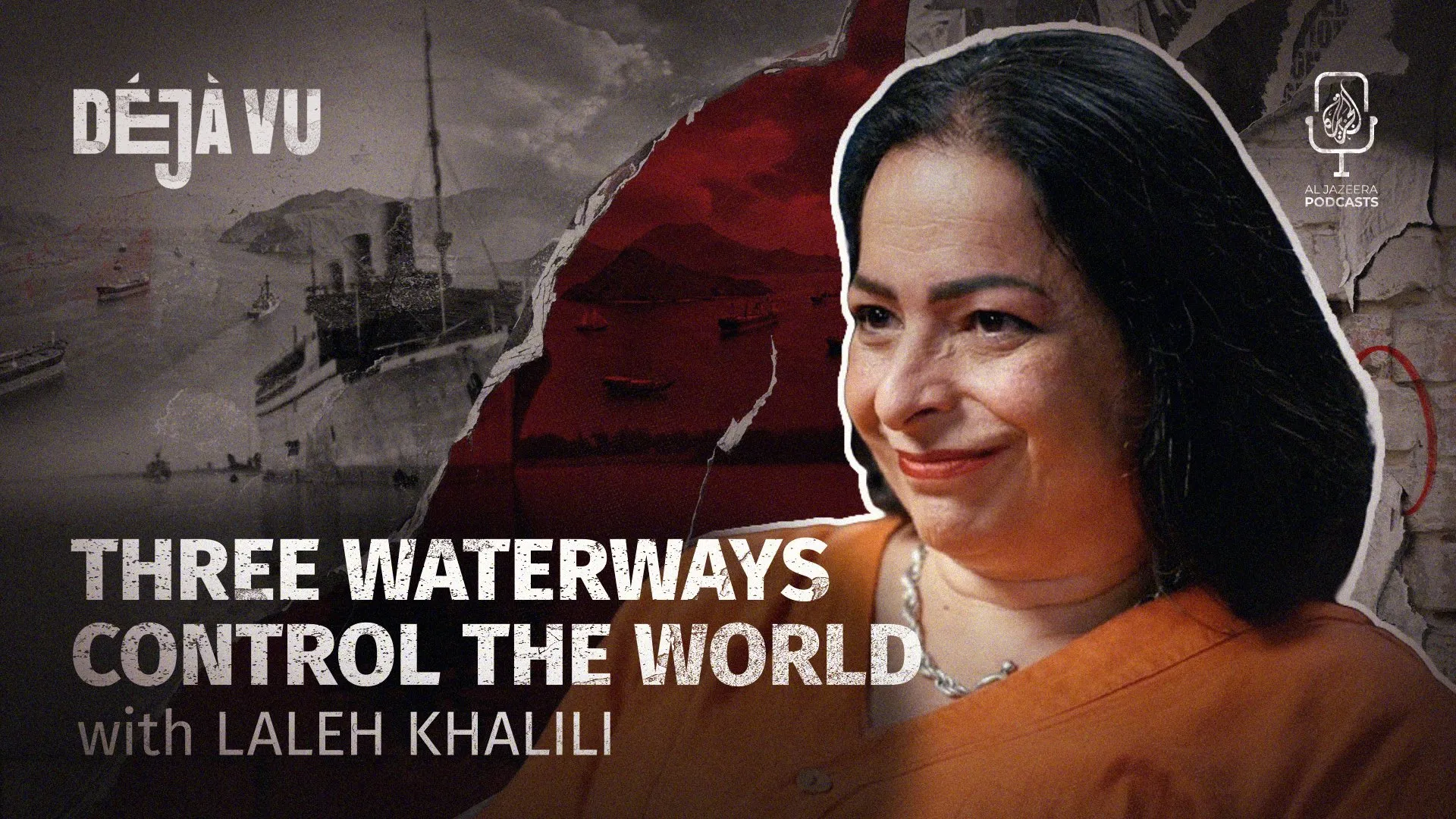
Political scientist and author Laleh Khalili, whose work examines the relationship between trade routes, warfare, and empire, has explored how these dynamics continue to shape the modern world. Her research into the intersection of shipping lanes and geopolitical power provides a critical framework for understanding why waterways like Suez and Hormuz carry such outsized importance.
At its core, the story is about more than geography. It is about who controls the arteries through which the global economy breathes. Oil tankers, cargo vessels, and military fleets all depend on open sea lanes. When those lanes are threatened or closed, the ripple effects reach financial markets, fuel prices, and foreign policy decisions across the world.
The Strait of Hormuz: Today's Flashpoint
The Strait of Hormuz, located between Iran and the Arabian Peninsula, is arguably the world's most critical oil transit chokepoint. Roughly 20 percent of global petroleum trade passes through it. Any disruption — whether through military conflict, blockade, or political brinkmanship — has the potential to send energy markets into turmoil and trigger broader geopolitical crises.
In recent years, tensions in the region have intensified. Iran has periodically threatened to close the strait in response to international sanctions and military pressure. Proxy conflicts, drone strikes on tankers, and naval confrontations have all contributed to an atmosphere of sustained instability. For the United States, which has long maintained a significant military presence in the Gulf region, the strait represents both a strategic commitment and a potential vulnerability.
Echoes of the Past
The parallels with the Suez Crisis are striking, if not exact. In both cases, a revolutionary or nationalist movement asserts control — or threatens to assert control — over a waterway of global economic significance. In both cases, a dominant world power finds itself forced to weigh the costs of military intervention against the risks of appearing weak or disengaged.
For Britain in 1956, the calculation proved catastrophic. The attempt to reassert control militarily backfired diplomatically, economically, and in terms of global standing. The question now being posed by historians and foreign policy analysts is whether the United States faces a similarly defining moment in the Gulf — and whether the outcome could be equally consequential for American global leadership.
What History Teaches — and What It Doesn't
History rarely repeats itself in precise detail, but the underlying dynamics often rhyme. The Suez Crisis demonstrated that military superiority alone does not guarantee geopolitical outcomes. Diplomatic pressure, international opinion, economic leverage, and the resolve of smaller powers all play decisive roles.
The Strait of Hormuz is now the lens through which these same dynamics are being examined. Whether the United States can navigate the tensions of the Gulf without repeating the mistakes of the British Empire remains an open — and urgent — question. What seems clear is that the era of unchallenged dominance over the world's most vital trade routes may be entering a new and unpredictable chapter.