A Calculated Pivot Toward the Far Right
As Israel's international reputation has suffered significant damage in recent years, particularly in the wake of ongoing military operations in Gaza, its government appears to have adopted a new strategy for maintaining relevance in Western political circles — one that centers on stoking fear and suspicion of Islam and Muslim communities.
The approach has taken several forms: direct outreach to European far-right parties, coordinated public relations campaigns, and messaging that frames Israel as a front line in a global struggle against what Prime Minister Benjamin Netanyahu repeatedly calls "radical Islam."
Far-Right Alliances and a Shifting Message
Earlier in 2026, the Israeli government hosted an anti-Semitism conference in Jerusalem that drew an unusual guest list. Rather than traditional allies, attendees included prominent figures from European far-right parties — representatives from Poland's PiS, Spain's Vox, Hungary's Fidesz, and France's Rassemblement National, among others.
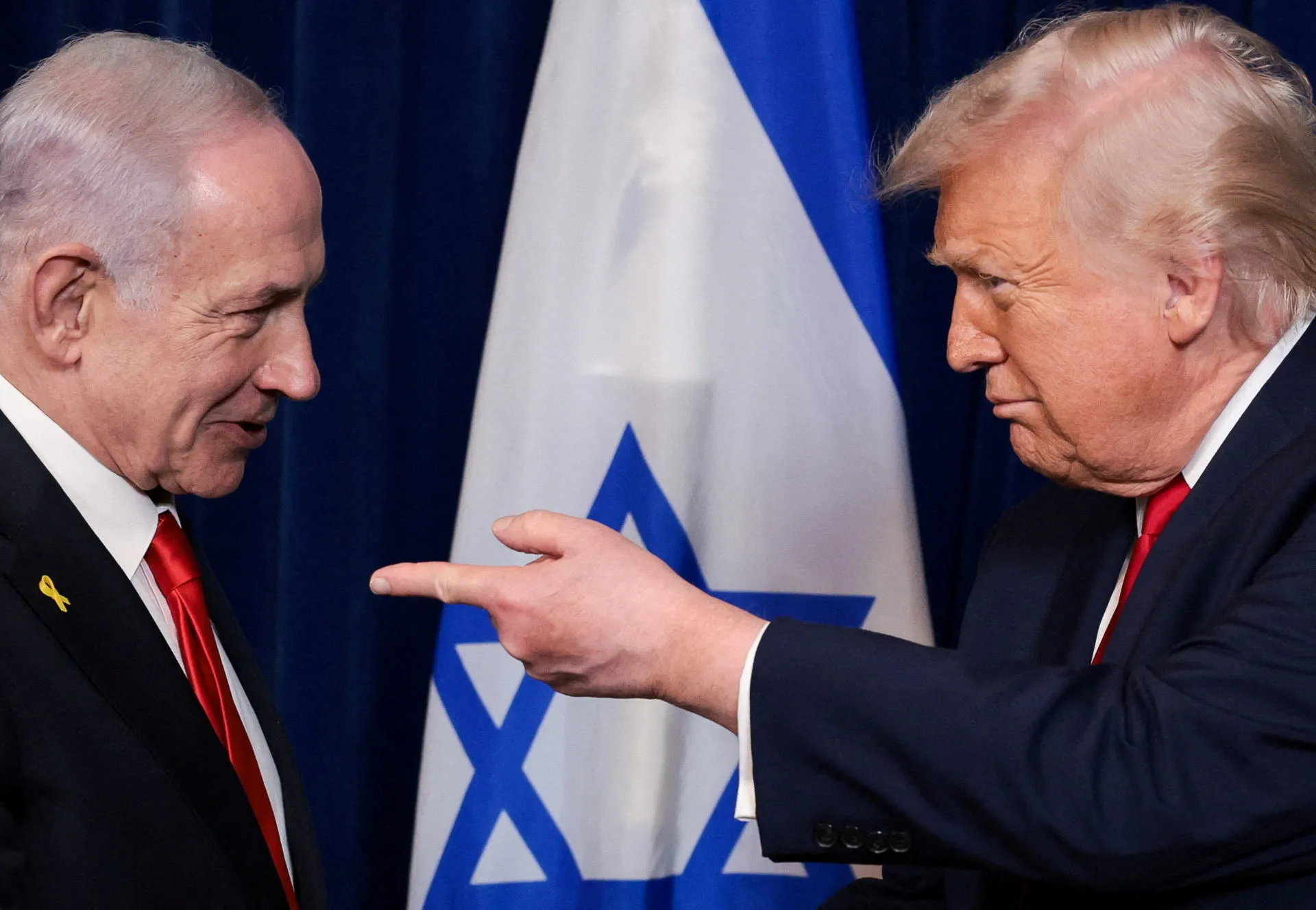
The gathering was notable not only for who attended, but for the message Netanyahu delivered to them: that these movements are now partners in resisting what he described as the "invasion of radical Islam." This framing marks a significant rhetorical shift, positioning Israel's interests as aligned with nationalist, anti-immigration movements that have historically carried antisemitic elements within their ranks.
Netanyahu has continued to escalate this language. He has warned publicly that Britain risks becoming "the first Islamic republic with nuclear weapons," and ran a re-election campaign featuring imagery linking Hezbollah and Iranian leadership alongside Turkish President Recep Tayyip Erdogan and New York Mayor Zohran Mamdani — a Muslim American politician — under the banner "Don't let them win."
Coordinated Influence Operations
Israel's promotion of anti-Muslim sentiment has not remained confined to domestic political rhetoric. Reports have surfaced of coordinated influence campaigns funded or linked to Israeli government interests operating in other Western countries.
In Canada in 2024, an operation using the name United Citizens for Canada — reportedly backed by Israeli government funding — ran social media campaigns portraying Muslim immigrants as a societal threat intent on imposing Islamic law. The campaign was later identified as a foreign-directed influence operation.
In the United States, millions of Americans reportedly received automated text messages promoting the idea that the US-Israel relationship is essential to regional stability. These messages were traced to a firm contracted by Israeli interests.
A leaked study, said to have been commissioned by Israel's Ministry of Foreign Affairs from US public relations firm Stagwell Global, reportedly found that amplifying fears of "Radical Islam" and "Jihadism" was among the most effective tactics for shifting American public opinion in Israel's favor.
The Domestic Impact on Muslim Communities
The broader environment in the United States has grown increasingly hostile toward Muslim Americans. Anti-Muslim attacks have risen sharply, including a deadly shooting at the Islamic Center of San Diego in May 2026 that killed two worshippers and a security guard.
Proposals as modest as adding foot-washing stations at Dallas Fort Worth International Airport — to accommodate Muslim travelers observing religious practice — were withdrawn after Texas Governor Greg Abbott condemned the idea as unconstitutional. Such incidents reflect a climate in which even routine religious accommodation has become politically contentious.
Many in the Muslim community have noted the contrast with the post-September 11 era under President George W. Bush, who visited a mosque and publicly declared that "Islam is peace." That posture of inclusion has largely disappeared from mainstream Republican politics, replaced by rhetoric that critics describe as outright bigotry.
A Strategy With Uncertain Outcomes
Some observers argue that the Israeli government's strategy reflects a deeper problem: rather than reassessing its own conduct — particularly in Gaza — Israel has chosen to reframe global opinion through aggressive public relations and by targeting its critics.
The strategy rests on the premise that if Israel can convince Western right-wing audiences that Muslim communities represent a civilizational threat, it can consolidate support and neutralize opposition to its policies. Netanyahu has reportedly told foreign leaders that Israel serves as a "model in the struggle against radical Islam," framing Israeli policy as a template for the West to follow.
However, the strategy has shown mixed results. Recent electoral successes by Muslim American candidates — including primary victories that drew broad cross-community support — suggest that Islamophobic rhetoric does not command universal appeal, even among right-leaning voters.
Broader Implications for Western Pluralism
At its core, the Israeli government's campaign presents a fundamental tension. Western democracies have increasingly moved toward diverse, pluralistic societies with leadership reflecting that diversity. Israel's current messaging, by contrast, seeks to push Western opinion toward greater suspicion of minority communities — effectively urging the West to adopt a more exclusionary political culture.
Analysts warn that even if the campaign achieves some short-term success in rallying far-right support, it risks unleashing social harms that extend well beyond Israel's immediate interests. Fear and hatred, once stoked, tend to spread beyond their intended targets and prove difficult to contain.
Whether this represents a sustainable foreign policy strategy or a sign of diminishing options remains an open question — but its consequences for Muslim communities in the West are already being felt.