The Human Toll of Economic Strain
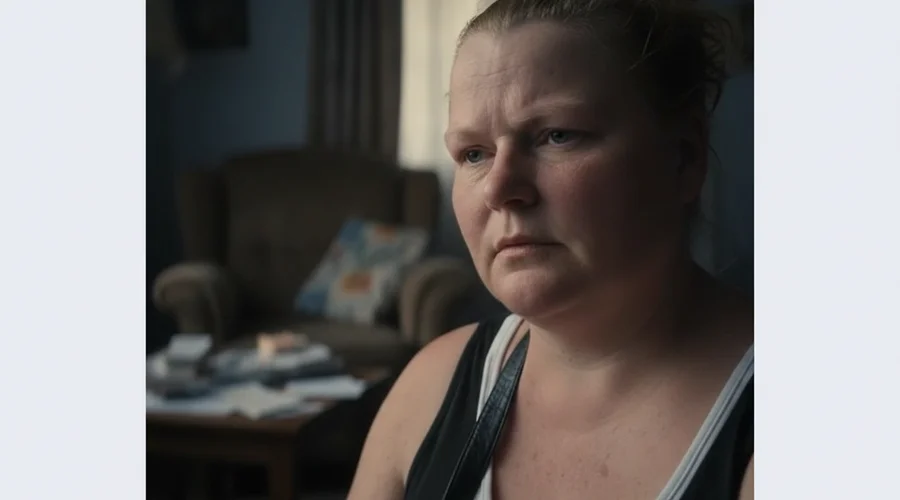
For many individuals across the United Kingdom, the daily reality of the cost of living crisis is stark and deeply personal. Donna O’Hara, a 54-year-old mother of four, exemplifies the acute pressures faced by numerous households. Due to medical conditions, O'Hara is unable to work, and the departure of her son and his partner—who previously contributed to household expenses—following the birth of their child, plunged her family into further financial instability. This shift has necessitated reliance on food banks and borrowing money to cover essential needs, a situation she describes as both "stressful and embarrassing."
O'Hara's health challenges exacerbate her precarious financial state. Diagnosed with multiple myeloma, a form of blood cancer, she has endured multiple hospitalizations for life-saving antibiotics, forcing pauses in her chemotherapy. Although currently in remission, doctors anticipate a recurrence before she can resume treatment. Her husband passed away last year from lung cancer, adding to her emotional and financial burden.
The inadequacies of the current welfare system are evident in her son's situation. Despite receiving Universal Credit, the UK's primary working-age welfare payment, child maintenance deductions leave him with only £340 ($460) per month. He is unable to work while awaiting gallbladder surgery. O'Hara questions the feasibility of living on such a meager sum, noting that her efforts to assist him further strain her own finances.
Her housing situation also highlights systemic issues. O'Hara receives £1,800 ($2,440) in housing benefit, but her private rental property costs £2,500 ($3,390) monthly. The specific type of property, featuring a downstairs toilet, was crucial for both her and her late husband due to their cancer treatments. Having fallen behind on rent, she faces imminent eviction, uncertain of where she will be rehoused.
Understanding the Crisis's Roots
The UK's cost of living crisis intensified in late 2021, initially fueled by disruptions from the global pandemic and subsequently by a surge in energy prices following Russia's invasion of Ukraine. However, for families like O'Hara's, the underlying issues are more deeply entrenched, stemming from over a decade of austerity measures, stagnant wage growth, and lagging productivity, further compounded by the economic repercussions of Brexit.
This historical context forms the bedrock of Prime Minister Andy Burnham's political agenda. The new premier has unveiled a comprehensive 10-year strategy designed to alleviate the crisis. Key elements of this plan include expanding social and affordable housing options, reforming the Universal Credit system, and investing in local economies. Burnham is actively engaging with the public across the nation to understand and address their financial concerns.
While Universal Credit is intended as a safety net, for many, its provisions are insufficient to cover basic living expenses. Research conducted by the Joseph Rowntree Foundation corroborates these individual experiences, revealing that an estimated 7.4 million low-income families have been unable to afford at least one essential item, such as heating, toiletries, or food, within the past six months. Sam Tims, the charity's lead analyst, notes that this figure represents a record high.
Tims attributes these challenges directly to policy decisions, stating that a combination of "damaging structural factors" has weakened the economy, suppressed wages, inflated rents, and left the income safety net in disrepair. He points out that the basic rate of Universal Credit support is lower now than it was a decade ago. While acknowledging the positive impact of removing the two-child benefit limit in April—a measure estimated to have lifted approximately half a million children out of poverty—Tims advocates for a "protected minimum floor" within Universal Credit and increased local housing allowance rates to make private rents affordable once more.
Beyond Economic Indicators: Measuring Well-being
Adam Lang, policy director at Carnegie UK, highlights further evidence of widespread financial vulnerability. Polling by his think tank indicates that over a quarter of households cannot afford an unexpected £850 ($1,150) expense, and one in 20 households struggles to provide enough food for everyone at home. Lang observes that these figures have shown no significant improvement over the past three years.
While cautiously supportive of Burnham's long-term approach, Lang cautions against expecting a single solution to resolve the complex issues at hand. He emphasizes the importance of governments tracking not only economic growth and employment but also the overall well-being of their citizens, enabling policymakers to assess "not just how the economy is performing, but how people are doing."
Evelyn Henderson-Child, a senior researcher at the Centre for Local Economies (CLES), further argues that economic growth often fails to benefit those most affected by the crisis. She notes that Gross Domestic Product (GDP) can increase while the fundamental conditions of life, community resilience, and individual financial stability erode. Growth-centric policies, she contends, frequently prioritize high-productivity sectors while neglecting essential areas such as food, retail, transport, housing, and care, which sustain society and provide significant employment.
Henderson-Child suggests that the solution lies not merely in growth itself, but in who ultimately benefits from it. Traditional policy tends to address inequality retroactively, after wealth has been generated and concentrated. Instead, she advocates for "pre-distribution"—rewiring the economic system from the outset to ensure a more equitable spread of economic and social benefits.
For individuals like Donna O'Hara, however, these broader debates often feel distant from her immediate struggle. "Some people say 'work on a budget'. Try working on a budget when you have to count your pennies just to get a loaf of bread," she states, underscoring the profound personal impact of a crisis that extends far beyond statistics and policy discussions.