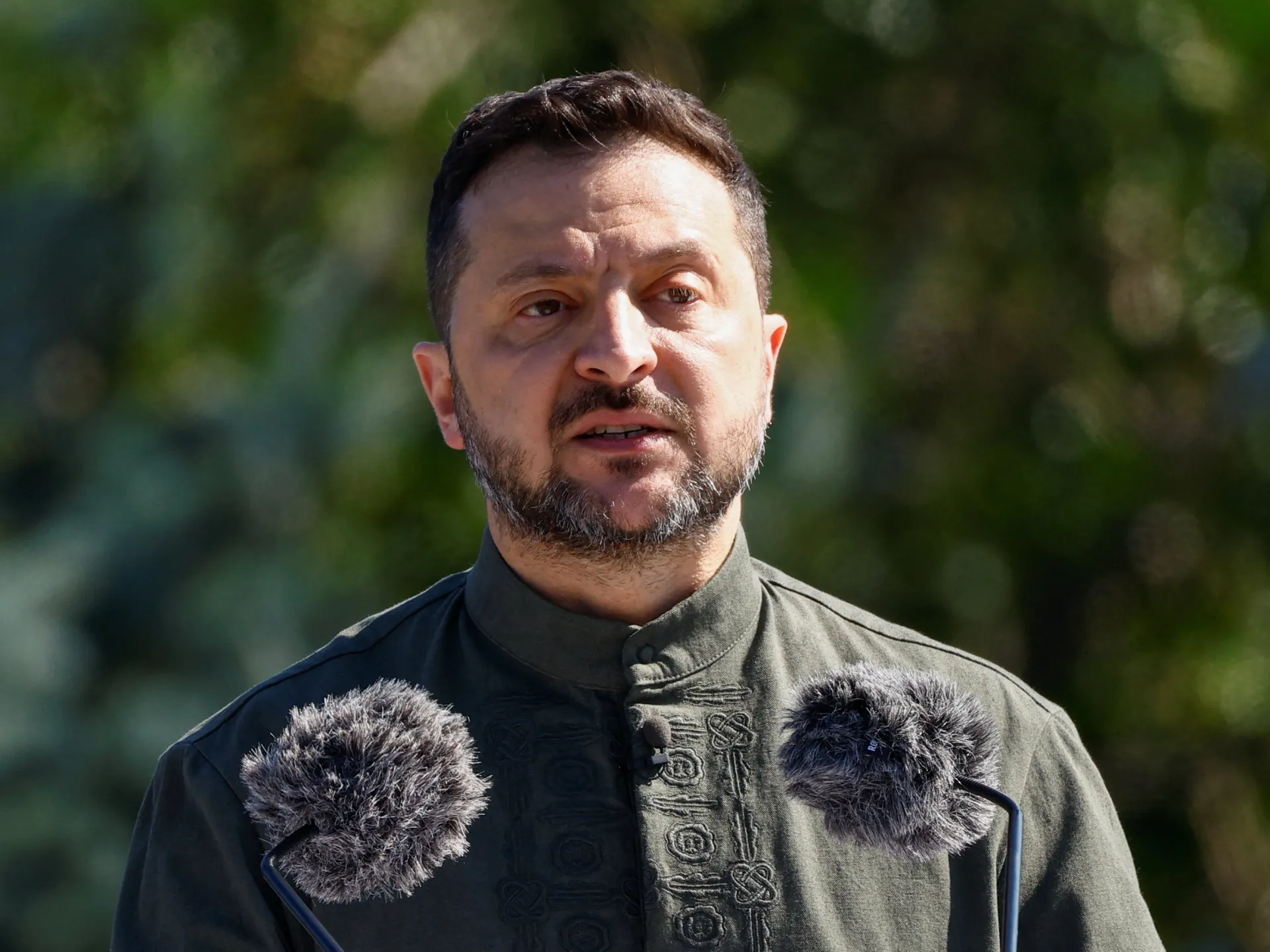
Zelenskyy Dismisses Election Calls as Dangerous to National Stability
Ukrainian President Volodymyr Zelenskyy has firmly rejected growing calls to hold elections while the country remains at war with Russia, warning that doing so could have catastrophic consequences for the nation's unity and survival. Speaking at a press briefing on Saturday, Zelenskyy described the prospect of wartime elections as a "tsunami" that would fracture Ukraine at its most vulnerable moment.
"I believe that in a war like this, elections as such are a huge risk. Elections right now are a tsunami for the country that will split Ukraine," Zelenskyy said. "If we want to destroy the country, then we can move in the direction of elections during these times of war."
The remarks came in response to a public demand for elections made earlier in the week by Mykhailo Fedorov, Ukraine's former defence minister. Fedorov, who is 35 years old and considered a popular figure domestically, was dismissed from his post by Zelenskyy in July after only six months in the role — a move that sparked protests across Ukraine.
Former Defence Minister Ignites Political Controversy
In a nine-minute video published on YouTube, Fedorov argued that Ukraine's democracy should not be suspended indefinitely because of the ongoing conflict. He questioned whether Russia should have any influence over when Ukrainians get to choose their leaders, and claimed the country is experiencing a "systemic crisis of governance."
"Can Russia actually be entitled to define when Ukrainians can elect their authorities next time? I'm sure it's not," Fedorov said in the video.
Ukrainian law currently prohibits elections during wartime, and until Fedorov's public statement, that restriction had largely gone unchallenged. Analysts and independent experts who have weighed in on the topic have noted that holding any election in the current environment would be practically unworkable, given the serious logistical challenges and ongoing security threats across the country. Polling has also suggested that most Ukrainians do not support the idea of holding a vote while the war continues.
Ongoing Russian Strikes Add to the Pressure
The internal political dispute is unfolding against a backdrop of relentless Russian military attacks. Ukrainian emergency services reported that overnight strikes in the eastern Donetsk region killed two people and wounded two others on Sunday, with at least 141 private homes sustaining damage. In the northeastern city of Kharkiv, a drone strike wounded eight people, including a child, and set fire to at least two residential buildings.
In the Odesa region, a Russian drone struck a passenger train travelling from Zhytomyr to Odesa, according to Ukrainian Railways leadership. No casualties were reported in that incident.
In response to the escalating missile threat, Zelenskyy said Ukrainian forces are prioritising the targeting of Russian ballistic missile launch sites, particularly as the supply of US-made Patriot air defence missiles has declined sharply. Ukraine received 264 Patriot missiles in 2026, compared to 364 in 2025 and 675 in 2023. Zelenskyy indicated that Ukraine is actively pursuing domestic production of Patriot missiles following a political green light from US President Donald Trump.
Satellite Communications and Battlefield Technology
Zelenskyy also addressed the future of battlefield communications technology, revealing that both Ukraine and Russia are developing their own versions of satellite internet systems, similar to the Starlink network operated by US entrepreneur Elon Musk. According to Zelenskyy, Russia's alternative — developed in partnership with China — is expected to become operational by December. Ukraine, meanwhile, is working on a comparable system with an unnamed European partner.
"We are not just going to sit and wait for Russia and China," Zelenskyy said, signalling that Kyiv is actively seeking technological independence in military communications.
Defence Funding Shortfall and International Support
Beyond battlefield operations and political tensions, Ukraine is also grappling with a significant financial challenge. Zelenskyy disclosed that the country faces a defence funding gap of approximately $27 billion for the current year, after military expenditure ran higher than anticipated in the first half of 2026. He stated that Ukraine would need at least $8 billion to ensure a stable start to 2027, along with roughly $20 billion to cover other costs including military salaries and compensation payments to the families of those killed in combat.
On the international support front, Zelenskyy confirmed that Ukraine has reached agreements with France for at least one SAMP/T air defence system and with Germany for the delivery of approximately 600 PAC-2 and PAC-3 interceptor missiles through 2028. Norway announced on Sunday that it would provide 85 billion crowns — approximately $9.2 billion — to Kyiv for the 2027 fiscal year, consistent with its contributions in 2026.
As Ukraine enters its fifth year of full-scale war, the debate over elections highlights the deepening strains on the country's political institutions, even as its military and government work to secure both battlefield gains and international backing.