Global Conflicts' Ripple Effect on Cambodian Education
The distant geopolitical landscape, particularly the ongoing tensions between the United States and Iran, is casting a long shadow over the educational prospects of children in Cambodia. Far removed from the direct conflict zones, Cambodian families, especially those with limited incomes, are grappling with the economic fallout. A primary concern is the significant increase in fuel prices, a direct consequence of global market instability exacerbated by international conflicts. This economic pressure is making it increasingly challenging for families to afford essential expenses, including sending their children to school, thereby jeopardizing access to education for a vulnerable demographic.
For many low-income households in Cambodia, every penny counts. The rising cost of transportation, whether for commuting to work or school, directly impacts their already stretched budgets. In rural areas, where public transport options are scarce, families often rely on motorbikes or other fuel-dependent vehicles for daily commutes. The surge in fuel prices means that a larger portion of their meager income must be allocated to these essential services, leaving less for educational materials, school fees, or even basic necessities like food. This creates a difficult choice for parents, often forcing them to prioritize immediate survival over long-term educational investments.
The Plight of Children Like Sou Sreynich
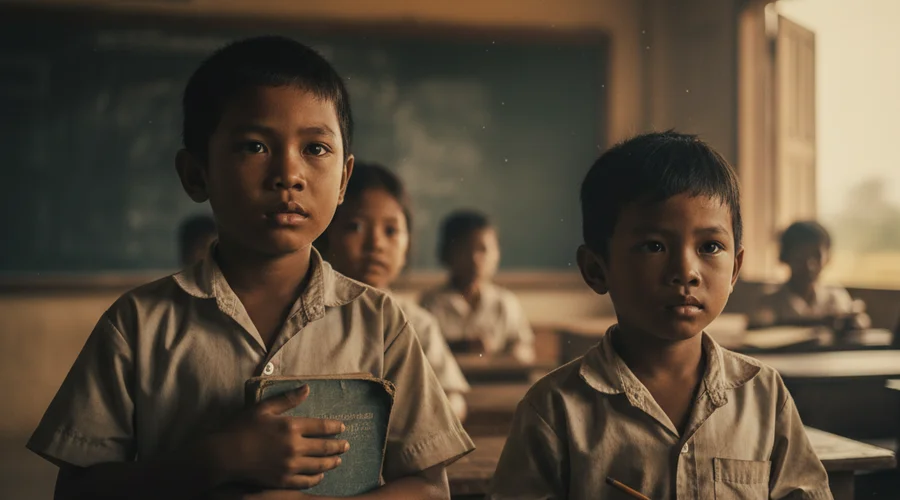
The human face of this crisis is exemplified by children such as 13-year-old Sou Sreynich. For Sou and many others in similar circumstances, attending school consistently has become a luxury they can no longer always afford. The economic strain on her family means that on certain days, instead of being in the classroom, she must engage in labor to supplement the household income. This not only leads to missed lessons but also creates a cycle of disadvantage, as interrupted schooling can severely hinder a child's academic progress and future opportunities.
When children are compelled to skip school to work, they fall behind their peers, making it harder to catch up. This can result in decreased motivation, increased dropout rates, and ultimately, a less educated workforce in the future. The long-term implications for Cambodia's development are considerable, as a well-educated population is crucial for economic growth and social progress. The erosion of educational access for a significant portion of the youth can perpetuate intergenerational poverty and inequality.
Economic Pressures and Educational Disruption
The link between global conflicts and local economic hardship is a complex but undeniable one. International events, such as military confrontations or political instability in oil-producing regions, can trigger volatility in global commodity markets. Fuel, being a critical commodity for transportation, agriculture, and industry, is particularly susceptible to these fluctuations. When fuel prices surge, the cost of goods and services across the board tends to increase, leading to inflationary pressures that disproportionately affect low-income populations.
In Cambodia, where a substantial portion of the population lives in poverty or near-poverty, these economic shocks are acutely felt. Families often operate on very thin margins, with little to no savings to absorb unexpected cost increases. The decision to pull a child out of school, even temporarily, is rarely made lightly. It is a desperate measure taken when families face the stark choice between providing immediate sustenance and investing in their children's future education.
The rising cost of living, propelled by global fuel price hikes, is forcing an increasing number of Cambodian families to make agonizing decisions, often at the expense of their children's schooling. This situation underscores the interconnectedness of global politics and local well-being, demonstrating how events thousands of miles away can directly impact the daily lives and educational opportunities of vulnerable communities. Addressing this challenge requires not only local interventions but also an acknowledgment of the broader international factors at play.
Organizations and local communities are attempting to mitigate these impacts, but the scale of the problem often overwhelms available resources. Support programs, such as school meal initiatives or direct financial aid for educational expenses, become even more critical during such times. However, these programs themselves can be underfunded or strained when the economic environment deteriorates broadly.
A Call for Global Awareness
The situation in Cambodia serves as a poignant reminder that the consequences of geopolitical conflicts extend far beyond their immediate geographical boundaries. The international community, policymakers, and humanitarian organizations must recognize these indirect yet profound impacts. Understanding how global events affect local economies and social structures is vital for developing effective strategies to protect vulnerable populations and ensure that fundamental rights, such as the right to education, are upheld even in times of global instability. The story of Cambodian children losing access to education due to distant conflicts highlights the urgent need for a more holistic approach to global stability and humanitarian aid.