A Growing Global Crisis
Water-related conflicts are rising at an alarming pace around the world, drawing renewed attention as the annual World Water Week conference convenes in Stockholm, Sweden. Organized by the Stockholm International Water Institute (SIWI) under the theme "Water for People and Progress," the event highlights the deepening intersection of water security, climate stress, and armed conflict.
According to the Pacific Institute, a US-based water research organization, 420 water-related conflicts were recorded in 2024 — a record high representing a 78 percent increase from the 235 incidents documented in 2022. The surge is largely attributed to deliberate attacks on water infrastructure and worsening access disputes in war-affected territories.
How Water Becomes Part of Conflict
For over three decades, the Pacific Institute has tracked water conflicts globally, categorizing each incident according to the role water played. Three primary classifications are used:
- Casualty: Water infrastructure — including dams, pipelines, wells, and treatment plants — is damaged or destroyed, either deliberately or as collateral damage. This category accounted for 55 percent of water conflicts recorded in 2024.
- Trigger: Water scarcity or unequal access sparks violence between communities, farmers, herders, or armed factions. This type drove 28 percent of incidents in 2024.
- Weapon: Water is deliberately manipulated to pressure or harm adversaries, such as by cutting off supplies, contaminating sources, or flooding areas. Though less common, this method represented two percent of incidents in 2024.
Regions Most at Risk
Palestine
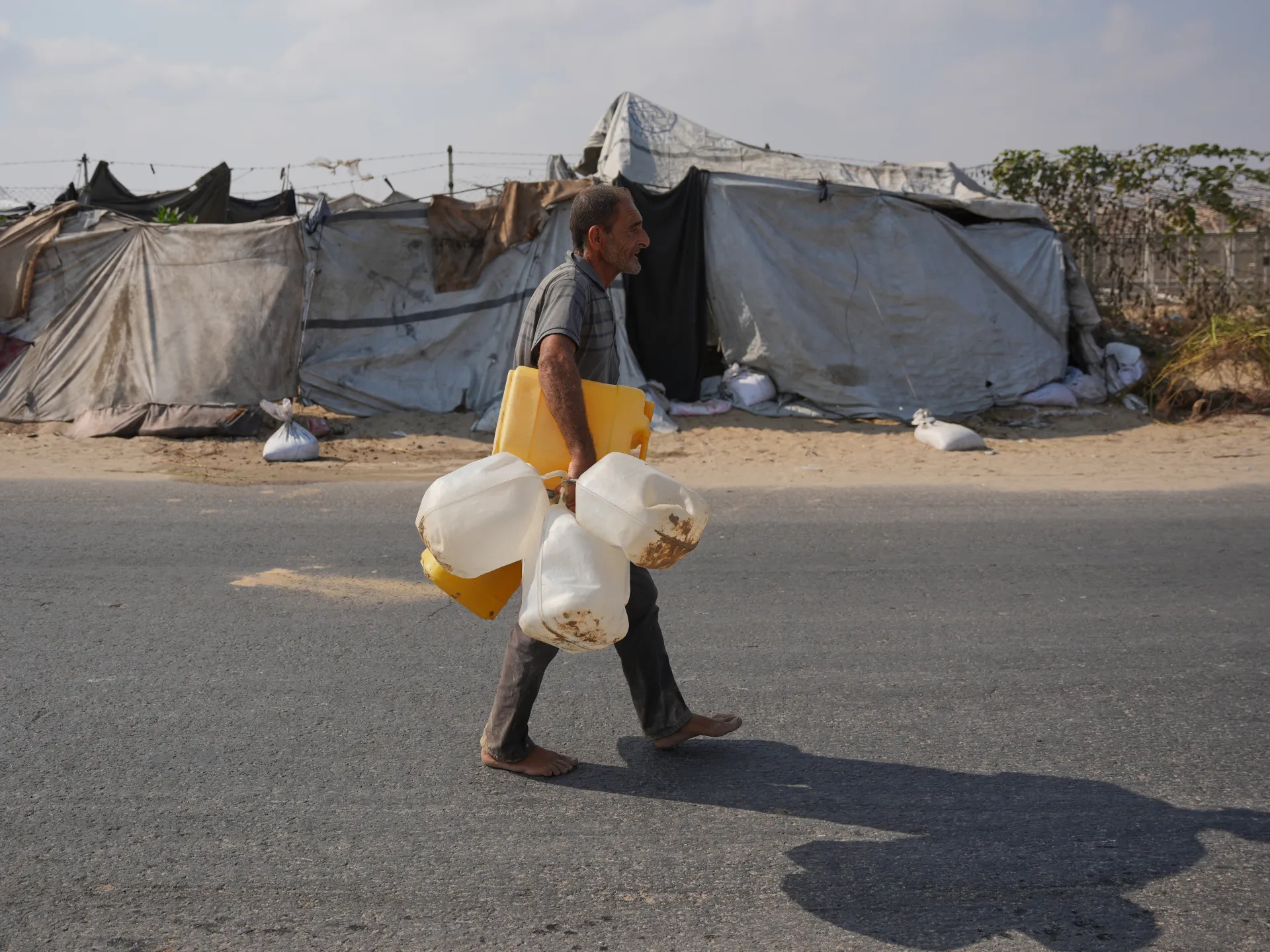
The humanitarian situation in Gaza has produced one of the most severe water crises anywhere in the world. Of a population of approximately 2.1 million, around 1.9 million remain displaced. According to UNICEF, roughly 90 percent of water and sanitation infrastructure has been damaged or destroyed. Up to 70 percent of residents cannot collect the minimum six liters of water per day required for basic drinking and cooking needs, and 90 percent of households face moderate-to-high water insecurity.
Medical organization Médecins Sans Frontières has reported water prices rising by as much as 500 percent in Gaza. Disrupted distribution systems have worsened diarrheal and skin diseases, with children and pregnant women facing the greatest health risks. In the occupied West Bank, settler attacks and demolitions have also damaged Palestinian water infrastructure, with raids near Ramallah cutting supply to around 100,000 people.
Sudan
Fighting between the Sudanese Armed Forces and the Rapid Support Forces, ongoing since April 2023, has displaced approximately 12 million people and triggered a humanitarian crisis affecting more than 30 million. Reports from the Geneva Academy document widespread attacks on water infrastructure — including reservoirs, treatment plants, and distribution networks — particularly concentrated in Darfur. The collapse of water and sanitation systems has accelerated cholera outbreaks and deepened food insecurity, with famine risks rising across multiple regions.
Iran
Military strikes on Iran beginning in late February 2026 have placed additional strain on a water system already severely weakened by prolonged drought and critically depleted groundwater. Attacks reportedly damaged desalination plants and reservoirs in Qeshm Island and Hormozgan province, disrupting water access for tens of thousands. Damage to electricity networks and transport routes has further complicated repair efforts. Some reservoirs were reported to be up to 92 percent depleted before the strikes, and water levels in Mashhad — Iran's second-largest city with roughly four million residents — fell below three percent capacity.
The Gulf Region
The conflict involving Iran has exposed deep vulnerabilities in water infrastructure across the broader Gulf region, one of the most water-scarce areas on Earth. Gulf states depend heavily on large-scale desalination to meet domestic water needs. Desalinated water accounts for approximately 90 percent of drinking water in Kuwait, 86 percent in Oman, 70 percent in Saudi Arabia, over 90 percent in Bahrain, and nearly all of Qatar's supply. Desalination facilities in Bahrain, Kuwait, and the UAE sustained damage during the conflict, though the broader impact on water availability remained relatively contained.
Ukraine
Ukraine's water infrastructure continues to deteriorate under the strain of ongoing conflict with Russia. UNICEF reports that 4.3 million people received safe-water assistance last year, while 12.7 million require humanitarian support. Attacks on energy infrastructure have reduced electricity generation capacity by 70 percent, directly disrupting water pumping and heating systems. In the city of Kherson, recent strikes severed water supply to entire neighborhoods. The destruction of the Kakhovka Dam in June 2023 alone affected more than 100,000 people, and around 10 million Ukrainians now lack reliable access to safe water.
A Trend With No Clear End
The data paints a troubling picture: water, long considered a basic human necessity, is increasingly being caught in the crossfire of geopolitical and military conflicts. As climate pressures intensify and armed disputes persist, the number of people losing access to safe water through conflict is expected to continue rising, making water security a central challenge of the coming decades.