A Family Torn Apart by an Iron Divide
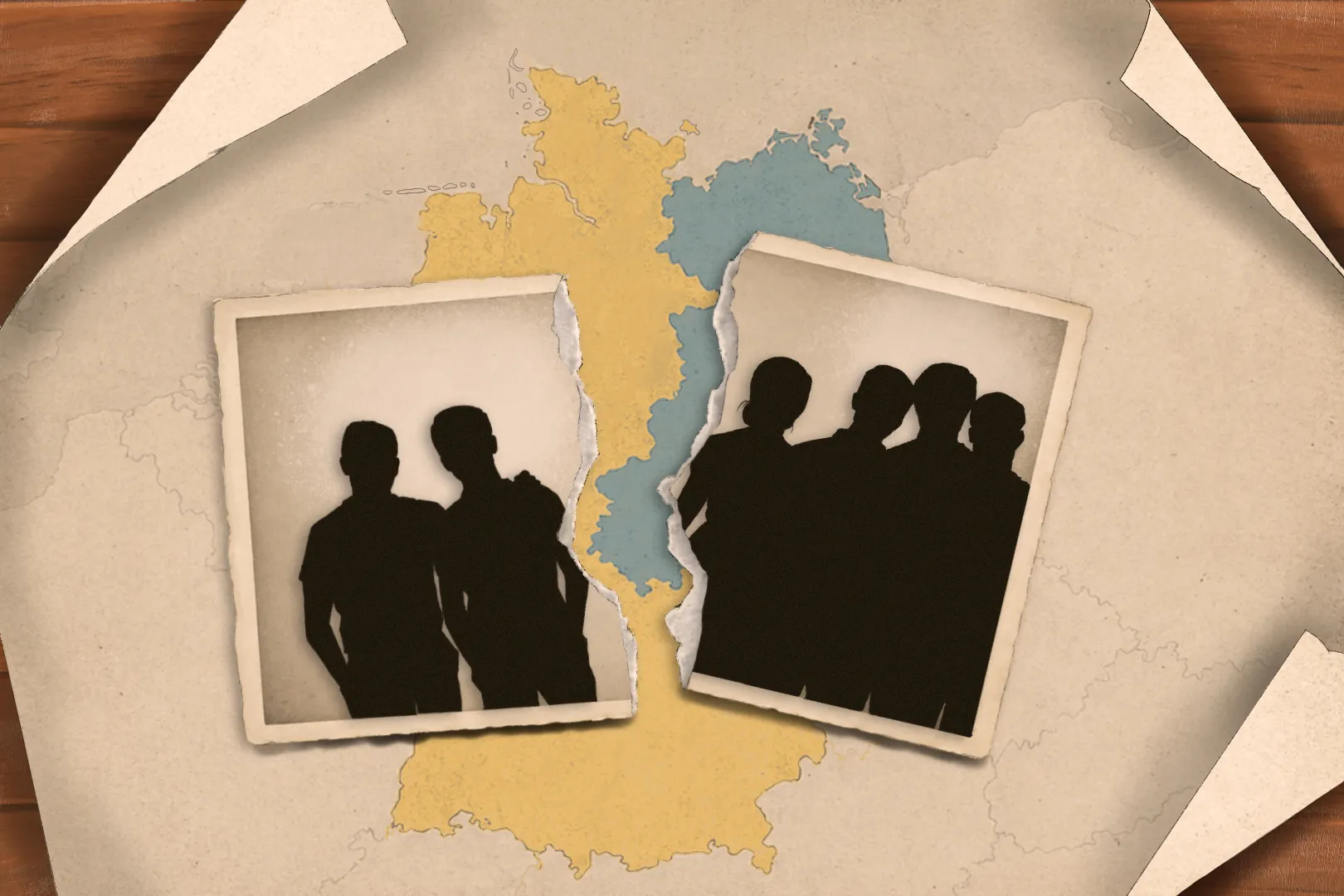
When Erich Guetinger was 18 years old, he made a trip that would have been unremarkable in most countries but was anything but ordinary in Cold War Germany. He was going to visit his uncle's family — relatives he had not properly seen since early childhood. The year was 1969, a summer marked globally by the Apollo moon landing, the Beatles' final studio sessions, and the early withdrawal of American troops from Vietnam. For the Guetinger family, however, the summer was defined by visa applications, border checkpoints, and the lingering anxiety of living in a divided nation.
Germany had been split for two decades by that point. West Germany, officially the Federal Republic of Germany, operated as a capitalist democracy aligned with the United States and Western Europe. East Germany, known as the German Democratic Republic, was a Soviet-backed socialist state governed by the Socialist Unity Party. Berlin itself had been divided since the end of World War Two, and the construction of the Berlin Wall in August 1961 had physically cemented that separation. The wall, a 155-kilometre concrete barrier encircling West Berlin, effectively isolated the city within East German territory.
The Geography of Separation
The Guetinger family's story illustrates how Germany's partition was not just a geopolitical abstraction but a lived human experience. Most of the family resided in Babenhausen, a small Bavarian market town in West Germany. Erich's uncle Hans, aunt Frieda, and cousins Dieter and Guenter, however, lived in Brieskow-Finkenheerd, a village near Frankfurt an der Oder in the east. Geographically, the distance was manageable. Politically and bureaucratically, it was immense.
What might have been a simple family visit required weeks of advance planning, formal visa applications, detailed disclosures to East German officials about the purpose of the trip and accommodation arrangements, and travel through designated transit corridors. Erich and his father, Ernst, departed on a Saturday afternoon and crossed into East Germany through a Bavarian border crossing at Probstzella. The moment the train entered GDR territory, border guards boarded to inspect visas and identification documents.
The family spent a week together in Frankfurt an der Oder — sharing meals, meeting friends, and making up for years of lost time. Uncle Hans was eager to introduce his West German brother to his circle of friends. Despite the warmth of the reunion, an undercurrent of caution pervaded daily interactions. Every room entered required an informal assessment of who was nearby and how far they were from the conversation. The Stasi, East Germany's feared secret police, maintained a pervasive surveillance network, and residents understood that indiscreet remarks could carry severe consequences.
How the Family Ended Up on Opposite Sides
The roots of the family's division stretched back to the postwar years. Hans, the eldest of three brothers, had served as a soldier during World War Two. After Germany's defeat in 1945, he returned to Babenhausen and attempted to find work as a shoemaker, but employment was scarce. His wife, originally from the east, encouraged the family to try their luck in the GDR, where labour was needed and a modest form of security was on offer. In 1958, Hans and his family relocated to Brieskow-Finkenheerd, where he found work at a local power station.
Life in the east suited Hans in certain respects. He was an avid hunter, and while hunting in West Germany was restricted to landowners, the collective ownership model in the GDR allowed him to hunt freely. His skills became so valued that local Communist Party officials would call upon him when they wanted game for special occasions.
His younger brother Ernst, who remained in Bavaria, became the father of Erich Guetinger in 1951. As East Germany progressively tightened restrictions on travel and communication throughout the 1960s, the two branches of the family found themselves increasingly cut off from one another. Letters were exchanged but written with care — residents on both sides were aware that the Stasi routinely intercepted and read correspondence between families separated by the border.
Parcels, Censorship, and Silent Grief
Like many West German families with relatives in the east, the Guetingers sent care packages containing goods that were difficult to obtain in the GDR. Coffee, blue jeans, and other Western products were common inclusions. Even then, delivery was not guaranteed — parcels were monitored, and items could be confiscated without notice.
Guetinger reflects that the emotional toll of the separation on his parents was rarely spoken about openly. The weight of having family members on the other side of an increasingly militarised border — one lined with barbed wire, watchtowers, and orders permitting border guards to shoot those attempting to cross — was carried in silence. Between 1961 and 1989, an estimated 75,000 people were imprisoned for attempting to flee East Germany.
A Legacy That Outlasted the Wall
Germany's division also shaped migration patterns that extended well beyond its borders. East Germany developed ties with countries aligned with the Soviet bloc, drawing approximately 70,000 Vietnamese contract workers, more than 20,000 young people from Mozambique, and a smaller contingent of North Korean engineers into its workforce. West Germany, meanwhile, cultivated links with South Korea, Taiwan, and other nations outside the Eastern Bloc.
It was through one such connection that Guetinger's personal life took an unexpected turn. In 1973, he encountered Yan-Yun Chiang, a nurse from Taiwan who had come to West Germany through a recruitment programme. The two met through mutual friends and, as Guetinger describes it, something struck them both immediately. They later married, their relationship a product of the same Cold War geography that had separated his family.
Now 75, Guetinger looks back on a life shaped at every turn by a wall that no longer stands. The physical structure came down in 1989, but the memories, the years of limited contact, and the habits of cautious conversation forged during that era remain part of who he is. The Berlin Wall may be history — but for those who lived through its shadow, its legacy is anything but distant.