The Rise of Autonomous Ground Systems
In the ongoing conflict in Ukraine, ground robots are emerging as a pivotal force, transforming the landscape of modern warfare. These unmanned ground vehicles (UGVs) are performing a variety of critical tasks, from logistical support to direct combat operations, thereby reducing human exposure to danger and introducing new tactical possibilities.
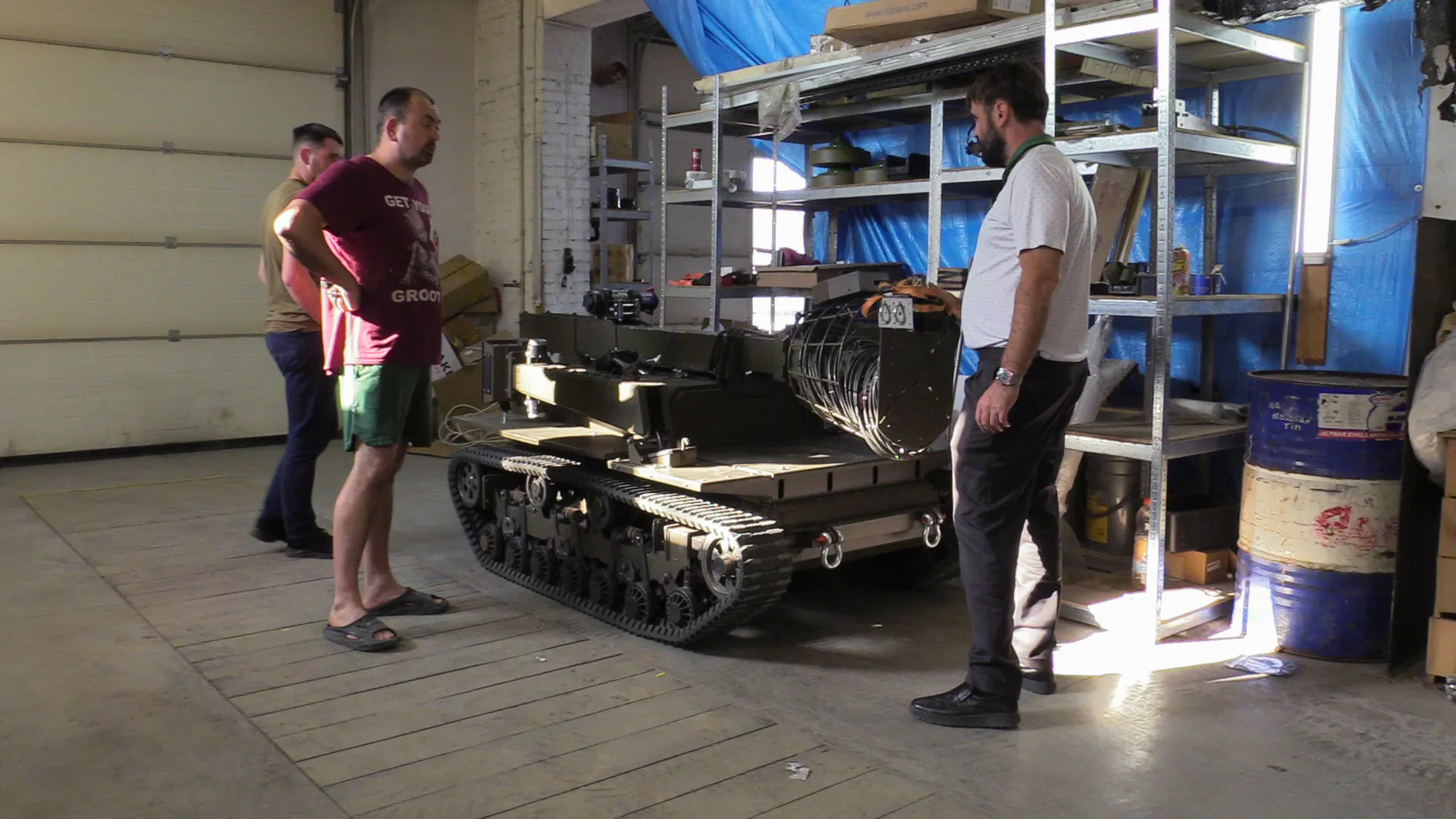
One such robot, named Murakha (Ukrainian for 'ant'), exemplifies these advancements. During a mission in northeastern Ukraine, a Murakha unit, roughly a meter high and equipped with tank-like tracks, found itself stuck in a trench. Its operators, positioned tens of kilometers away in a bunker, faced a dilemma. Sending a human rescue team was deemed too perilous. Instead, they deployed another Murakha to extricate the stranded unit. This incident, described by an officer using the call sign Maska, highlighted the ingenuity and resilience of these robotic systems and their handlers. Maska, whose identity is withheld due to wartime protocols, expressed the profound satisfaction derived from these successful operations, particularly those near Pokrovsk, which, despite meticulous planning, often conclude rapidly under intense drone fire. He emphasized that their work significantly contributes to saving lives.
Technological Innovation on the Front Lines
Murakha and similar robots are products of a burgeoning industry in Ukraine, with companies like Robotic Complexes in Ternopil and over 200 startups contributing to this technological revolution. This shift signifies a departure from the conventional perception of warfare, where human combatants are directly engaged, towards a model where robotic systems increasingly take their place on the front lines. Maska, a former infantryman who nearly lost his life in the early stages of the full-scale invasion in 2022, noted, “In 2022, it was a war of people; today people fight robots.” His team now meticulously plans each mission, considering environmental factors such as temperature, wind, terrain curvature, and even the depth of puddles.
While aerial drones frequently dominate headlines, ground robots, though less visible, are equally crucial. Their electric motors make them less susceptible to thermal detection compared to vehicles with internal combustion engines. They boast longer battery lives and can carry significantly heavier and bulkier payloads. Furthermore, kamikaze robots, laden with explosives, deliver a more substantial destructive impact.
Ground Robots in Combat and Support Roles
A landmark event in April marked the first instance in military history where two ground robots successfully captured a Russian position in the Kharkiv region. One robot breached the entrance of a bunker with an explosion, while the second blocked the exit, revealing two Russian soldiers who subsequently surrendered. Ukrainian President Volodymyr Zelenskyy lauded this operation, stating, “The future is already on the front line, and Ukraine is building it.”
Each Murakha robot is equipped with advanced features, including cameras, infrared illuminators, a GPS module, or Starlink connectivity. Their pilots utilize frequency-hopping algorithms to prevent signal jamming. These robots can transport hundreds of kilograms of ammunition, medical supplies, or food. They can also tow additional cargo or carry radio antennas to extend the operational range of drones. Moreover, when fitted with a specialized evacuation module—bullet-, sound-, and vibration-proof, with polymer armor, heating, ventilation, and a first-aid kit—a Murakha can safely transport wounded soldiers, its most vital cargo.
Ihor Chaikivsky, the innovator behind Murakha, initially a businessman in agriculture, ventured into robot manufacturing to safeguard lives, including his own. He stated that the primary motivation for his enterprise was to protect people from the conflict. His company operates from 11 decentralized facilities across the Ternopil region to mitigate the risk of missile attacks. Chaikivsky noted that the Ukrainian army’s Soviet-era mentality has been challenged by a bottom-up culture of innovation, driven by volunteers and mobilized individuals from diverse professional backgrounds, who, despite lacking military experience, brought fresh ideas and a willingness to battle-test new technologies. “Only proximity to death spurred us to take action to gain an advantage in this war,” Chaikivsky remarked, emphasizing the rapid adoption of innovations from the grassroots level.
Comparative Approaches to Military Innovation
In contrast, Russia, despite its larger population, financial resources, and technological base, has not seen a similar widespread adoption of such an innovative culture. Chaikivsky attributes this to cultural, mental, political, and corrupt practices that hinder rapid and effective implementation, although he cautions against underestimating their technological capabilities. The approach employed by companies like Robotic Complexes, which designs robots with minimal welded parts for easy front-line repairs and rapidly incorporates feedback from servicemen, appears to be highly effective.
Lieutenant General Ihor Romanenko, former deputy head of Ukraine’s general staff of armed forces, supports the rapid scaling and implementation of such technological solutions to minimize manpower on the battlefield. However, some servicemen express concerns about the robots' vulnerability. A member of the Russian Volunteer Corps, fighting for Ukraine, noted that while robots are effective for delivering supplies, they can be easy targets for drones and may not be ideal for evacuating the wounded. This highlights the ongoing need for refinement and adaptation in the deployment of these advanced systems.