Shifting Political Landscape Ahead of November Elections
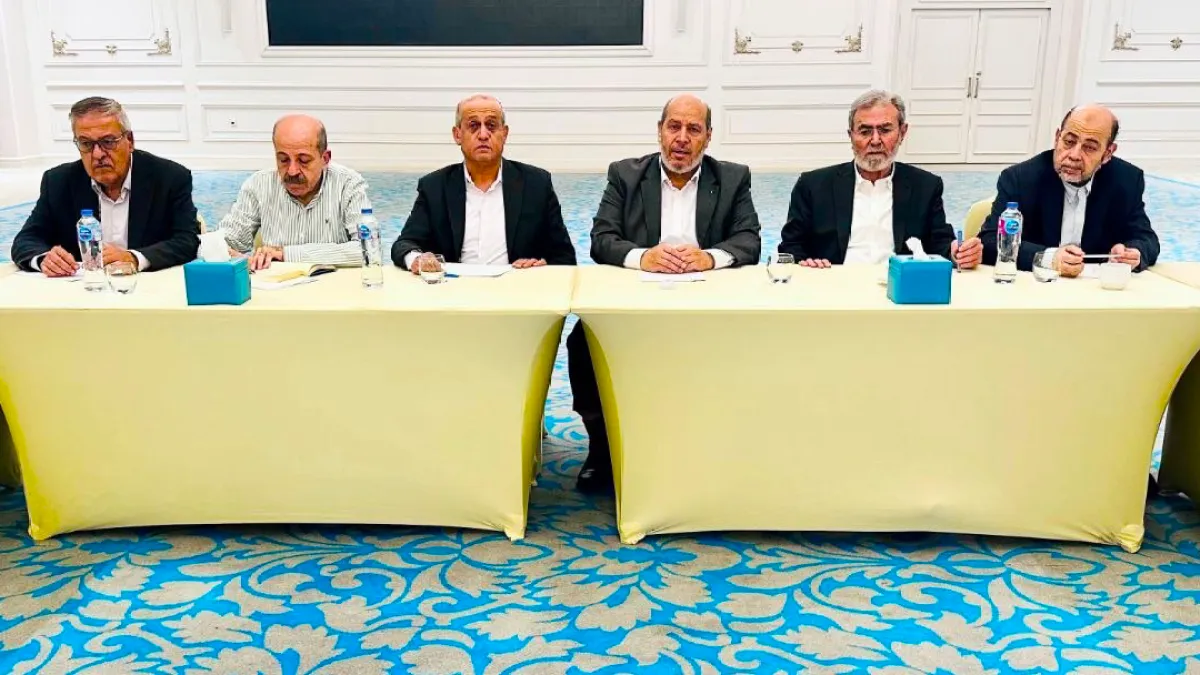
As the Palestinian territories brace for legislative elections in November, several political factions are actively engaged in discussions to form a comprehensive electoral coalition. This potential alliance, spearheaded by Hamas and other groups opposed to the Fatah-led Palestinian Authority government under President Mahmoud Abbas, seeks to present a unified front in the upcoming polls. The elections, slated for November 28, would mark the first such legislative vote since January 2006, signaling a significant moment in Palestinian political history.
Husam Badran, a national relations official for Hamas, confirmed that the movement has been holding bilateral and collective meetings with various factions. These discussions have included prominent groups such as Palestinian Islamic Jihad, the Popular Front for the Liberation of Palestine (PFLP), the National Initiative and Democratic Reform, and the breakaway Fatah faction led by Mohammed Dahlan. Notably, Dahlan's Democratic Reform current has historically been critical of Hamas, highlighting the evolving dynamics within Palestinian politics.
The announcement of these elections by President Abbas on July 9 comes amidst a challenging environment, including ongoing conflict in Gaza, heightened violence in the West Bank, and Israeli restrictions in East Jerusalem. Despite these complexities, political maneuvering among major factions has already begun, as leaders and analysts observe.
Hamas Seeks Broad Coalition, Fatah Plans Independent Race
Hamas has expressed its intention to participate in the legislative elections, with Badran stating that the movement prefers to do so as part of the broadest possible national bloc. He emphasized that Hamas's electoral decisions would not be influenced by potential Israeli objections to its participation, asserting that taking part in Palestinian elections is an inherent right for all factions.
In contrast, the Palestinian National Liberation Movement, commonly known as Fatah, is preparing to contest the elections independently. Munther al-Hayek, a spokesperson for Fatah, indicated that the movement's organizational bases are against forming a joint list with Hamas. However, he noted that Fatah remains open to alliances with other factions. Al-Hayek described the upcoming elections as a step towards unifying the Palestinian political system, emphasizing that they align with existing agreements. He also mentioned the formation of a committee by President Abbas to engage with various factions and facilitate the electoral process across all Palestinian territories, including the Gaza Strip.
Dahlan's Democratic Reform Emerges as Key Player
The Democratic Reform current, under Mohammed Dahlan's leadership, is proving to be a pivotal force in the potential formation of a coalition list. Osama al-Farra, a leader within the faction, disclosed that a delegation led by Dahlan recently met with a Hamas delegation headed by Khalil al-Hayya. Al-Farra confirmed Democratic Reform's decision to participate in the legislative elections and expressed strong support for a “broad national alliance” that would include various factions, professionals, and community figures.
Dahlan, a native of Gaza's Khan Younis refugee camp, previously served as Gaza security chief under Yasser Arafat, a role in which his actions against Hamas activists earned the enclave the moniker “Dahlanistan” from some observers. Despite being a former adversary of Hamas and later expelled from Fatah by Abbas in 2011, Dahlan, now based in Abu Dhabi, has found common ground with Hamas due to their shared opposition to the Palestinian Authority president. Al-Farra underscored that any agreed-upon candidate list would not be formed “against anyone.”
Discussions among factions regarding a potential presidential candidate for the alliance frequently mention Marwan Barghouti, a long-imprisoned leader. His widespread appeal and perceived ability to lead a unifying project make him a significant figure in these considerations. Al-Farra also voiced concerns about separating legislative and presidential elections, referencing the abrupt cancellation of elections in 2021 by Abbas, who cited Israeli voting restrictions in East Jerusalem. This year's decree specifically calls for legislative polls without a concurrent presidential vote.
Analyzing the Evolving Political Dynamics
Political analyst and writer Ahmed al-Tanani suggests that while a coalition list is a priority for several opposition forces, its success hinges on its ability to evolve into a “broad national programme” aimed at restructuring the political system, rather than remaining a temporary electoral alliance. Al-Tanani explained that President Abbas's call for legislative elections without a simultaneous presidential vote is primarily an attempt to formally renew the Palestinian Authority's legitimacy in response to international pressures.
He further noted that the participation of Hamas, the PFLP, and Dahlan's faction has altered the calculations of those within the Palestinian political spectrum who anticipated an opposition boycott. This shift is mirrored in recent indicators of public support. Polling data suggests that Barghouti leads a hypothetical presidential race with 54 percent support, followed by al-Hayya at 26 percent and Abbas at 14 percent. Additionally, 28 percent of respondents believe Hamas is most deserving to lead the Palestinian people, compared to 21 percent for Fatah under Abbas, indicating that no single faction currently commands overwhelming popular support.