Disorder Disrupts High-Risk German Cup Fixture
A German Cup first-round match between Waldhof Mannheim and Kaiserslautern was thrown into chaos late Friday evening after serious crowd disturbances left around 100 people injured, including 35 police officers, according to local authorities. Eight individuals required hospital treatment following the incidents, which brought the game to a temporary standstill.
The contest had been categorized as high risk well in advance due to the intense rivalry between the two clubs, which are based roughly 50 kilometers apart. Despite extensive security measures being put in place, violence broke out near the end of regulation time when the scoreline stood at 0-0, forcing officials to halt play for approximately 30 minutes.
How the Trouble Unfolded
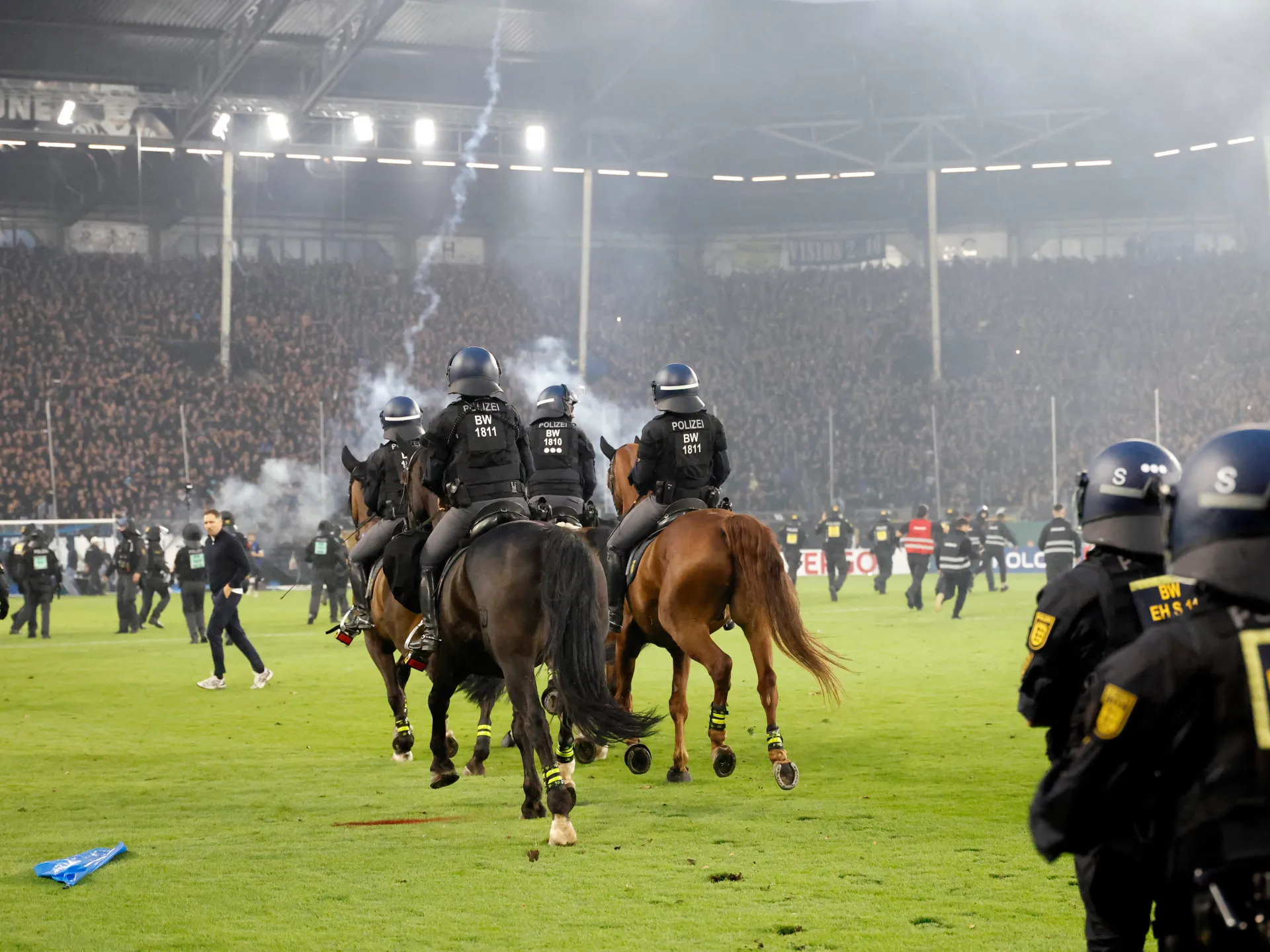
According to police, the disorder began when supporters in the away end launched flares in the direction of the main stand. The act provoked a reaction from home fans, a number of whom proceeded to invade the playing surface in response. The situation escalated rapidly, drawing a large-scale response from law enforcement already stationed at the venue.
Authorities deployed a total of nearly 1,400 police officers to manage security at the match, a figure that underscores the level of concern surrounding the fixture before a ball had even been kicked. Despite this significant presence, officers found themselves overwhelmed as the confrontation between fan groups intensified.
In a statement released following the match, police described the measures taken to restore order:
A massive police intervention on the pitch was required to force individuals back toward the home supporters' section using physical measures.
The intervention proved effective enough to allow the match to resume, though the scenes had already caused considerable disruption to players, officials, and the many supporters who had attended without any intention of causing trouble.
Injuries and Medical Response
Of the roughly 100 people reported to have been affected by the disturbances, 85 required some form of medical attention on the night. Eight were deemed to need further care and were transported to nearby hospitals. Among the injured were 35 police officers, highlighting the dangerous conditions faced by those tasked with managing the crowd.
The injuries sustained ranged in severity, and while no fatalities were reported, the scale of the incident prompted immediate concern from officials and football governing bodies about safety standards at matches involving historically rival fan groups.
Match Eventually Completed
Following the extended interruption, the game was allowed to continue into extra time. The deadlock was finally broken in the 120th minute when Kaiserslautern's Ibrahim Kanate found the net, giving the visitors a 1-0 victory and securing their progression in the German Cup.
The late winner, though significant from a sporting perspective, was largely overshadowed by the events that had unfolded earlier in the evening. Attention quickly shifted away from the result itself and toward questions about how such disorder could occur despite the considerable security apparatus that had been put in place.
Broader Concerns About Fan Violence in Football
Friday's scenes are part of a wider pattern of crowd trouble that continues to affect football at various levels across Europe. Matches between clubs with deeply rooted local or regional rivalries frequently present challenges for authorities, and the Mannheim-Kaiserslautern fixture has a well-documented history of tension between its respective supporter bases.
The use of pyrotechnics such as flares inside stadiums remains a persistent problem at football grounds, and incidents in which their use triggers retaliatory crowd behavior are not uncommon. Governing bodies and law enforcement agencies across the continent have repeatedly called for stricter enforcement of bans on such items, though implementation remains inconsistent.
In the aftermath of Friday's events, it is likely that both clubs will face scrutiny from German football authorities. Potential sanctions could include fines, stadium bans, or restrictions on away supporters attending future fixtures. An investigation into the circumstances that led to the disorder is expected to follow.
The incident serves as a reminder of the ongoing challenges faced by football administrators, clubs, and police in ensuring that matches between rival communities can be held safely, particularly when the stakes — even in an early-round cup tie — are elevated by historical animosity between fan groups.