US Aims for Indefinite Naval Blockade Against Iran
The United States has declared its intent to sustain an “indefinite” naval blockade on Iranian ports, coupled with new economic sanctions designed to further isolate Iran. This development comes as ceasefire negotiations between the two nations remain stalled. US Secretary of Defense Pete Hegseth affirmed the US military's capacity to maintain a naval presence in the region for an extended period, stating that ships would be rotated in and out as needed to enforce the blockade.
US Treasury Secretary Scott Bessent also indicated forthcoming economic measures, describing them as unprecedented in their scope of economic isolation. These measures, combined with the ongoing blockade in the Strait of Hormuz, are intended to severely restrict Iran's trade activities.
Concerns Mount Over Conditions Aboard USS Abraham Lincoln
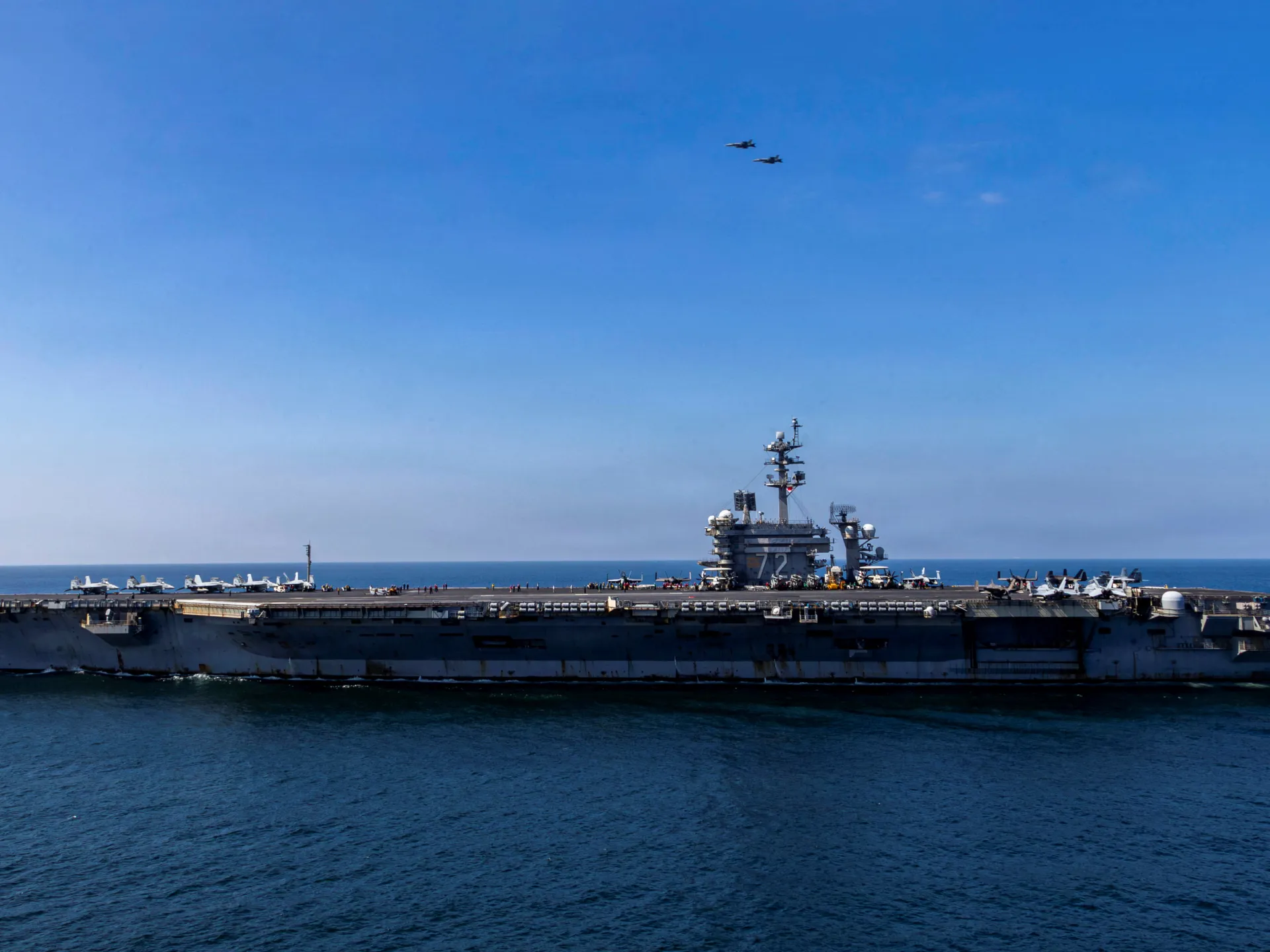
Despite the US administration's assertions of indefinite sustainability, significant concerns have emerged regarding the well-being of personnel aboard the USS Abraham Lincoln, the flagship aircraft carrier enforcing the blockade. Reports from military publications, citing family members, have highlighted deteriorating mental health, flagging morale, and instances of suicidal ideation among sailors. One sailor's wife, Annabelle Loma, reported her husband attempted to jump overboard due to what she termed “severe burnout.”
These reports have prompted urgent inquiries from US lawmakers. Senator Richard Blumenthal, in a letter to Secretary Hegseth, noted that the USS Abraham Lincoln has been continuously at sea for nearly seven months, a record deployment without a port stop. Blumenthal raised alarms about shortages of basic supplies, water contamination, increased safety incidents, and disruptions to mail services, which affect care package deliveries. He questioned the Navy's ability to maintain its operational tempo, particularly given the administration's reliance on aircraft carriers for ongoing conflicts.
Minority Leader Chuck Schumer publicly called for Hegseth's removal, citing incompetence. Similarly, California lawmakers, led by Representative Mike Levin, demanded answers from Hegseth and Acting Secretary of the Navy Hung Cao, emphasizing the need for transparency regarding operational failures that led to the reported problems. They questioned why unsanitary conditions and mental health support issues were not immediately addressed, and why the Navy failed to communicate these problems to families and officials.
The US Central Command (CENTCOM) has denied reports of worsening conditions, including claims of sailor deaths or suicidal ideation, labeling them as false and asserting the resilience of the Abraham Lincoln Carrier Strike Group personnel. They confirmed that a sailor who fell overboard was quickly and safely recovered.
Can the US Navy Sustain Prolonged Deployments?
The Trump administration's strategy for sustained operations involves rotating ships, with reports indicating the USS George Washington is en route to the Middle East. However, naval experts express skepticism about the long-term feasibility of such extended deployments.
Harlan Ullman, a retired senior naval officer, emphasized that complex vessels like nuclear-powered aircraft carriers require routine maintenance in port that cannot be performed at sea. He explained that prolonged deployments without proper onshore care erode a ship's readiness and capability. Ullman urged the administration to prioritize naval readiness over political considerations, acknowledging that issues need to be addressed rather than dismissed defensively.
Iran's Resilience Against the Blockade
The US hopes to cripple Iran's economy through the naval blockade and sanctions. President Trump has indicated a preference for economic pressure over military action, citing Iran's alleged financial distress. The blockade has significantly impacted Iran's crude oil revenues, with reported losses of at least $6 billion since April 13. Iran has condemned the blockade as an “act of piracy.”
However, experts suggest Iran may be in a stronger position than the US portrays. Ali Vaez of the International Crisis Group noted that Iran could escalate by targeting US naval assets or encouraging Houthi actions against regional energy exports. He posited that Iran's historical experience suggests the US often backs down in confrontations.
Iran's control over the Strait of Hormuz is a crucial leverage point. Tehran has repeatedly stated it will not reopen the vital waterway until the US naval blockade and sanctions are lifted, and its assets unfrozen. Rear Admiral Ali Azmaei of Iran's Islamic Revolutionary Guard Corps Navy asserted complete control over all movements in the strait.
Professor Mostafa Khoshcheshm of the University of Applied Sciences and Technology in Tehran characterized Iran's approach as economic rather than military warfare, viewing the Strait of Hormuz as central to this strategy. Iran also hopes to exert economic pressure on neighboring countries, compelling them to pressure the US into negotiations.
Mehran Kamrava, a professor at Georgetown University in Qatar, expressed skepticism about the effectiveness of US economic pressure, highlighting that Iran's leadership, operating within a repressive political system, may not be as susceptible to internal political pressure as the Trump administration. He concluded that Iranian leaders prioritize staying in power, which might make them less sensitive to the economic plight of their populace.