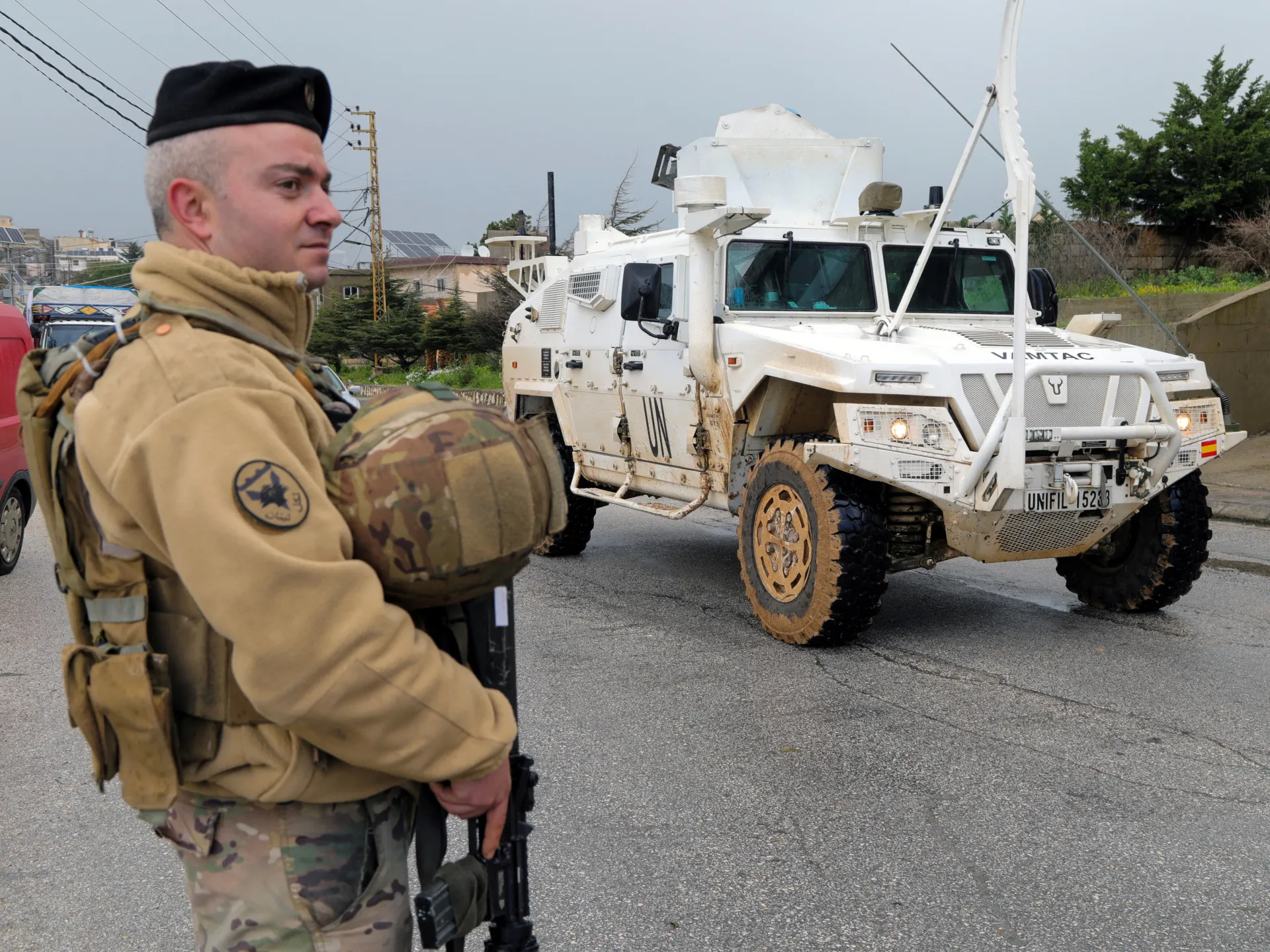
The Evolving Landscape of Peacekeeping in Southern Lebanon
As the mandate for the United Nations Interim Force in Lebanon (UNIFIL) approaches its conclusion at the end of the year, the future of peacekeeping operations in southern Lebanon remains uncertain. Despite widespread international and domestic support for maintaining a peacekeeping presence in the region, which has been significantly impacted by conflict since 2023, any successor mission is anticipated to be considerably smaller in scale. This shift could potentially create security voids, especially in the absence of comprehensive political resolutions.
Experts suggest that the effectiveness of any future international force hinges on several critical factors. According to Lebanese political scientist Imad Salamey, a sustainable peace requires the Lebanese state to assert its authority and monopolize arms, Israel to withdraw and respect Lebanese sovereignty, and Iran to refrain from interfering in Lebanese affairs. Salamey emphasizes that while international forces can monitor and support peace, they cannot substitute for fundamental domestic and regional agreements essential for upholding it.
UNIFIL's Historical Role and Limitations
Established in 1978 amidst the Lebanese civil war, UNIFIL's mandate has frequently been scrutinized by various factions for its perceived inability to fully implement UN Resolution 1701. Adopted two decades ago, Resolution 1701 calls for the withdrawal of Israeli troops behind the Blue Line – the de facto border between Israel, Lebanon, and the occupied Golan Heights – the deployment of the Lebanese Armed Forces (LAF) to southern Lebanon, and the disarmament of Hezbollah south of the Litani River. However, the enforcement of Resolution 1701 was never a core component of UNIFIL's original mission.
Salamey clarifies that UNIFIL was not granted the authority to forcibly impose Resolution 1701 on either side of the border. Its mandate primarily involved monitoring, reporting, coordination, and assisting the Lebanese Armed Forces. Therefore, expecting UNIFIL to forcibly disarm Hezbollah or compel Israel to cease violations extended beyond the enforcement powers it was actually given.
Sidelining UNIFIL in Recent Negotiations
Analysts point to a significant shift in dynamics, suggesting that the decision to not extend UNIFIL's mandate may stem from the United States adopting Israel's stance against the mission. This perspective reportedly aims to allow the Israeli military to operate in Lebanon without the presence of an international monitoring body. As negotiations between Israel and Lebanon progress, UNIFIL's role has increasingly been confined to merely observing violations.
A 'framework agreement' reached on June 26 between Israel and Lebanon proposes the establishment of 'pilot zones.' In these zones, Israel would withdraw its occupying forces, and the Lebanese Army would assume control, overseeing Hezbollah's disarmament. Notably, UNIFIL has no designated role in these pilot zones, a development that analysts attribute to pressure from Israeli and US interests to exclude the force.
David Wood, a senior Lebanon analyst for the International Crisis Group, observes that under the latest Lebanon ceasefire arrangement, both the US and Israel have clearly marginalized UNIFIL, along with other international community members. He notes that UNIFIL does not play a key role in implementing the 'pilot zones' scheme and no longer holds a seat on the ceasefire monitoring mechanism, unlike under previous truce agreements. Wood explains that this approach reflects a shared skepticism between the US and Israel regarding UNIFIL's mission to keep Hezbollah out of southern Lebanon.
Despite this, Wood cautions that excluding UNIFIL from the peace process carries inherent risks. He highlights UNIFIL's past effectiveness in de-escalating stand-offs between Lebanese and Israeli militaries, citing an instance during the implementation of the Zawtar al-Gharbiyeh pilot zone where gunfire erupted. Wood suggests that UNIFIL could resume its on-the-ground mediation and monitoring functions as short-term measures to prevent the situation in southern Lebanon from deteriorating further.
The Prospect of a New Peacekeeping Force
As UNIFIL's mandate draws to a close, several nations have expressed willingness to contribute peacekeepers to a potential successor force. European diplomats have indicated that their respective countries are discussing sending personnel to whichever mission replaces UNIFIL. One proposal suggests that the UN Truce Supervision Organization (UNTSO) could step in, though UNTSO would be a significantly smaller force compared to UNIFIL, which once boasted approximately 15,000 personnel and had around 7,000 in June 2026.
In June, UN Secretary-General Antonio Guterres presented the Security Council with three options for a future mission, with proposed troop numbers ranging from 900 to 3,000. The exact form of the next peacekeeping mission in southern Lebanon remains uncertain. Wood notes that it is difficult to ascertain how an international force could effectively promote stabilization in southern Lebanon until the broader security arrangements between Israel and Lebanon become clearer.
Concerns are mounting about the potential for a security vacuum if a new force is not established promptly after UNIFIL's mandate ends. Wood warns that if the Security Council permits such a gap to emerge, it could prove exceedingly challenging to fill it later. Political scientist Salamey reiterates that a peacekeeping force alone cannot resolve the complex issues of Hezbollah's armament and Israel's continued presence in southern Lebanon. He concludes that replacing UNIFIL with UNTSO, a multinational, or a European force will yield little difference without a comprehensive political settlement addressing these underlying challenges.