Ukrainian Counteroffensive Recovers Territory
Ukrainian authorities have announced the successful conclusion of an operation in the southern Dnipropetrovsk region, resulting in the reclamation of 745 square kilometers (287 square miles) of territory this year. President Volodymyr Zelenskyy confirmed on Wednesday that the campaign unfolded precisely as planned, noting that nearly 10,000 Russian soldiers were reportedly killed during the offensive. This counteroffensive has reportedly dislodged Russian forces from almost all the territory they had seized in Dnipropetrovsk since their entry into the region in June 2025, pushing them back towards the regional boundaries of Donetsk and Zaporizhia.
Zelenskyy specifically highlighted the liberation of 26 settlements as part of the Dnipropetrovsk operation. The Institute for the Study of War (ISW), a Washington-based think tank that evaluates territorial control through geolocated open-source intelligence, provided a more conservative estimate, suggesting Ukraine had regained at least 627 square kilometers (242 square miles) in the area. Oleksandr Syrskii, the former commander-in-chief who orchestrated the operation, stated, “This operation once again proved that the Ukrainian army is capable not only of steadfastly holding its defenses, but also of launching offensives, seizing the initiative, and liberating Ukrainian land.”
Across the entire front, the ISW estimates Russia has incurred a net loss of 233 square kilometers (90 square miles) this year. This is despite persistent Russian offensives in the eastern Donetsk region, an area Russian President Vladimir Putin has frequently emphasized as a priority. Russian assaults in June and July launched from Pokrovsk towards Dobropillia and from Chasiv Yar towards Kostiantynivka have allowed Russia to capture some territory and penetrate significant areas beyond, albeit at a substantial cost. Russia reportedly suffered 39,000 casualties in June and nearly 43,000 in July, marking its highest losses since January 2025.
Drone Warfare: A Key Factor in Battlefield Dynamics
A crucial element contributing to Ukraine's battlefield successes has been its increased production of short-range, first-person view (FPV) drones. Ukraine now deploys 16 FPV drones for every 10 Russian drones. These drones were responsible for over 70 percent of Russian casualties in June and July. Furthermore, Ukraine has shown growing proficiency in countering Russian FPV drones, reportedly downing more than 40,000 Russian drones in July, a significant increase compared to May.
Russia Intensifies Ballistic Missile Attacks
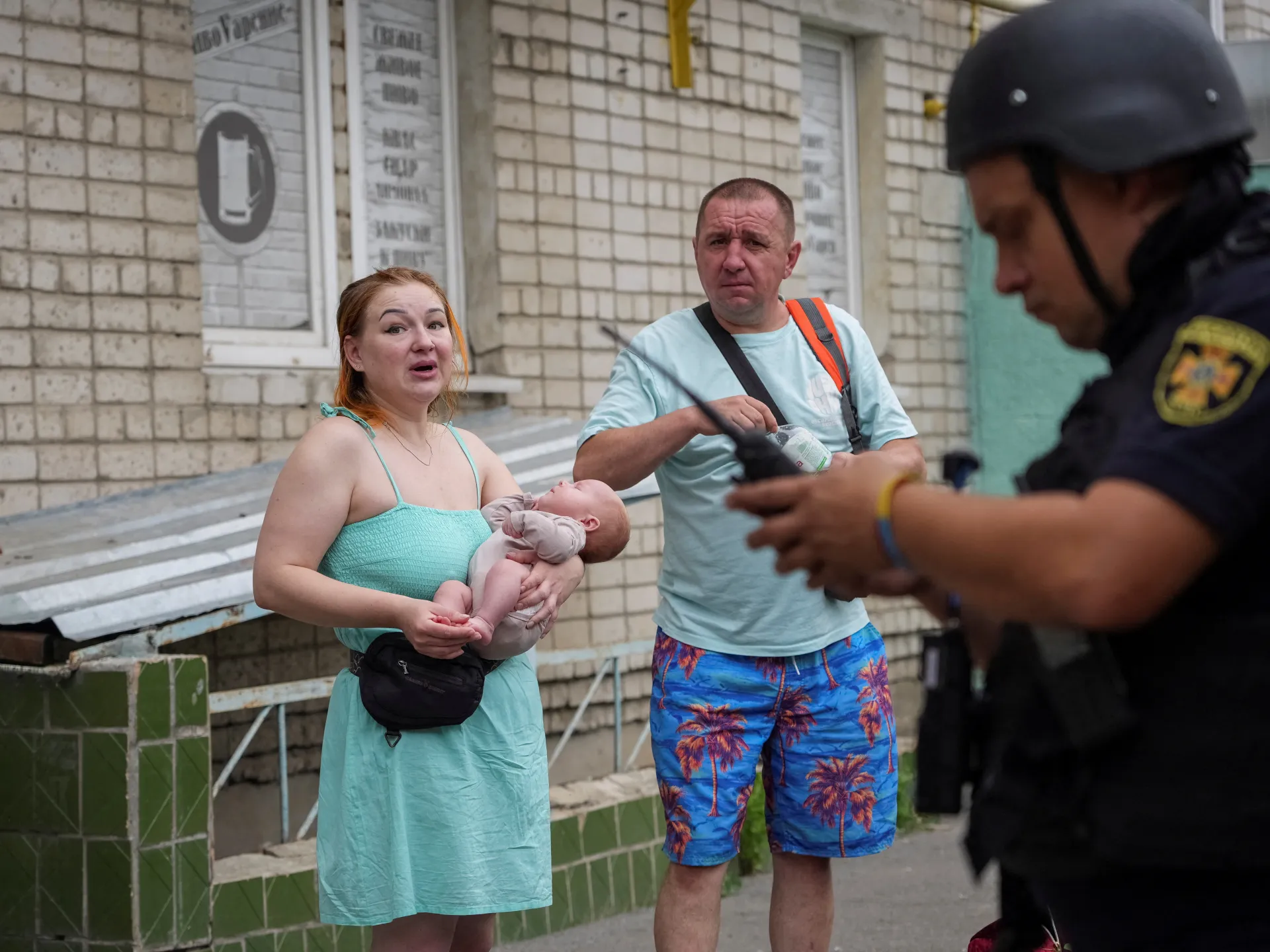
Despite Ukrainian territorial gains, Russia has intensified its ballistic missile strikes against Ukrainian cities. Vadym Skibitskyi, Ukraine's deputy military intelligence chief, informed RBC Ukraine that Russia is leveraging its aerial command by increasing its use of ballistic and hypersonic missiles. Ukraine's ability to intercept these advanced missiles has been primarily reliant on Patriot systems, but a shortage of interceptors has become a critical concern. Zelenskyy stated that Ukraine has received almost three times fewer interceptors from its allies this year compared to 2025.
Skibitskyi indicated that Russia has ceased production of missile types that Ukraine had become adept at shooting down, reallocating components to manufacture a greater number of Iskander-M ballistic missiles and S-400 hypersonic missiles. The S-400s, originally designed as surface-to-air missiles, have been reprogrammed for steep ballistic trajectories and have proven as effective as the Iskanders. This strategic reorientation is yielding results, with Russian industry reportedly exceeding production targets across most missile categories. Skibitskyi noted, “In April there were 61 ballistic missiles, in May – 107, in June – 134. If we talk about ballistic and hypersonic missiles … the enemy launched 198 of them in July. This is the highest figure this year.”
Russia is currently producing over 100 ballistic and hypersonic missiles monthly. While it may have drawn from existing stockpiles to launch 56 such missiles in the first week of August, plans are in motion to bolster these reserves for a large-scale winter campaign targeting Ukraine's energy infrastructure. Last winter, Russian attacks inflicted up to $70 billion in damage to Ukraine's energy grid, almost plunging Kyiv into prolonged darkness. Ukraine's Center for Strategic Communications also suggested Russia might be planning a significant strike on Kyiv before Ukraine’s Independence Day on August 24.
Reports from several Ukrainian sources suggest North Korea is deploying a contingent with up to 120 ballistic missiles to Russia’s western Voronezh region, adjacent to Ukraine, where barracks are reportedly being constructed. Mykhailo Fedorov, a former defense minister, proposed in an interview with Serhiy Sternenko that Ukraine's most effective response to Russian ballistic threats would be to expedite the production of its own successfully tested ballistic missile, engaging in “counter-ballistic warfare.” Fedorov emphasized, “The Russians must understand that a few minutes after the launch, the entire team that launches the missile must die from our ballistic missile.”
Skibitskyi also mentioned Russia's prioritization of jet-powered Geran 4 and Geran 5 drones, which are more challenging to intercept than their slower, piston-engine counterparts. Furthermore, Russia is reportedly launching its own satellite network, Rassvet, ahead of schedule, with 16 satellites currently operational and a projected increase to 292 by 2027. This development follows a setback in February when Starlink disabled terminals Russia was using for battlefield communication and counter-battery fire coordination.
Ukraine's Extended Reach
Ukraine's long-range drone capabilities have significantly impacted Russia's refining capacity, destroying almost a third of it this year. In the past week alone, Ukraine struck four refineries, including Gazprom’s Neftekhim Salavat refinery in the Republic of Bashkortostan, located 1,300 kilometers (810 miles) from Ukrainian territory. Ukraine has also conducted medium-range strikes on Russian military logistics and oil tankers, aiming to disrupt supplies to the front lines. Over the past week, Ukraine claimed to have sunk or disabled 218 ships and destroyed six air defense systems. A notable strike occurred on August 12 at Russia's main Black Sea port of Novorossiysk, targeting two frigates, a missile ship, a landing ship, and a patrol ship. The Sheshkharis oil offloading terminal was also hit as part of a strategy to diminish Russia's fossil fuel export revenues. Zelenskyy characterized this operation as “unique” due to the coordinated deployment of 14 different types of domestically produced aerial and surface drones simultaneously.