President Trump Opts for Economic Levers in Iran Strategy
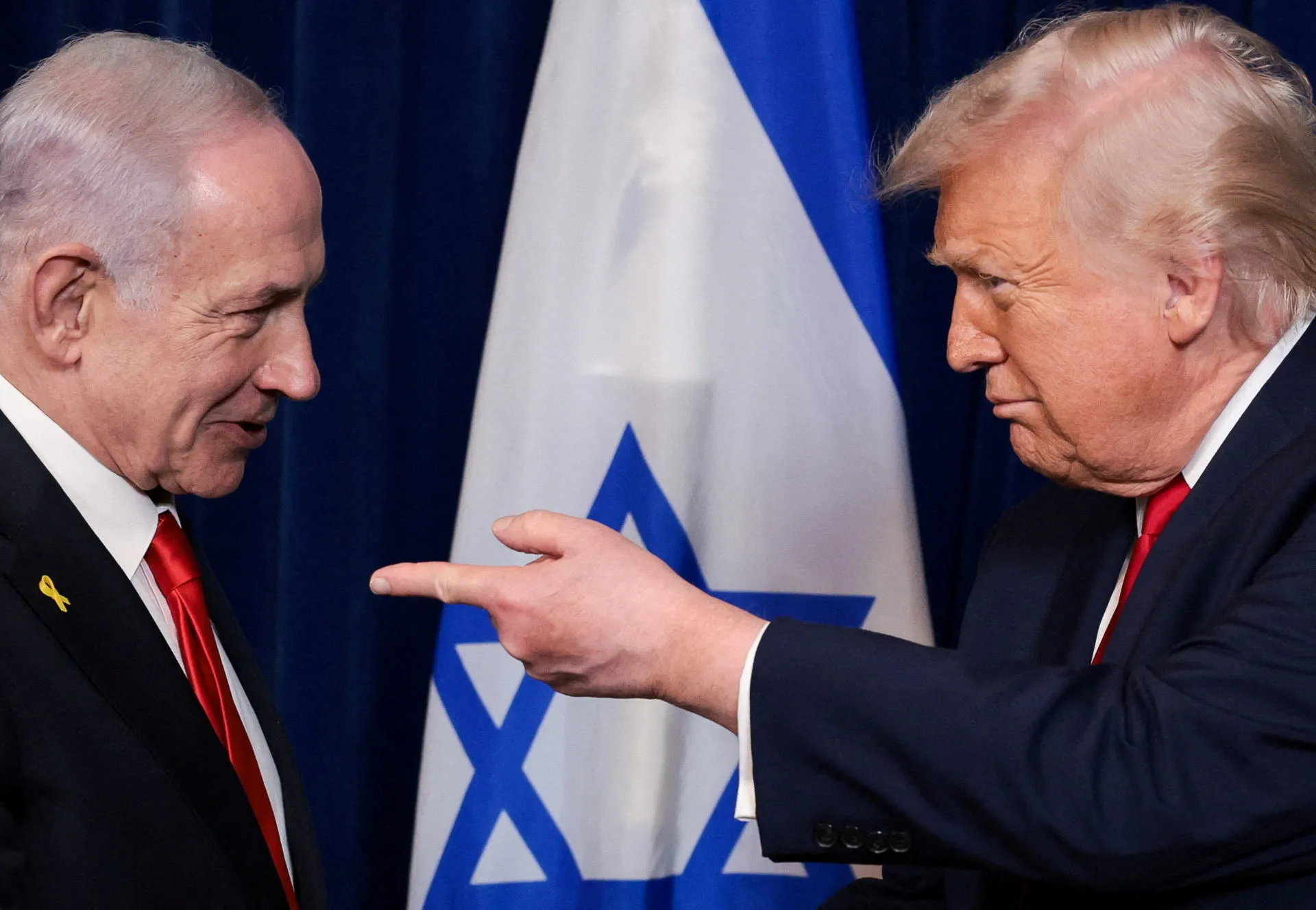
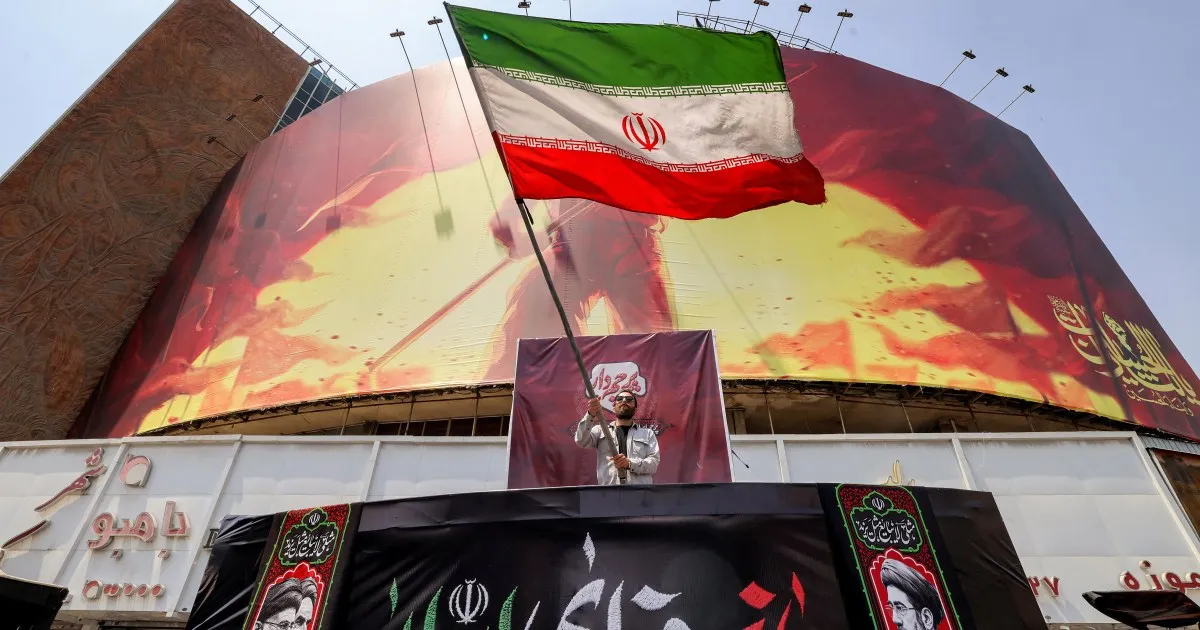
In the ongoing conflict with Iran, now in its 23rd week, United States President Donald Trump has signaled a strategic shift, favoring economic coercion over a renewed military offensive. This marks a departure from earlier threats of severe military action, with the administration now emphasizing financial pressure to achieve its objectives. The critical Strait of Hormuz remains disrupted by Iranian forces, even as a US naval blockade tightens around Iranian ports. While Iran and Oman have reported nearing an agreement on the strait's management, Trump stated that the US is only 'semi-negotiating' with Tehran, a claim Iran has refuted, denying any direct talks with Washington.
The Rationale Behind the Strategic Pivot
Earlier in the month, President Trump had issued stark warnings, threatening attacks on Iran at levels 'not seen since World War II.' However, these threats have since been rescinded, with the administration now focusing on economic tactics. In a recent interview, Trump indicated a 'low-keying' of the US approach, stating a preference to 'hit Iran economically instead.' He highlighted Iran's precarious financial situation, citing high inflation and difficulties in compensating its military personnel, attributing increased pressure to a US naval blockade initiated in April.
Trump further claimed that declining oil prices, currently around $78 a barrel, have mitigated the economic impact on US consumers, despite the war and the closure of the Strait of Hormuz having previously driven prices above $100. He expressed confidence in the strategy, likening it to a 'chess game' that would ultimately yield positive results. Vice President JD Vance echoed this sentiment, stating that the US is employing a comprehensive array of 'diplomatic, economic, military tools' to secure the best outcome for the American populace.
Impact of the Naval Blockade on Iran
Since mid-April, the US has maintained a naval blockade targeting Iranian ports, primarily aimed at curtailing Iran’s oil exports, estimated at 1.5 million barrels per day, and subsequently reducing its oil revenues. The US military's Central Command (CENTCOM) recently reported redirecting 53 commercial vessels, boarding two, and disabling two others, a measure Trump described as an unyielding 'wall of steel.' Iranian authorities have confirmed a near-zero crude export rate due to the blockade, exacerbating Iran's existing economic challenges, which stem from domestic structural issues, mismanagement, and years of stringent sanctions. Additionally, Iran's infrastructure has sustained significant damage during the conflict launched by the US and Israel in late February. Tehran has made compensation for these losses a condition for reopening the Strait of Hormuz.
US Munitions Stockpiles: A Point of Contention
Reports from several US media outlets have suggested a depletion of Washington's munitions stockpiles due to ongoing conflicts in the Middle East and Ukraine. Axios reported that General Dan Caine, Chairman of the US Joint Chiefs of Staff, had cautioned Defense Secretary Pete Hegseth and President Trump about a potential shortage of air defense interceptors, which could compromise the US's ability to protect its forces and allies in the region. The Washington Post, citing a Department of Defense memo, indicated that the Pentagon has urged the US defense industry to accelerate the production and delivery of critical munitions. However, a Pentagon official, Jarred Conley, principal deputy director at the Defense Department’s Defense Innovation Unit, asserted that the US possesses 'sufficient munitions for the task at hand' and 'everything it needs today to execute a war.'
Domestic Pressure on the Trump Administration
President Trump commenced his second term with a pledge to avoid 'stupid wars.' However, the current conflict with Iran faces considerable unpopularity domestically, particularly as the president and congressional Republicans prepare to defend their narrow majorities in the upcoming November midterm elections. A recent Reuters/Ipsos poll indicated that only approximately 35 percent of Americans approve of the war. Furthermore, for the first time since December 2024, when Reuters/Ipsos began polling on the issue, registered voters now favor Democrats over Republicans (37 percent to 36 percent) in handling war and 'terrorism,' signaling growing public discontent.
Efficacy of Economic Pressure on Iran
Mehran Kamrava, a professor at Georgetown University in Qatar, expressed skepticism regarding the effectiveness of Washington's economic pressure campaign against Iran, noting the slow pace of negotiations. He highlighted Iran's strategy of exerting economic pressure on Gulf countries, including Qatar, UAE, Saudi Arabia, and Kuwait, to encourage them to influence the US towards negotiations. Kamrava observed a stalemate where 'neither side is willing to take that first step and extend an arm and say, ‘Let’s sit down and negotiate.’' He further questioned the efficacy of economic pressure, particularly given that Iran's leadership, operating within a repressive political system, is not subject to the same internal political pressures as the Trump administration. 'They want to stay in power,' he stated, suggesting that the plight of the middle classes may not be a primary concern for decision-makers in Tehran, thus casting doubt on the tactic's success.
Unfulfilled War Objectives
The US and Israel have frequently revised their stated objectives since initiating the conflict on February 28, the day of Iranian Supreme Leader Ali Khamenei's death. Initially, the war's stated purpose was to prevent Iran from developing nuclear weapons, a claim Tehran has consistently denied, and to force a change in Iran's government, an objective Trump has since quietly abandoned. Other demands included restricting Iran's ballistic missile program and ending its support for regional armed groups such as Hezbollah, the Houthis, and various factions in Iraq and Syria. The escalating costs to Gulf countries and the global energy crisis resulting from the Strait of Hormuz closure have intensified pressure on Washington to reach a peace agreement. Iran has put forth its own conditions for ending the conflict, including the lifting of US sanctions and the naval blockade, as well as the unfreezing of Iranian assets.
A memorandum of understanding (MoU) signed by Iran and the US on June 17, aimed at reopening the Strait of Hormuz and initiating a 60-day negotiation period, quickly unraveled due to disagreements over the strait's management. While the MoU mentioned the eventual lifting of US sanctions and a reconstruction fund for Iran, it notably omitted specific US demands concerning Iran's ballistic missile program or its regional proxy groups. The agreement also implied that the US had abandoned its aim of regime change in Iran.