
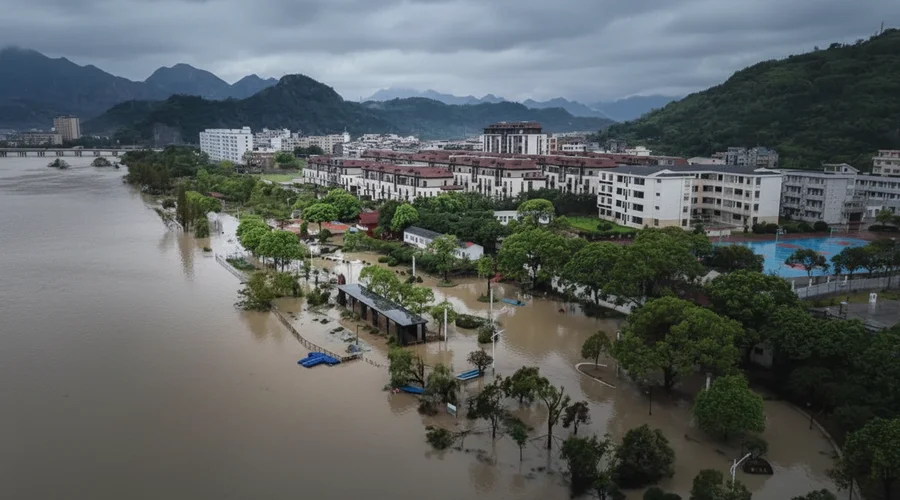
Powerful Storm Batters Coastal Regions
Eastern China has been significantly impacted by Tropical Storm Dolphin, which made landfall as a typhoon late Sunday. The storm brought with it intense rainfall and powerful winds, prompting authorities to issue severe warnings for potential flooding and landslides across the affected areas. Maximum sustained winds reached 151 kilometers per hour (94 mph) as Dolphin initially struck Yuhuan, located in Zhejiang province, leading to the activation of China's most stringent weather alert.
Extensive Evacuation Efforts Underway
In anticipation of the storm's arrival and its projected severity, the National Meteorological Center (NMC) elevated its warning status to a 'red alert,' signifying the highest level within the country's typhoon warning system. This critical measure facilitated the evacuation of more than a million residents from their homes in vulnerable regions. As the storm progressed inland, it gradually diminished in strength, transforming into a tropical storm. Despite this weakening, Dolphin continued to drench eastern provinces, including Anhui, Jiangsu, and Shandong, throughout Monday.
Rainfall Projections and Regional Impact
Forecasters predicted a substantial amount of rainfall across a broad swathe of eastern China through August 10. Regions such as Zhejiang, Shanghai, northern Fujian, northeastern Jiangxi, central and southern Anhui, and much of Jiangsu were expected to experience torrential downpours. Specifically, parts of central and eastern Zhejiang were projected to receive between 250 to 500 millimeters (approximately 9.8 to 19.7 inches) of rain, highlighting the potential for severe hydrological impacts.
Disruptions to Travel and Daily Life
The storm's passage led to significant disruptions, particularly in the aviation sector. Shanghai's two major airports were compelled to cancel a total of 943 flights, resulting in a nearly 40 percent reduction in air travel capacity, as reported by state broadcaster CCTV. In response to the hazardous conditions, authorities advised residents to work remotely and to minimize outdoor activities for their safety. Search and rescue operations were initiated in Wenling, a city within Zhejiang province, after local media reported that a nine-year-old boy was swept into the sea during the storm.
More than 900,000 residents were relocated in the city of Wenzhou alone, with nearly 100,000 evacuated in Shanghai and another 99,000 in neighboring Fujian province, state media reported.
Storm's Inland Trajectory and Future Concerns
Dolphin, recognized as the most potent typhoon to affect China this year, is forecasted to continue its trajectory deeper inland. The storm is expected to reach the central provinces of Hubei and Henan in the coming days, simultaneously pushing moisture northward. This inland movement has prompted further preparations in the capital, Beijing, where authorities have raised warnings for impending torrential rain. The city is set to activate its flood control response early Tuesday morning, anticipating 'significant rainfall' from Tuesday through Thursday. Concerns have also been voiced regarding the heightened risk of flash floods within the city proper and potential landslides in the surrounding mountainous areas, underscoring the widespread and prolonged impact of Tropical Storm Dolphin across China.