Taiwan's Annual Military Readiness Drills Underway
Taiwan is currently undertaking its most extensive annual military exercises, designed to bolster its defensive capabilities against a potential invasion. These drills, spanning a ten-day period, are a critical component of the island nation's strategy to maintain a robust and prepared military force. The exercises are meticulously planned to simulate various aspects of a large-scale conflict, ensuring that Taiwan's armed forces can effectively respond to a range of threats.
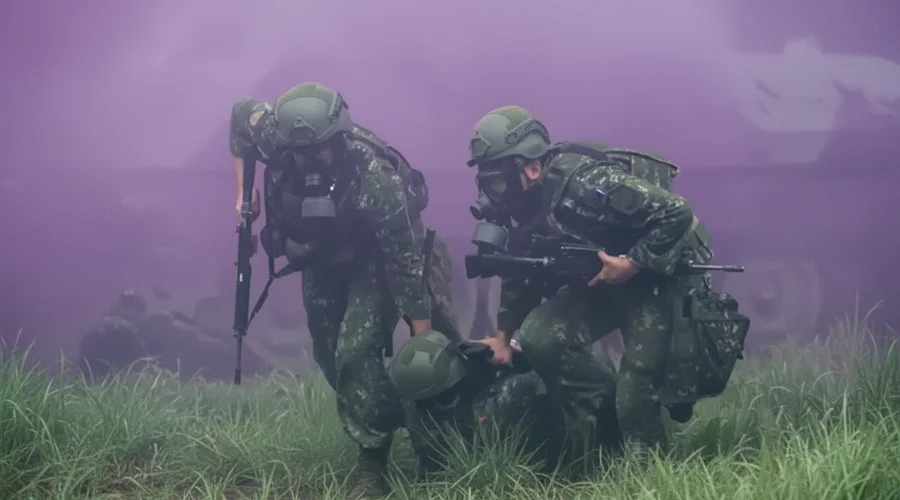
The scope of this year's drills is particularly noteworthy, incorporating a diverse array of scenarios intended to challenge and refine military responses. Among the key components are simulations of chemical warfare attacks, which require specialized training and equipment to manage. These scenarios are crucial for preparing personnel to operate in hazardous environments and to mitigate the impact of such attacks on both military and civilian populations. The inclusion of chemical attack simulations underscores the comprehensive nature of Taiwan's defense planning, addressing a wide spectrum of potential threats.
Live-Fire Training and Evolving Tactics
A significant portion of the exercises involves live-fire training, an essential element for ensuring the proficiency of military personnel in combat situations. Live-fire drills allow soldiers to practice with actual ammunition and weaponry in a controlled environment, enhancing their accuracy, tactical decision-making, and coordination. This type of training is indispensable for maintaining combat readiness and for evaluating the effectiveness of various military units under realistic conditions.
Furthermore, this year's military drills feature the integration of new practices and tactical approaches, many of which are modeled on those employed by the United States military. This adoption of US military methodologies suggests an ongoing effort by Taiwan to modernize its armed forces and to align its operational strategies with those of key international partners. Such integration can facilitate interoperability and enhance the overall effectiveness of Taiwan's defense posture, particularly in the context of potential joint operations or international support.
Strategic Importance of the Drills
The annual military exercises serve multiple strategic purposes for Taiwan. Firstly, they provide an opportunity to assess and improve the readiness of its armed forces, identifying areas for further training and development. This continuous evaluation process is vital for any military seeking to maintain a high level of preparedness.
Secondly, the drills act as a deterrent, signaling to potential adversaries Taiwan's resolve and capability to defend itself. By publicly conducting large-scale and sophisticated exercises, Taiwan aims to demonstrate its commitment to national security and its capacity to impose significant costs on any aggressor. This show of force is intended to discourage hostile actions and to maintain regional stability.
Thirdly, these exercises are instrumental in fostering public confidence in the military's ability to protect the nation. By showcasing the professionalism and preparedness of its armed forces, Taiwan seeks to reassure its citizens and to reinforce national unity in the face of external pressures. Public support and morale are critical components of a robust national defense.
Regional Context and Geopolitical Implications
The staging of these extensive drills occurs within a complex geopolitical landscape, characterized by heightened tensions in the Indo-Pacific region. The exercises are viewed by many as a direct response to the ongoing military assertiveness from mainland China, which regards Taiwan as a breakaway province that must eventually be reunified, by force if necessary. Taiwan, however, views itself as a sovereign entity with its own democratically elected government.
The scale and nature of these drills, particularly the inclusion of advanced scenarios and the adoption of US-inspired tactics, reflect Taiwan's strategic efforts to enhance its asymmetric warfare capabilities. Asymmetric warfare focuses on leveraging unique strengths and innovative tactics to counter a numerically superior force, aiming to inflict disproportionate costs on an attacker. This approach is central to Taiwan's defense doctrine, which emphasizes making any potential invasion prohibitively costly and difficult.
In conclusion, Taiwan's largest annual military exercises represent a significant undertaking aimed at strengthening its defense capabilities, deterring aggression, and reassuring its populace. The comprehensive nature of the drills, encompassing chemical attack simulations, live-fire training, and the adoption of modern military practices, underscores Taiwan's proactive approach to national security in an increasingly volatile region. These efforts are a clear demonstration of Taiwan's commitment to self-defense and its determination to maintain peace and stability across the Taiwan Strait.