Former Regime Figure Receives Capital Punishment
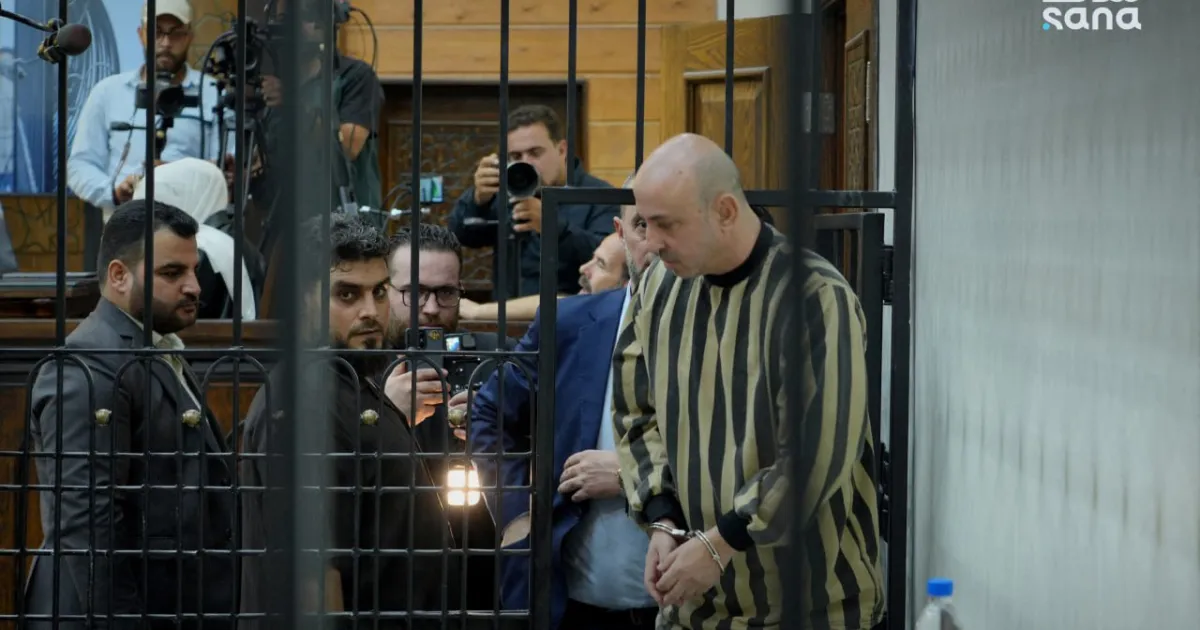
A Syrian court has handed down a death sentence to Wassim al-Assad, a prominent figure from the previous al-Assad regime, for his involvement in crimes including premeditated murder and torture during the protracted 14-year conflict. The verdict, delivered on a Tuesday, comes merely a week after former President Bashar al-Assad, his brother Maher al-Assad, and cousin Atef Najib also received death sentences. These judicial actions are part of ongoing transitional justice efforts within Syria.
Understanding Wassim al-Assad's Background and Charges
Wassim al-Assad, aged 46, was born in Latakia, situated on Syria's Mediterranean coast. He is a cousin to Bashar al-Assad, who was deposed in December 2024 following a rapid rebel advance on Damascus. Bashar and Maher al-Assad, along with other family members, subsequently sought refuge in Moscow, where they have resided under Russian oversight. Bashar al-Assad, a member of the Alawite minority, had governed Syria since 2000, succeeding his father Hafez, who had ruled since 1970.
Following the collapse of the al-Assad regime, a transitional government assumed power, led by President Ahmed al-Sharaa, a former leader of the armed opposition. This new administration has initiated a judicial process to hold accountable those responsible for crimes against humanity committed during the previous regime. Wassim al-Assad faced numerous charges, including establishing and commanding pro-regime paramilitary organizations from early 2011, coinciding with the outbreak of Syria's civil war stemming from Arab Spring protests, which were violently suppressed by al-Assad forces.
The conflict resulted in an estimated half-million fatalities and displaced between 13 and 14 million of Syria's pre-war population of 22 million, with approximately half becoming refugees abroad. Wassim al-Assad was specifically implicated in military operations targeting civilian areas in Eastern Ghouta, particularly the town of al-Mleiha, where numerous civilians lost their lives. Eastern Ghouta, an agricultural region east of Damascus, became a significant rebel stronghold during the war, enduring a military siege by the al-Assad government and a subsequent humanitarian crisis.
Court Proceedings and Verdict Details
On Tuesday, the Fourth Criminal Court in Damascus pronounced the death sentence after finding Wassim al-Assad guilty. Judge Fakhr al-Din al-Aryan stated that Wassim al-Assad had committed multiple murders and “murder accompanied by torture and brutality… classified as crimes against humanity and war crimes.” The judge further confirmed that the court had definitively established the involvement of an armed group associated with Wassim al-Assad in the abduction and killing of Syrian citizens.
Wassim al-Assad was apprehended in June 2025 upon his return from Lebanon. He had long been accused of overseeing the production and illicit trade of Captagon, an amphetamine-like drug, to neighboring countries during the former regime's tenure. He is also subject to sanctions imposed by the United States and European entities. Despite these accusations, the court acquitted him of drug-trafficking charges, citing insufficient evidence of his direct involvement, as reported by Obaida Hitto from outside the court. In addition to the death sentence, the court ordered the confiscation of Wassim al-Assad’s assets.
Other Convictions Among Former Syrian Leaders
On August 11, the Fourth Criminal Court also sentenced Bashar and Maher al-Assad, along with Najib, to death. These sentences were met with public celebration in the streets outside the Damascus courthouse. While the al-Assad brothers were sentenced in absentia, former security official Najib, widely regarded as the instigator of the civil war due to his harsh suppression of protesters in Deraa in southern Syria in 2011, received his sentence in person. Najib had been in detention since January 2025.
Najib faced at least 10 charges, including murder, torture, overseeing massacres, and crimes against humanity linked to the Deraa massacre. The trial, which commenced in April, has been viewed as a critical test for Syria's transitional justice system and the new authorities' commitment to prosecuting officials from the al-Assad era for abuses committed under his rule.
The government led by al-Sharaa had previously faced criticism for delays in implementing the promised transitional justice process after the war. Hitto reported last week that “The country has been trying to reconcile more than five decades of dictatorship led by the al-Assad family over the last 18 months or so,” underscoring the ongoing challenges in addressing the legacy of the former regime.