Trump's Bold Declaration Regarding the Strait of Hormuz
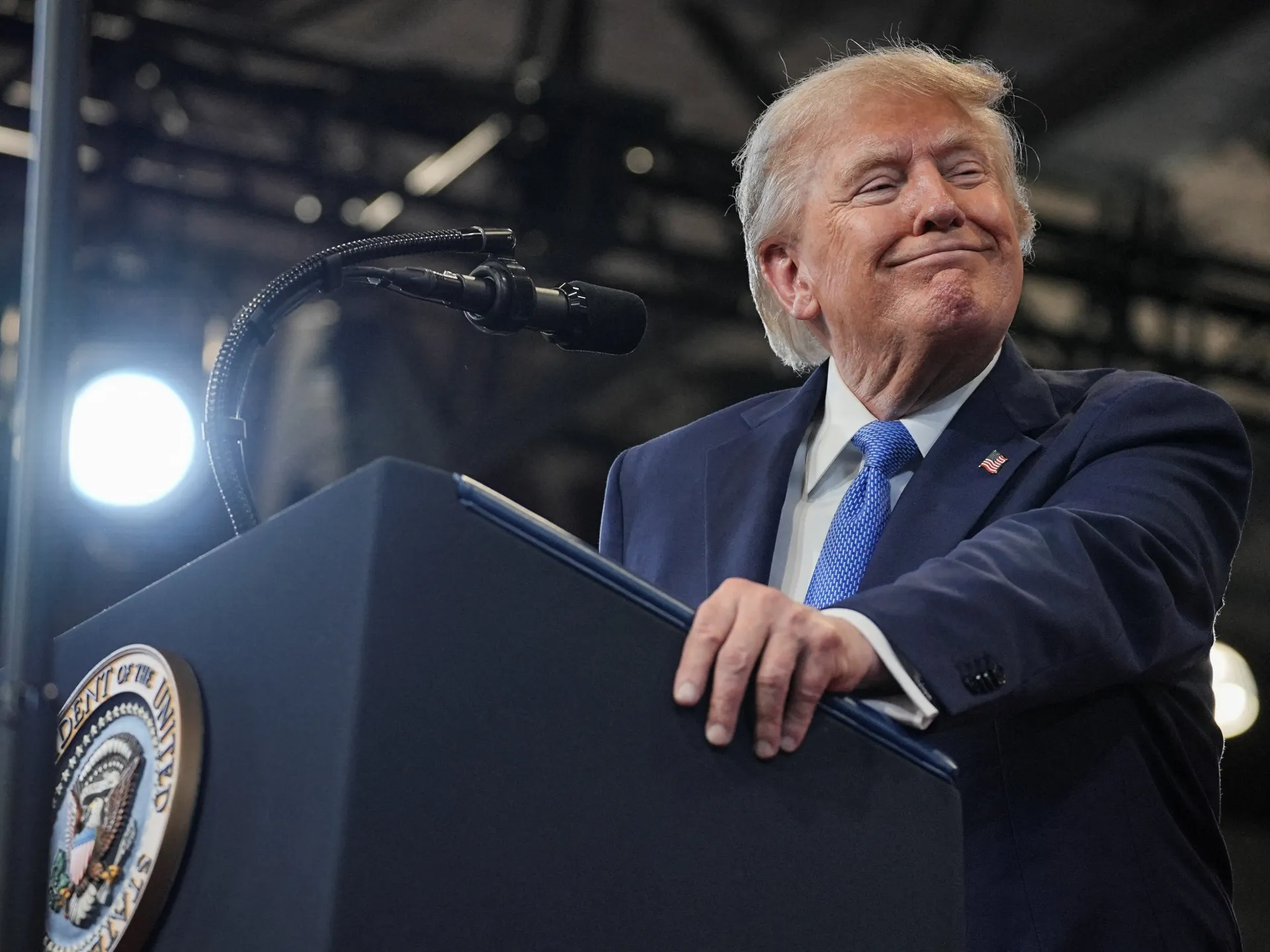
Former President Donald Trump recently articulated his intention to designate the Strait of Hormuz as a territory of the United States. This assertion was made during a speech in New York, where Trump indicated that such a declaration would occur “pretty soon” following the perceived defeat of Iran. The Strait of Hormuz, a vital maritime passage, is recognized globally as a critical chokepoint through which approximately one-fifth of the world's oil and gas transits. Trump further elaborated on his stance, suggesting that the strait is already, in essence, US territory due to an existing naval blockade. “We have the blockade. No ships get through unless we want them to,” he stated, implying significant US control over the waterway.
This declaration is not an isolated incident but rather aligns with a pattern of assertive rhetoric employed by Trump throughout the ongoing conflict, which commenced in February. Observers have noted that while Trump frequently issues strong threats, he has, on several occasions, opted to de-escalate at the last moment. Al Jazeera's Kimberly Halkett, reporting from Washington, DC, commented on the perceived unseriousness of Trump's remarks, noting that even the former president seemed to deliver them with a chuckle. Halkett highlighted that the territorial waters of the Strait of Hormuz legally belong to Iran and Oman, suggesting Trump's comments were primarily aimed at provoking adversaries, particularly Iran, while underscoring the reality of the ongoing US naval blockade.
International Law and the Feasibility of Annexation
The notion of unilaterally annexing the Strait of Hormuz raises significant questions regarding international law and practical feasibility. Legal experts emphasize that sovereignty over territory cannot be transferred through a mere presidential proclamation. Bruce Fein, who served as an associate deputy attorney general under President Ronald Reagan, explained that constitutional requirements for territorial annexation necessitate either a treaty ratified by the Senate or specific legislation. Historical examples, such as the Louisiana Purchase, the annexation of Hawaii, or the acquisition of the Panama Canal, Puerto Rico, and the Philippines, all involved formal legal processes. Fein warned that any unilateral annexation attempt by a US president would constitute a “crime of aggressive war under international law,” violating principles enshrined in the UN Charter.
Natalie Klein, an international law specialist and associate dean at the University of New South Wales, Sydney, further elaborated on the legal complexities. She suggested that for Trump's claim to possess any international legal plausibility, the US would need to assert control over the Strait as an occupying power, similar to the authority the US exercised over Japan post-World War II. Such a scenario, however, would require the US to maintain military control over Iran or at least its coastal regions, a situation that currently does not exist. The Strait of Hormuz, at its narrowest, is approximately 21 nautical miles (39 kilometers) wide, with the territorial seas of Iran and Oman, each extending 12 nautical miles (22 kilometers), overlapping across it. While neither the US nor Iran has ratified the UN Convention on the Law of the Sea (UNCLOS), the convention's provisions regarding international straits are widely accepted as customary international law, which grants ships a right of passage that “shall not be impeded.”
Iran's Response and Diplomatic Maneuvers
Iranian officials have vociferously rejected Trump's statements. The head of Iran's judiciary labeled the former US president's remarks as “nonsense,” asserting that the Strait of Hormuz is unequivocally Iranian territory. Kazem Gharibabadi, Iran's deputy foreign minister, underscored this sentiment, stating, “The Strait of Hormuz cannot be seized by tweet, nor by aircraft carrier, nor by issuing an order, nor by an election speech.” He affirmed that the Strait has always been and will remain Iranian, and its closure or opening will be solely at Iran's command.
Amidst this diplomatic friction, Iran has engaged in discussions with Oman, the only other coastal nation bordering the strait, to address the management of maritime traffic. Iranian Foreign Minister Abbas Araghchi indicated that negotiations between Tehran and Muscat could soon reach a conclusion. However, Araghchi clarified that the reopening of the waterway is contingent upon the US adhering to commitments made in a June memorandum of understanding, specifically the removal of the naval blockade and sanctions against Iran. This represents a shift in Iran's negotiating position, where the reopening of the strait, originally a condition for ending the broader conflict, is now presented as a condition for US concessions.
Domestic and Geopolitical Context
The former president's pronouncements also resonate within a broader domestic and geopolitical context. The conflict with Iran has faced declining public approval in the US, with a Reuters/Ipsos poll indicating that only about 35 percent of Americans approve of the war. Reports from various US media outlets suggest a depletion of munitions, including critical Patriot anti-missile interceptors. Furthermore, rising petrol prices, exceeding $4 a gallon, have become a significant concern for American consumers. Former US Vice President JD Vance reportedly stated that the Trump administration's primary objective in the conflict had shifted to controlling petrol prices, with the prevention of Iran's nuclear weapon development becoming a secondary priority. Analysts suggest that Iran's attacks on its Gulf neighbors are strategic attempts to compel regional countries to pressure Washington into a more favorable negotiating position.
Paul Musgrave, an associate professor of government at Georgetown University in Qatar, contextualized Trump's statements by noting that they are often directed at a domestic US audience, particularly his support base. Musgrave characterized Trump as a “showman” and a product of US reality television, suggesting that while his statements should be taken seriously in some respects, they should not always be interpreted literally. He concluded that, in this specific instance, Trump's claims regarding the Strait of Hormuz are both physically and legally impossible to realize, yet they underscore his unwavering stance against Iran and his determination not to concede defeat in the protracted conflict.