Call for Peace and Denuclearization
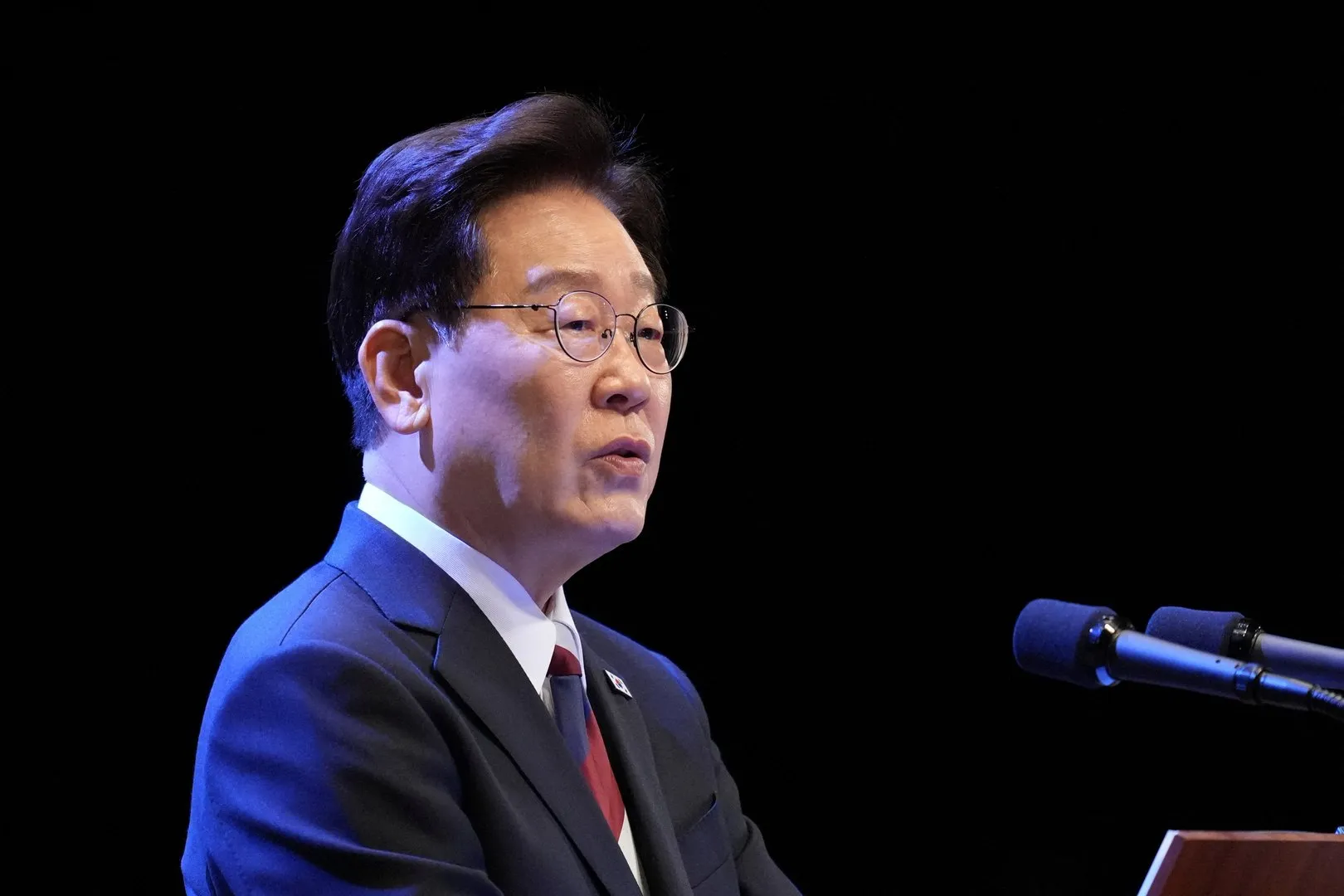
South Korean President Lee Jae-myung has put forward a significant proposal for talks with North Korea, centered on the formal conclusion of the Korean War. His initiative seeks to transition from the current armistice agreement to a more permanent peace regime on the Korean Peninsula. This overture comes with the additional goal of addressing and potentially curtailing Pyongyang's ongoing development of its nuclear program through diplomatic engagement.
The Korean War, which spanned from 1950 to 1953, concluded not with a peace treaty but with an armistice agreement. This means that, technically, the two Koreas remain in a state of war, a situation that has contributed to decades of high tension and sporadic confrontations. President Lee's call for a formal end to the conflict underscores a long-held aspiration within South Korea for a stable and peaceful coexistence with its northern neighbor.
Historical Context of the Armistice
The armistice agreement, signed on July 27, 1953, by the United States (representing the United Nations Command), North Korea, and China, established a ceasefire and created the Demilitarized Zone (DMZ). However, South Korea was not a signatory to this agreement, which has often been a point of contention and a symbolic representation of the unfinished nature of the conflict. The absence of a formal peace treaty has perpetuated a state of military readiness and mutual distrust, heavily influencing the geopolitical landscape of Northeast Asia.
Over the years, various attempts have been made to replace the armistice with a peace treaty, but these efforts have consistently faltered due to a complex array of political, security, and ideological differences. Key obstacles have included disagreements over denuclearization steps, the presence of U.S. troops in South Korea, and fundamental differences in governance and international relations between the two Koreas.
Addressing North Korea's Nuclear Program
A crucial component of President Lee's proposal is the intention to use dialogue as a means to address North Korea's advancing nuclear capabilities. Pyongyang's nuclear program has been a persistent source of international concern and a major destabilizing factor in the region. Despite numerous international sanctions and diplomatic pressures, North Korea has continued to develop and test nuclear weapons and ballistic missiles, asserting these as essential for its national security.
President Lee's approach suggests that a comprehensive peace framework, which includes formally ending the war, could create an environment conducive to discussions about denuclearization. The premise is that if North Korea feels more secure and recognized within a peaceful framework, it might be more willing to negotiate limits or reductions to its nuclear arsenal. This perspective contrasts with approaches that prioritize denuclearization as a precondition for broader peace talks.
Previous Diplomatic Efforts and Challenges
The history of inter-Korean relations is replete with cycles of tension and détente. Past South Korean administrations have also pursued engagement strategies, sometimes with notable breakthroughs, such as the inter-Korean summits in 2000 and 2007, and more recently in 2018. These summits led to various agreements on economic cooperation, family reunions, and military de-escalation measures, though many of these initiatives ultimately stalled due to political shifts and renewed tensions.
One of the primary challenges in engaging North Korea is its often unpredictable behavior and its tendency to use military provocations as leverage in negotiations. Furthermore, the involvement of other regional powers, particularly the United States and China, adds layers of complexity to any peace process. Any durable solution would likely require multilateral agreement and sustained commitment from all parties involved.
Prospects for Future Dialogue
President Lee's proposal signals a renewed commitment from South Korea to seek a diplomatic resolution to the longstanding conflict. The success of such an initiative would depend heavily on North Korea's willingness to engage in good faith and on the ability of both sides to bridge significant gaps in their respective positions. International support, particularly from major global powers, would also be critical in facilitating and sustaining any peace process.
The formal end of the Korean War and the establishment of a peace regime would represent a monumental shift in regional dynamics, potentially unlocking new opportunities for cooperation, economic development, and reduced military expenditure. However, the path to such a resolution is fraught with historical grievances, deep-seated mistrust, and complex security concerns that will require patient and persistent diplomatic efforts to overcome.