Historical Context of the Kuril Islands Dispute
The Kuril Islands, a volcanic archipelago stretching from Russia's Kamchatka Peninsula to Japan's northern island of Hokkaido, have been a persistent point of contention between Moscow and Tokyo for decades. At the heart of this dispute are the four southernmost islands, which Russia refers to as Kunashir, Habomai, Shikotan, and Iturup, and Japan calls Kunashiri, Habomai, Shikotan, and Etorofu, collectively known as the Northern Territories. These islands were seized by the Soviet Union in 1945 during the final stages of World War II, leading to the deportation of approximately 17,000 Japanese residents. Since then, their sovereignty has remained a significant barrier to the formalization of a post-war peace treaty between Russia and Japan.
Geopolitically, the islands hold considerable strategic importance. During the Cold War, they served as critical air and sea bases for the Soviet Union, allowing it to project power in the Pacific region and counter the influence of the United States and its allies, including Japan. The islands are also rich in natural resources, boasting valuable mineral deposits such as gold and silver, and offering abundant fishing grounds. This combination of strategic location and economic potential further complicates any resolution to the territorial dispute.
President Putin's Inaugural Visit and Japan's Response
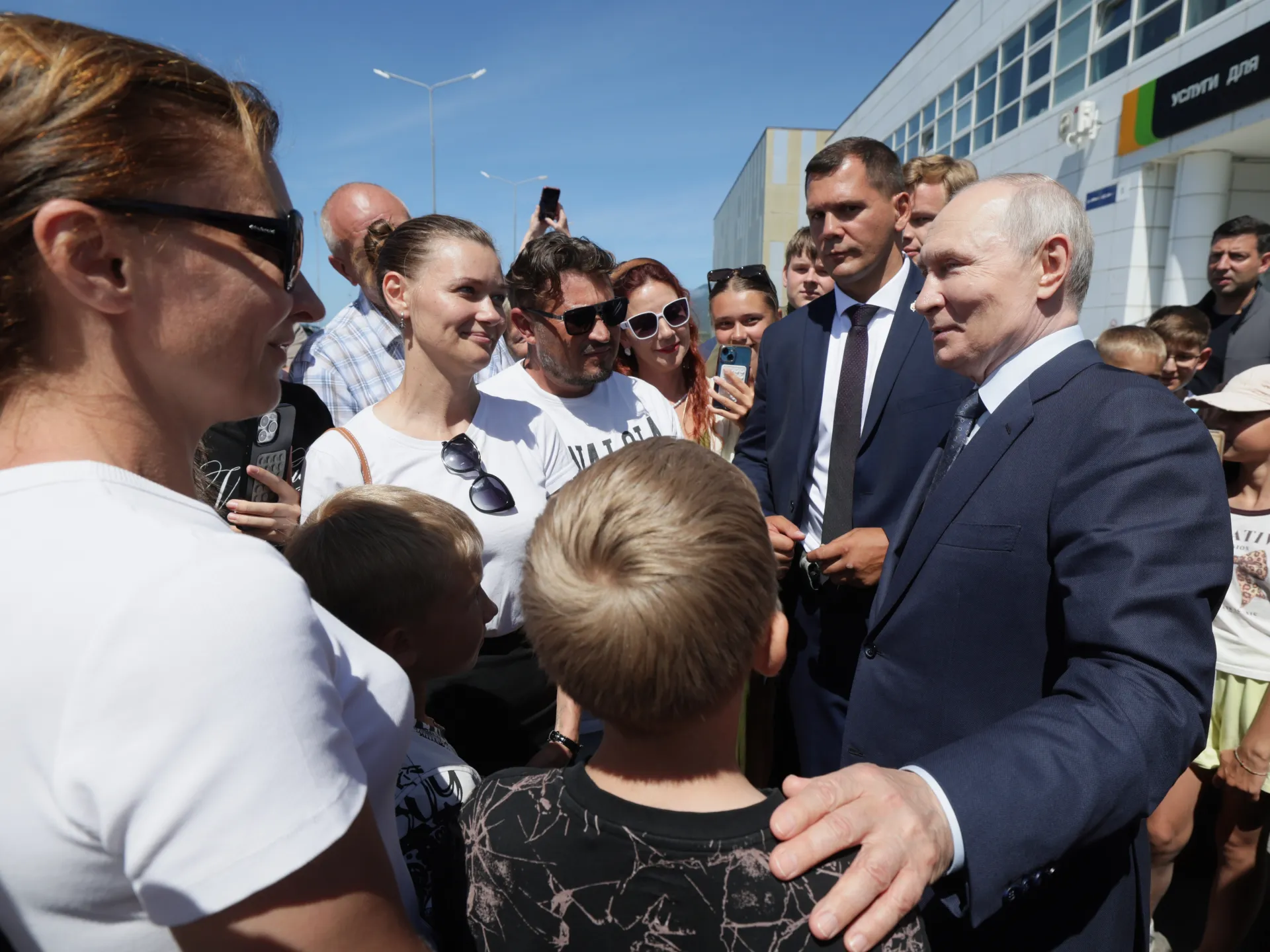
Russian President Vladimir Putin recently undertook his first-ever visit to the Russian-administered Kuril Islands. During his visit, he engaged with local officials, inspected a fish-processing plant, and toured a hospital and a school on Iturup, the largest of the disputed islands. This high-profile visit by the sitting Russian president was met with immediate and forceful condemnation from Japan.
"This visit ... by the sitting Russian president goes against Japan’s consistent position on the Northern Territories," stated Japanese Prime Minister Sanae Takaichi. She further described the visit as "absolutely unacceptable," asserting that it "offends the sentiments of the Japanese people."
Echoing these sentiments, Japan's Foreign Minister Toshimitsu Motegi emphasized that the disputed islands are an "inherent part of Japan’s territory both historically and under international law." Motegi subsequently summoned the Russian ambassador to Japan to lodge a formal and strong protest against President Putin's actions.
Deteriorating Bilateral Relations
The visit comes amidst a period of heightened tension between Tokyo and Moscow, largely fueled by the ongoing conflict in Ukraine. Japan has aligned itself with other G7 nations in imposing sanctions on Russia and has provided financial and non-lethal defense assistance to Kyiv. This stance has significantly strained diplomatic relations.
President Putin, commenting on Japan's actions, described the sanctions as "unprovoked." He further articulated Russia's perspective, stating, "Japan has identified Russia as a main source of threats. I would like to point out that we are not threatening Japan… On the contrary, it has territorial claims against our country." This statement underscores the deep-seated mistrust and differing interpretations of international law and historical claims that characterize the relationship.
Military Presence and Strategic Reinforcement
Over the years, Moscow has consistently fortified its military presence on the Kuril Islands. This strategic build-up is a clear indication of Russia's commitment to maintaining its control over the archipelago. Prior to his visit to the Kurils, President Putin was in Sakhalin, a nearby Russian island, where the Russian navy was conducting drills. During his time in Sakhalin, he reportedly held a meeting focused on "ensuring the security of Russia’s eastern borders," according to Russian state media. This sequence of events highlights Russia's ongoing efforts to strengthen its defensive capabilities and assert its geopolitical interests in the Far East, further complicating any potential diplomatic resolution to the Kuril Islands dispute.