Escalating Disputes in Arunachal Pradesh
Tensions are once again escalating along the contested border between India and China, particularly in India's eastern state of Arunachal Pradesh. A recent report from a fact-finding team, comprising regional politicians aligned with Prime Minister Narendra Modi's government, alleges that China has denied the Indian army access to crucial patrolling points and encroached upon Indian territory. This development has sparked considerable political outcry in New Delhi, with opposition parties criticizing the Modi administration for its perceived silence on alleged Chinese incursions across various border fronts in recent years.
The latest allegations specifically concern Upper Subansiri, a remote and rugged mountainous district within Arunachal Pradesh. These revelations threaten to undermine a recent period of relative calm in relations between India and China, two nations with a history of conflict, including a war in 1962. The timing is particularly sensitive, as Chinese President Xi Jinping is anticipated to visit India for the BRICS summit, scheduled to be hosted by New Delhi in September.
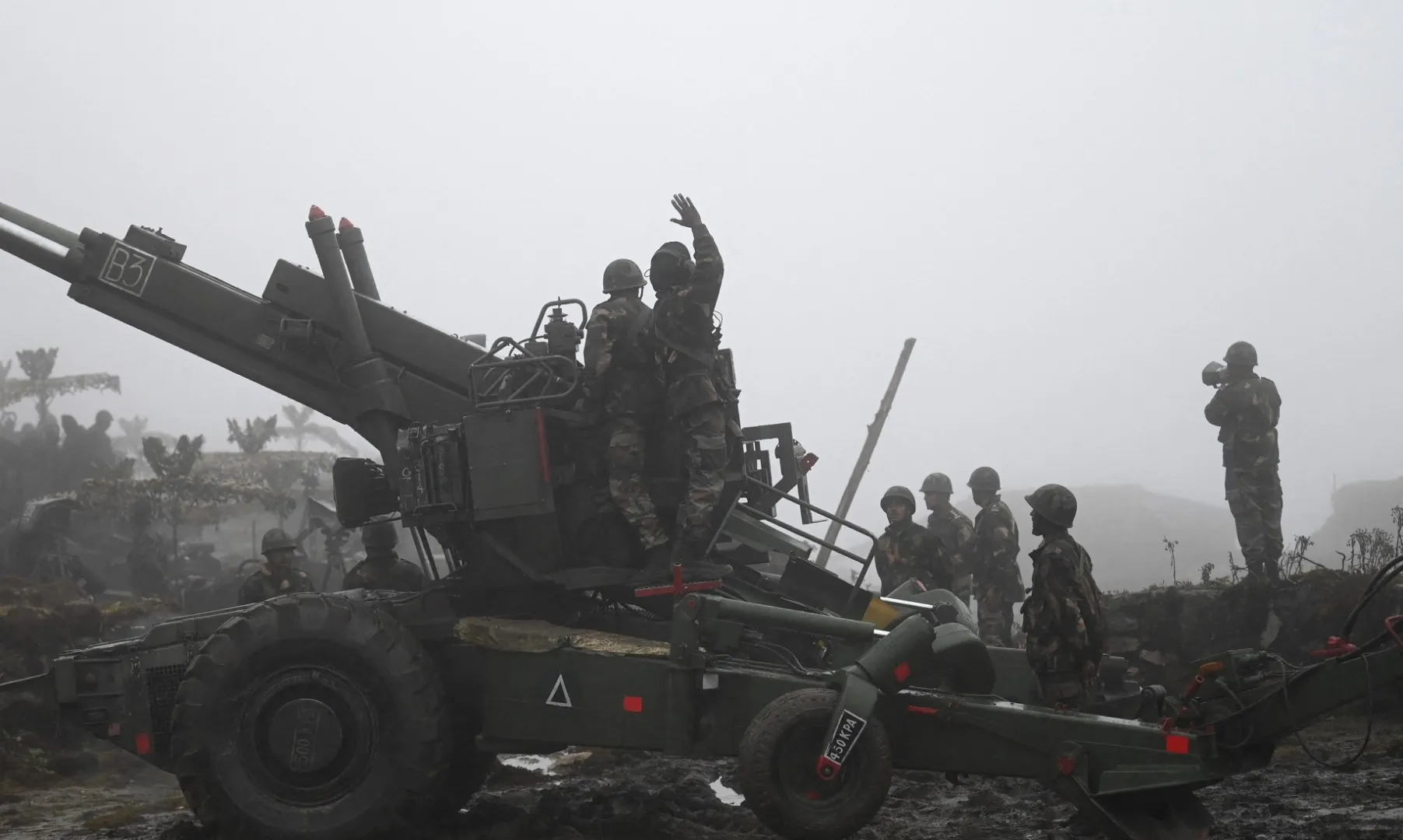
India shares a vast 3,488-kilometer border with China, stretching across northern and eastern regions including Jammu and Kashmir, Ladakh, Sikkim, and Arunachal Pradesh. A significant portion of this extensive border remains disputed, with both countries failing to agree on the precise demarcation of the Line of Actual Control (LAC), which is intended to delineate the territories under their respective control.
Findings of the Fact-Finding Team
Prompted by initial reports of encroachment, the People's Party of Arunachal Pradesh (PPA) dispatched a four-member fact-finding team to the remote area. Kaling Jerang, Vice President of the PPA, which is part of the Bharatiya Janata Party-led North East Democratic Alliance and governs Arunachal Pradesh, shared the team's findings. The report highlighted that Indian armed forces face significant challenges in patrolling the Taksing area of the state from April to October due to severe weather conditions, including flash floods, monsoon rains, and resultant landslides. Conversely, the report indicated that Chinese forces maintain continuous activity in the border region throughout this period, raising concerns about the adequacy of Indian infrastructure to defend against potential aggression.
Jerang's report further claimed that local residents informed the team that Indian forces had abandoned Shera 5, a border patrolling point, following a confrontation with China’s People’s Liberation Army (PLA) in 2023. Locals also expressed frustration over the loss of ancestral hunting grounds. Jerang asserted, “The ground reports of these intrusions are irrefutable. These encroachments are not new or sudden, but expanded over the years gradually, while the BJP governments in New Delhi and in the state have turned their back on the people at the border.” This sentiment was echoed last month by the Nah Welfare Society (NWS), a local tribal body, which communicated to government officials that Chinese encroachment had “increased manifold with an intention to occupy as much land as possible.”
Official Responses from Beijing and New Delhi
In response to these claims, the Indian army has dismissed media reports of Chinese encroachment as “incorrect and without any basis.” However, India’s Foreign Ministry has adopted a more nuanced stance. Randhir Jaiswal, the Indian Foreign Ministry spokesperson, stated that New Delhi consistently emphasizes to the Chinese side the gravity of border issues and the critical importance of maintaining peace and tranquility in these areas. He added that “the state of border affairs will reflect on the state of our larger bilateral ties.”
Beijing has also responded cautiously, neither confirming nor denying the fresh border tensions. Guo Jiakun, a spokesperson for China's Foreign Ministry, remarked that the “China-India border situation is generally stable at the moment,” noting that both countries recently held their 36th meeting on China-India Border Affairs. Guo affirmed that “the two sides agreed to maintain communication via diplomatic and military channels and jointly uphold peace and tranquility in the border areas.”
Historical Context of the Border Dispute
The border dispute is a fundamental aspect of the broader differences between India and China, with historical roots dating back to British colonial rule. In 1914, British India and Tibet, then not under Chinese control, signed the Simla Convention, which established the McMahon Line as their shared border. Since gaining independence in 1947, India has recognized the McMahon Line as its border with China. However, China, which came under communist rule in 1949, rejects this boundary, arguing it was not involved in the Simla Convention negotiations. Beijing claims the entire state of Arunachal Pradesh, referring to it as “South Tibet” or “Zangnan.” China also controls Aksai Chin, a portion of the disputed Kashmir region claimed by both India and Pakistan.
Following the 1962 conflict, India and China agreed to treat the Line of Actual Control (LAC) as their de facto boundary while working towards a resolution of their broader border disagreements. Nevertheless, they have been unable to agree on the precise alignment of the LAC itself, leading to differing claims and allowing patrols from both sides to enter areas claimed by the other. This disagreement has led to numerous face-offs and tensions, particularly in the western sector of the LAC in Ladakh, where a deadly hand-to-hand combat incident occurred in June 2020, resulting in casualties on both sides. Tensions also persist in the eastern sector, encompassing Sikkim and Arunachal Pradesh, with clashes reported in Naku La in 2020 and 2021. Smaller disputes exist in the middle sector in Uttarakhand’s Barahoti and Himachal Pradesh’s Shipki La regions. Additionally, a 73-day military standoff occurred in 2017 in Doklam, a plateau at the trijunction of China, India, and Bhutan, after Beijing attempted to extend a military road southward.
BR Deepak, a professor of Chinese studies at Jawaharlal Nehru University (JNU) in Delhi, cautions that “these issues snowballing is always a possibility. A small untoward incident can lead up to massive escalation, as it has happened earlier at times, for example in Galwan,” referencing the 2020 Ladakh clash. Praveen Donthi, a senior analyst at the International Crisis Group, observes that despite efforts to revive bilateral ties, India and China are engaged in “cautious re-engagement” following recent border tensions. Donthi suggests that “China uses the border dispute as a pressure point and to send mixed signals, as it has in the past, leaving India guessing whether local commanders are acting on their own or under direction from the [military] leadership.”
Economic Ties Amidst Border Strain
Despite the ongoing border disputes, trade relations between India and China have significantly expanded over the past decade. According to the Indian Embassy in Beijing, bilateral goods trade reached $151.1 billion in the 2025-26 financial year, more than doubling the $71.45 billion recorded in 2016-17. This growth is predominantly driven by Indian imports from China, which surged from $61.28 billion in 2016-17 to $131.63 billion in 2025-26, while Indian exports saw a more modest increase from $10.17 billion to $19.47 billion during the same period.
The United States recently identified India as a country allegedly involved in a “shadow transhipment network” aimed at helping China circumvent American sanctions and tariffs. Saheli Chattaraj, an assistant professor specializing in relations with China at Somaiya Vidyavihar University in Mumbai, notes that this dichotomy of improving diplomatic and trade relations amidst persistent border disputes is central to the bilateral relationship. “Economic and diplomatic engagement can improve without resolving the underlying strategic dispute. The border is not simply a bilateral irritant,” she stated. Chattaraj characterizes India-China relations as “managed competition rather than genuine normalisation,” suggesting that “China’s behaviour can be understood as an attempt to preserve an asymmetry of power along the disputed frontier and to remind India that improved bilateral relations do not alter the underlying strategic balance.” Donthi concurs, stating that in the broader geopolitical landscape, “India and China are destined to be competitors,” and that “the unresolved boundary dispute will continue to haunt relations until it is settled.”