Doha Dismisses Tehran's Accusations Regarding Downed Aircraft Personnel
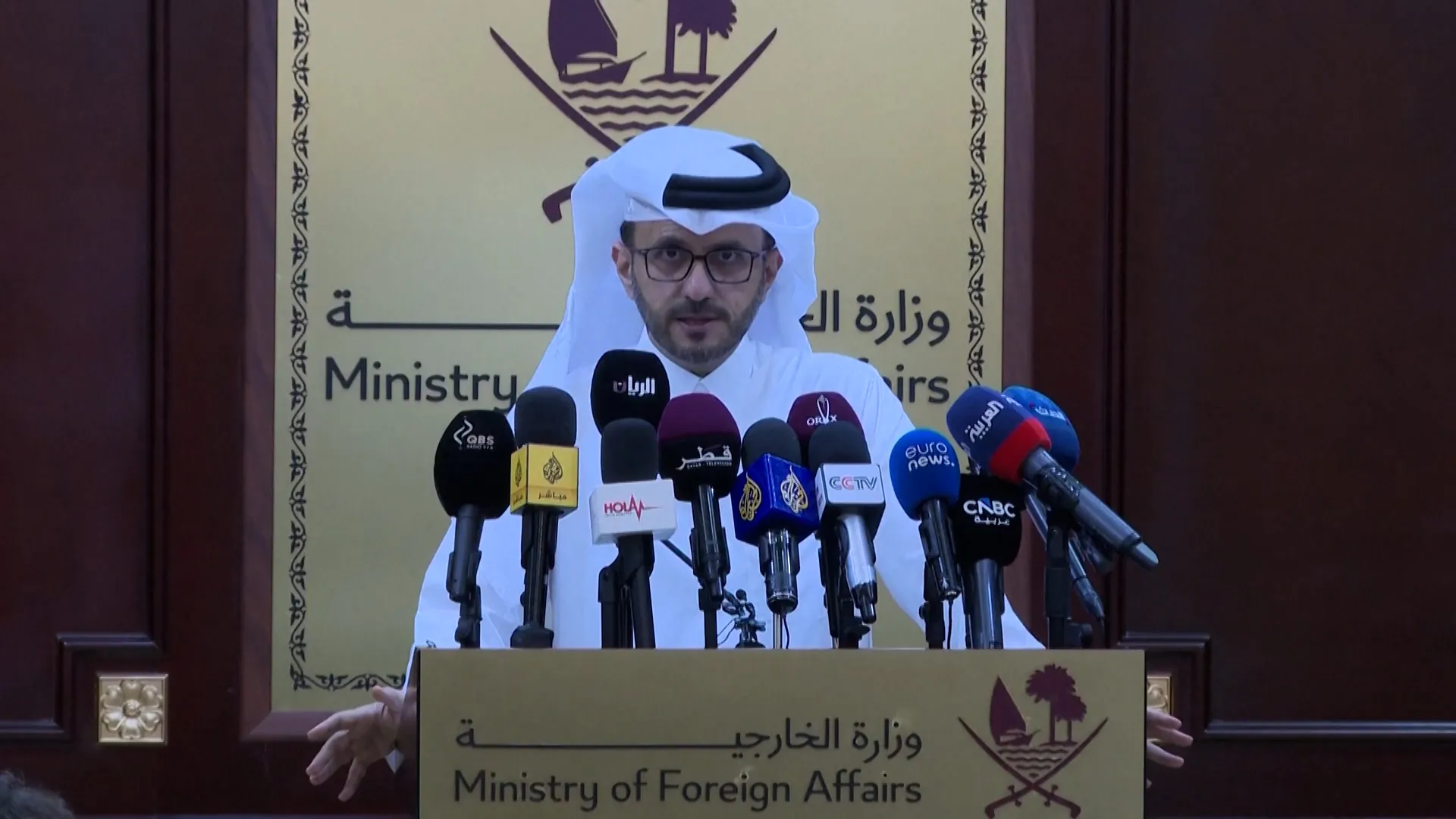
Qatar's Ministry of Foreign Affairs has issued a firm denial regarding accusations from Iran, which allege that Doha is holding three Iranian military pilots as prisoners. These pilots were reportedly involved in aircraft crashes during the initial phase of the conflict. Majed al-Ansari, the spokesperson for Qatar's Ministry of Foreign Affairs, characterized these claims as 'completely baseless, false and illogical' during a recent press conference.
Al-Ansari further elaborated that Qatar had previously handed over the remains of one of the pilots to an Iranian delegation in April, following their discovery. He expressed considerable surprise at the renewed allegations from Tehran, particularly given that Doha had extended an invitation to the Iranian side to dispatch a technical team to oversee the search operations, an offer that reportedly went unaddressed.
Background to the Allegations
The Qatari official's statements come in response to public assertions by Iranian officials, who have claimed that the pilots were secretly detained after being captured and have demanded their immediate release. General Mohammad Bagherzadeh of Iran, in a communication addressed to the International Committee of the Red Cross, identified the three pilots as Javad Salehi, Abdolmajid Dashtian, and Omran Behraveshian. According to Iran's Fars news agency, Bagherzadeh stated that these individuals survived the crash of their warplanes in March and were subsequently captured alive. He further alleged that the men have been held incommunicado for six months, prompting a call for international humanitarian intervention.
During his weekly press briefing, al-Ansari reiterated Qatar's position, asserting that the Iranian planes were targeted because they 'violated Qatar’s sovereignty and the city of Doha, and that they were dealt with according to the law.' He also dismissed the Iranian request for involvement from the Islamic Revolutionary Guard Corps (IRGC) in the matter as a 'media ploy.'
Sovereignty and Diplomatic Stance
Al-Ansari underscored Qatar's resolve, stating that the nation would not hesitate to 'defend its people, its territory and its sovereignty if it is attacked.' However, he concurrently emphasized the paramount importance of diplomatic engagement and dialogue as the preferred means of resolving disputes.
The military incident involving the downed aircraft occurred amidst an Iranian offensive targeting the Al Udeid airbase in Qatar, a facility that hosts personnel from the U.S. Central Command (CENTCOM). In early March, Qatar's Ministry of Defence publicly announced that it had successfully shot down two Sukhoi Su-24 bombers. This event marked a significant development, as it was the first instance of a Gulf nation intercepting and downing Iranian aircraft during the broader U.S.-Israel war on Iran.
Escalation and Failed Truce Efforts
The interception of the Iranian jets took place within the context of a wider series of Iranian retaliatory strikes across the Gulf region. These strikes followed the outbreak of hostilities on February 28. A ceasefire agreement was put in place in April, which temporarily halted major combat operations. This was followed by a Memorandum of Understanding (MoU) in June, which aimed to extend the truce and pave the way for further negotiations toward a lasting resolution of the conflict.
However, the MoU ultimately faltered. The agreement's collapse was attributed to Iran's targeting of vessels navigating the strategically vital Strait of Hormuz. Both sides subsequently accused the other of violating the terms of the agreement, leading to a renewed escalation of tensions and a continuation of the broader conflict in the region.
The ongoing dispute over the missing pilots adds another layer of complexity to the already strained relations between Qatar and Iran, highlighting the challenges in achieving stability and de-escalation in the volatile Gulf region.