Wisconsin's Democratic Primary: A Close Contest Reflecting Party Splits
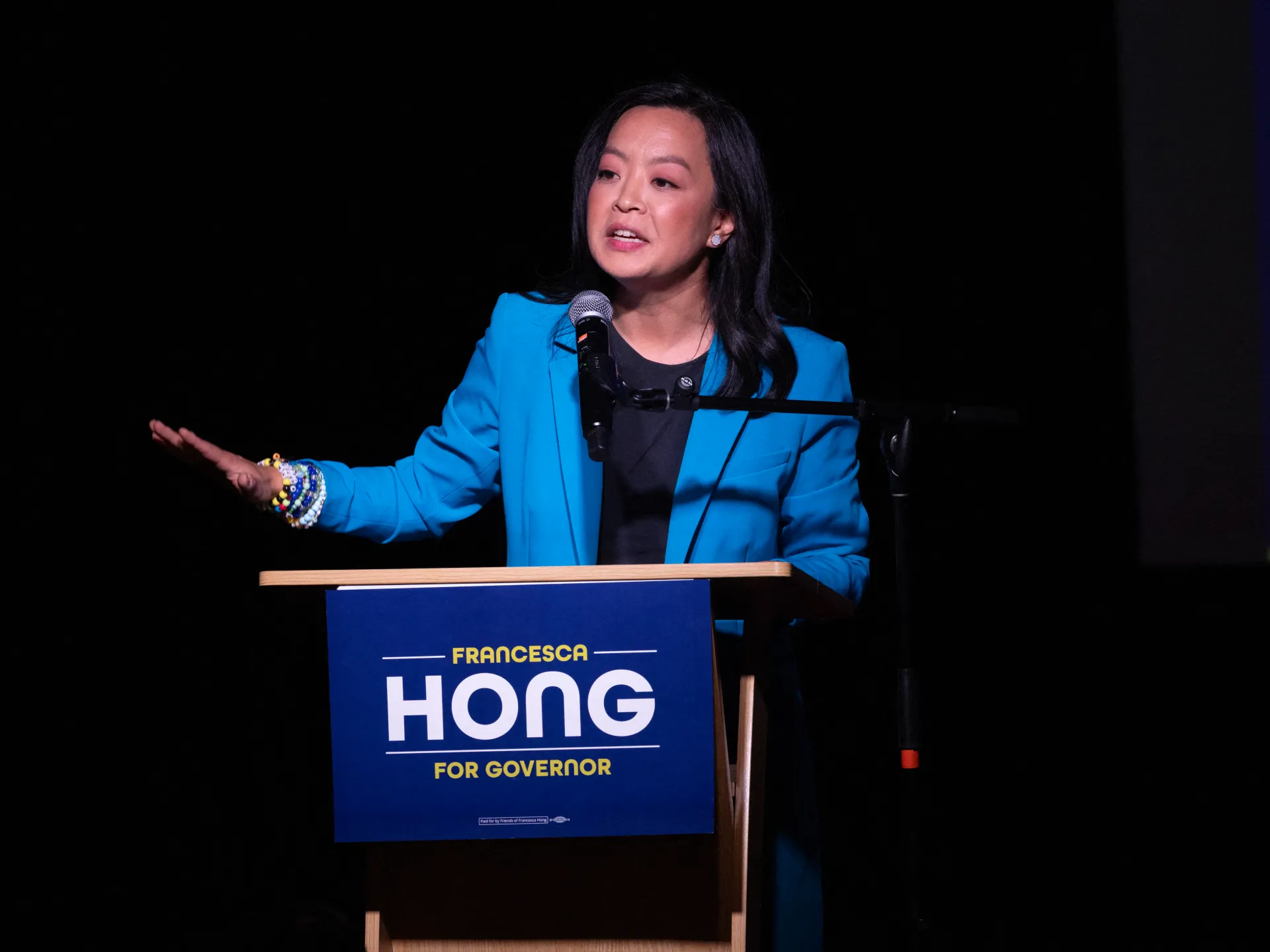
The Democratic gubernatorial primary in Wisconsin concluded with David Crowley narrowly defeating Francesca Hong, a progressive candidate. This outcome underscores the ongoing ideological struggle within the Democratic Party, pitting mainstream, often labeled 'moderate,' candidates against more left-leaning, 'progressive democratic socialists.' Despite pre-election polls suggesting Hong would win, she ultimately lost to Crowley by a margin of just 0.4 percent. Crowley, the Milwaukee County Executive, received 39.8 percent of the vote, securing the nomination to face Republican US Representative Tom Tiffany in the November general election. Tiffany had easily won his party's nomination with 95.3 percent of the vote.
Hong's campaign, which garnered 39.4 percent of the Democratic primary vote, advocated for policies such as the abolition of the US Immigration and Customs Enforcement (ICE) agency, a one-year moratorium on new data centers, and increased taxation on billionaires and corporations. These proposals resonated with a substantial segment of Democratic voters, aligning with findings from a recent Reuters/Ipsos poll. The poll indicated that a growing number of liberal Democrats consider it 'essential' for candidates to support measures like raising taxes on corporations and billionaires (76 percent), expanding abortion access (72 percent), and universal government-provided healthcare (71 percent).
However, unlike other successful progressive candidates, Hong did not receive endorsements from prominent figures such as US Senator Bernie Sanders or US Representative Alexandria Ocasio-Cortez. Her campaign also faced scrutiny over past social media posts, including comments made in November 2020 regarding Thanksgiving, which she later clarified were not intended to advocate for the holiday's cancellation but rather to acknowledge its painful historical context for some communities. Crowley's campaign manager, Garren Randolph, emphasized the candidate's focus on unity and delivering results for Wisconsin residents.
Minnesota's Primaries: Progressive Gains and Trump's Endorsement Test
In Minnesota, the Democratic Senate primary saw progressive Lieutenant Governor Peggy Flanagan secure a victory over the more moderate Representative Angie Craig, indicating momentum for left-leaning candidates. Flanagan won with 59 percent of the vote, while Craig received 39.4 percent. Conversely, the Republican gubernatorial nomination in Minnesota presented a challenge to the influence of former President Donald Trump's endorsements. Despite Trump's vocal support, former MyPillow CEO Mike Lindell lost the Republican nomination for governor to Lisa Demuth, the Speaker of the Minnesota House of Representatives. Demuth garnered 43.4 percent of the votes, surpassing Lindell's 32.5 percent. Lindell, a staunch Trump ally and proponent of unsubstantiated claims regarding the 2020 presidential election, had received Trump's endorsement via Truth Social. Demuth is now expected to face a formidable opponent in Democratic nominee Senator Amy Klobuchar.
Alabama's Congressional Races: Trump's Influence and Electoral Map Changes
In Alabama, a Trump-backed candidate did achieve success. Rhett Marques won the Republican primary in the newly redrawn 2nd Congressional District with 50 percent of the vote. This district's boundaries were recently redrawn following a Supreme Court ruling, a change that is anticipated to favor Republicans by reducing the number of districts where Black voters constitute a majority or near-majority. Marques will now challenge the incumbent Democrat Shomari Figures, who faces a more difficult path to re-election. Other Republican primary victories in Alabama included Ammie Akin for the 7th District and Jenny Carl for the 1st District.
South Carolina: The Battle for Lindsey Graham's Senate Seat
The race to fill the South Carolina US Senate seat, left vacant after the passing of Senator Lindsey Graham, saw his sister, Darline Graham, advance to a Republican primary runoff. Among 10 candidates, Graham received 32.7 percent of the vote, with US Representative Ralph Norman trailing at 24.7 percent. The runoff election is scheduled for August 25. Darline Graham, who was appointed by Governor Henry McMaster to serve the remainder of her brother's term, also received an endorsement from former President Trump for a full six-year term. Critics have questioned her bid, suggesting it relies heavily on her family name and presidential backing rather than a personal political record. However, Graham has stated her commitment to earning votes and not being simply 'handed' the seat. The eventual Republican nominee is considered the favorite to win in the November general election.