Farage's Political Comeback
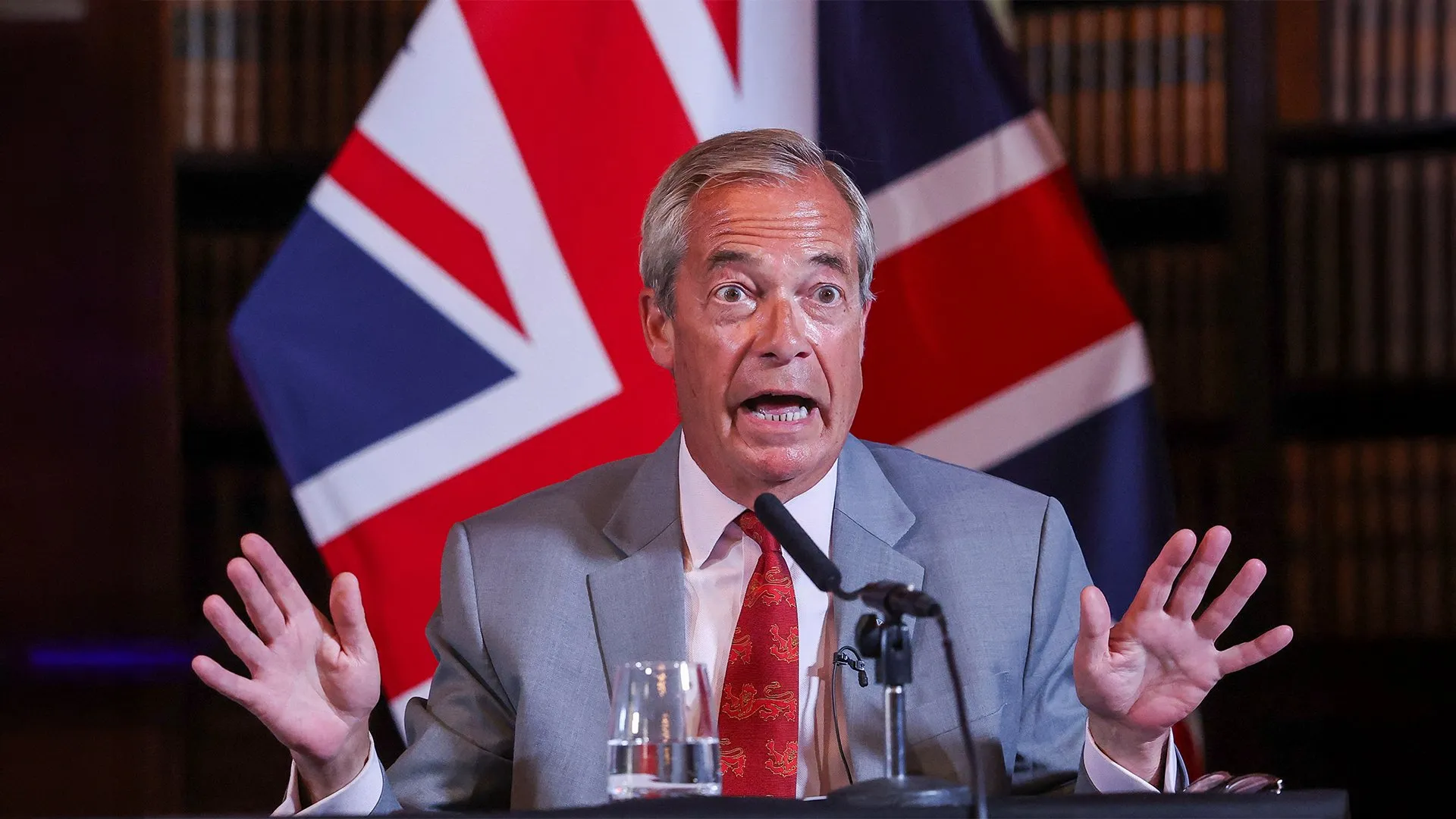
Nigel Farage, a prominent figure in British politics known for his leadership of various right-wing and Eurosceptic parties, has successfully secured a seat in the UK Parliament. His re-election comes after a period away from the House of Commons, following his previous resignation amidst public scrutiny concerning his financial affairs. The by-election, held to fill a vacant parliamentary position, saw Farage emerge victorious, though his absence from the results ceremony drew considerable attention.
Farage's political career has been characterized by a consistent focus on issues such as national sovereignty, immigration, and a critical stance towards the European Union. He rose to international prominence as a key architect of the campaign for the United Kingdom to leave the European Union, a movement that culminated in the 2016 Brexit referendum. His ability to mobilize segments of the electorate, particularly those feeling disenfranchised by mainstream politics, has been a defining feature of his political influence.
The By-Election Context
The by-election itself was not without its peculiarities. Farage's decision to contest the seat came after his previous departure from parliament. His return to electoral politics was framed by many as an attempt to reassert his influence on the national stage, particularly at a time when the political landscape continues to evolve post-Brexit. The campaign leading up to the vote was closely watched, with media outlets and political analysts scrutinizing the implications of his potential return.
By-elections in the UK often serve as a barometer of public opinion, offering insights into the electorate's mood between general elections. They can also be opportunities for smaller parties or independent candidates to gain traction, or for established figures to test their enduring appeal. In this instance, the focus was squarely on Farage, given his historical impact on British politics and the circumstances surrounding his previous resignation.
Absence from the Declaration
Perhaps one of the most talked-about aspects of the by-election was Farage's decision not to attend the declaration of results. Traditionally, candidates, especially those expected to win, are present at the count to acknowledge their victory or concede defeat. His absence fueled speculation and discussion among political commentators and the public alike. While reasons for such an absence can vary, ranging from strategic choices to personal circumstances, it added an unconventional element to an already high-profile event.
The media coverage of the declaration highlighted this absence, often juxtaposing it with images of the other candidates present. This included his closest rival, a comedian known by the stage name Count Binface, whose participation added a layer of satirical commentary to the political proceedings. The presence of such a figure underscored the diverse and sometimes unconventional nature of British electoral contests, where serious political competition can often intertwine with elements of protest or performance art.
Implications of the Return
Farage's re-entry into Parliament is likely to have several implications for the UK political scene. His presence could re-energize certain debates, particularly those related to immigration policy, national identity, and the future direction of the country's relationship with international bodies. He is known for his confrontational style and his willingness to challenge established political norms, which could lead to more robust and potentially divisive discussions within the legislative chambers.
Furthermore, his return might influence the strategies of other political parties. Mainstream parties may feel compelled to adjust their messaging or policy positions in response to his renewed parliamentary platform, particularly if he manages to galvanize a significant portion of the electorate once again. His ability to draw media attention also means that his views and proposals will likely receive considerable airtime, shaping public discourse on key national issues.
The by-election results, therefore, represent more than just the filling of a parliamentary vacancy. They signify the return of a highly influential and often controversial political personality, whose presence is expected to inject a new dynamic into the ongoing political dialogue in the United Kingdom. His re-election, achieved under somewhat unusual circumstances, ensures that he will once again be a central figure in the country's legislative and public debates.