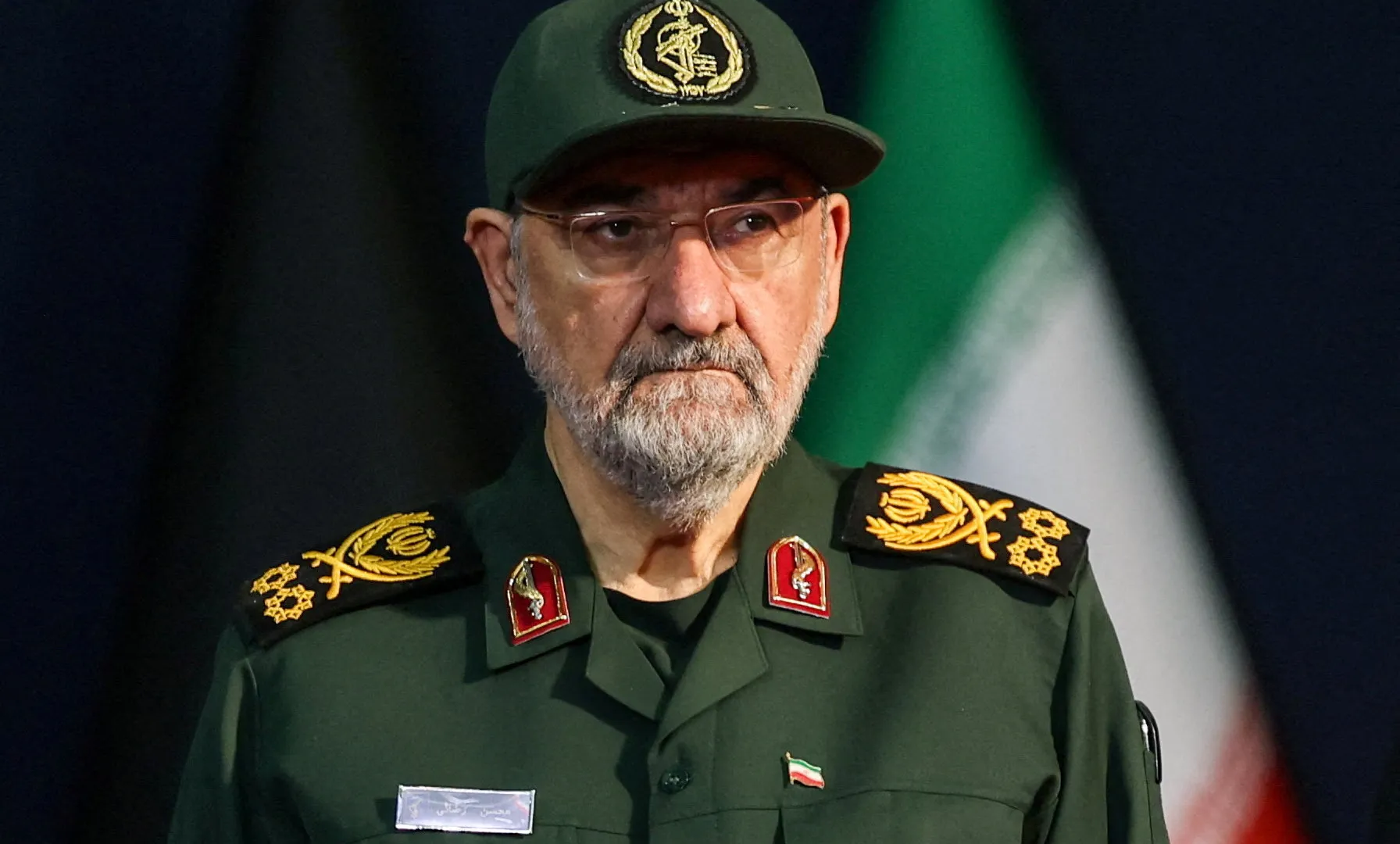
Mohsen Rezaei Assumes Key Security Role in Iran
Mohsen Rezaei, previously the commander-in-chief of the Islamic Revolutionary Guard Corps (IRGC), has been appointed as the secretary of Iran’s Supreme National Security Council (SNSC). This significant appointment places him at the helm of a crucial body responsible for shaping Iran's security and foreign policy. Rezaei succeeds Mohammad Bagher Zolghadr, who has transitioned to a role as a political adviser to Supreme Leader Mojtaba Khamenei. The position was previously held by Ali Larijani, who was reportedly assassinated in a US-Israeli strike in March.
Rezaei's appointment comes amidst ongoing deliberations concerning the Strait of Hormuz, a strategic waterway through which a substantial portion of global oil and gas transits. Iran has historically leveraged its control over this strait, particularly during its protracted conflict with the United States and Israel. His selection signals a potential shift in the nation's approach to these critical issues.
Who is Mohsen Rezaei?
Mohsen Rezaei, 71, commanded the IRGC from 1981 to 1997, a period that encompassed the Iran-Iraq War (referred to as the “Sacred Defense” in Iran). Following his tenure with the IRGC, Rezaei served on Iran’s Expediency Discernment Council, an entity tasked with resolving legislative disagreements between parliament and the Guardian Council. The Guardian Council, appointed by the supreme leader, is responsible for vetting candidates for various elected offices and ensuring legislative adherence to the constitution and Islamic law.
Rezaei has consistently emphasized the strategic importance of Iran maintaining control over the Strait of Hormuz. In July, he notably stated that command of the waterway held more value than 'dozens of atomic bombs.' More recently, he issued a warning to the United States, indicating that it would 'face serious risks and casualties' should its blockade of Iranian ports persist. This stance underscores his long-held view on the strait's significance, particularly in light of the US-Israel war initiated in February, to which Iran responded with a blockade of the strait, countered by a US naval blockade aimed at economic pressure.
Details of the Appointment
The Iranian president’s communications office announced Rezaei's appointment as SNSC secretary on Sunday evening, as reported by Al Jazeera Arabic. Concurrently, Supreme Leader Khamenei issued a decree appointing Rezaei as his representative on the council, specifically acknowledging his extensive experience and his status as one of the 'pioneers of the Sacred Defense era' during the Iran-Iraq war. This reference to his military background highlights its perceived relevance to his new role.
Significance of the Appointment
The Supreme National Security Council functions as a pivotal forum where the strategic considerations of the presidency, the foreign ministry, the armed forces, and various security agencies converge. Consequently, the individual leading this council holds influence beyond mere administrative duties, particularly during periods of conflict, stalled negotiations with the United States, and disputes over navigation rights and sovereignty in the Strait of Hormuz.
Abas Aslani, a senior research fellow at the Tehran-based Center for Middle East Strategic Studies, noted that Rezaei brings a blend of military, economic, and political expertise to the position. Aslani suggested that a key reason for his selection was the need for someone capable of 'synchronizing different bodies of the government.' While politically similar to his predecessor on security matters, Rezaei's potential to act as a 'balancing act' domestically is considered highly significant.
Aslani also indicated that Rezaei's background as a former IRGC chief and a member of the Expediency Discernment Council would make him a crucial figure in negotiations with the US. His ability to 'reach out to different factions and to talk to them' was cited as a compelling reason for his appointment.
Rezaei's political alignment also adds another layer of complexity. During the 2024 presidential election, he supported Mohammad Bagher Ghalibaf, aligning him with the conservative wing represented by Ghalibaf, the current parliament speaker and chief negotiator with the US. This positioning suggests he is not necessarily aligned with the more hardline faction associated with Saeed Jalili, who was the runner-up against President Masoud Pezeshkian. This nuanced stance within the conservative camp could afford Rezaei greater flexibility in navigating the various political currents within Iran, including Pezeshkian’s government, which has shown openness to negotiation, the conservative camp linked to Ghalibaf, and the military and security forces with whom Rezaei maintains historical ties.
Potential Implications
Analysts offer two primary interpretations of Rezaei's appointment. One view suggests it signifies a prioritization of military and security considerations amid heightened tensions with the United States. The other perspective posits that bringing a former IRGC chief into the core decision-making structure could, paradoxically, facilitate the acceptance of any future negotiated settlement by hardline elements domestically.
Iranian journalist and political analyst Mashallah Shamsolvaezin observed that Rezaei’s selection surprised some Iranians who anticipated new faces within the SNSC, particularly given the ongoing conflict and calls for renewal in decision-making. According to Shamsolvaezin, hardline factions view Rezaei’s military record, especially his IRGC command, as a factor that lends greater security and political credibility to the council's decisions. This interpretation stems from the understanding that the challenge in Iranian decision-making isn't just about making choices, but also ensuring their acceptance across various power centers and among the hardline social base. Negotiations have sometimes faced opposition from those accusing proponents of weakness, making any settlement vulnerable to political attacks if championed by a moderate figure. Shamsolvaezin believes Rezaei’s presence could mitigate this debate, as his military history would make it difficult for hardline factions to accuse him of weakness or compromising Iran's security interests.
Internationally, Rezaei's appointment can be seen in two seemingly contradictory ways. The first suggests it is Iran's response to escalating US pressure, indicating that increased sanctions and military pressure will be met with a similarly hardened stance. This view implies that demands exceeding previous understandings will prompt Iran to deploy figures representing a more unyielding front in the confrontation.
The second reading suggests that major settlements often require figures from the core of power, rather than moderates. When a figure with a strong military and security background advocates for negotiation, they are better positioned to defend it domestically and are less susceptible to accusations of making concessions. Shamsolvaezin believes Rezaei could advance political negotiations with the US, as his military history provides crucial domestic cover for any future agreement. In this context, the focus isn't on whether Rezaei is hardline or moderate, but on his ability, due to his credentials, to translate a decision into actionable policy, regardless of its direction.
Shift in Security Doctrine
Professor Mohsen Farkhani, an international relations expert, offers an alternative analysis, suggesting the appointment reflects a shift in Iranian security doctrine. Farkhani argues that Rezaei’s appointment follows repeated US violations of the June Memorandum of Understanding (MoU) and diplomacy’s failure to contain tensions. He contends that Rezaei’s experience, both in commanding the IRGC and organizing forces during the eight-year war, aligns with Iran’s evolving strategy towards 'offensive deterrence based on punishment' and a readiness for serious military confrontation and prolonged attrition warfare.
Farkhani believes this decision indicates a greater emphasis on traditional warfare approaches, alongside continued asymmetric tactics, to inflict cumulative losses on hostile states during intense, long-term confrontations. Based on this, he anticipates less flexible positions from Tehran towards the US, both in potential negotiations and regarding the Strait of Hormuz. While acknowledging that Rezaei alone won't fundamentally alter the decision-making structure or the influence of President Pezeshkian, the foreign ministry, or the IRGC leadership, Farkhani argues that his appointment will elevate military and security considerations in decision-making and implementation, making assessments of deterrence and warfare more prominent when political and negotiating options are being weighed.
Ultimately, Farkhani views Rezaei’s appointment as an indicator of prioritized military and security considerations and a hardening of Iran's stance, while Shamsolvaezin suggests his hardline background might, paradoxically, enable him to garner domestic support for a negotiated settlement.