A Shifting Security Landscape
In a significant development for geopolitical dynamics, Saudi Arabia, Turkiye, and Pakistan recently formalized a mutual defense pact in Mecca. This agreement has prompted considerable analysis regarding its implications for regional security and its potential to alter the established order, which has historically seen the United States as the primary security guarantor in the Middle East. The timing of this pact coincides with a period where the US has signaled a desire for its allies to assume greater responsibility for their own defense expenditures and capabilities.
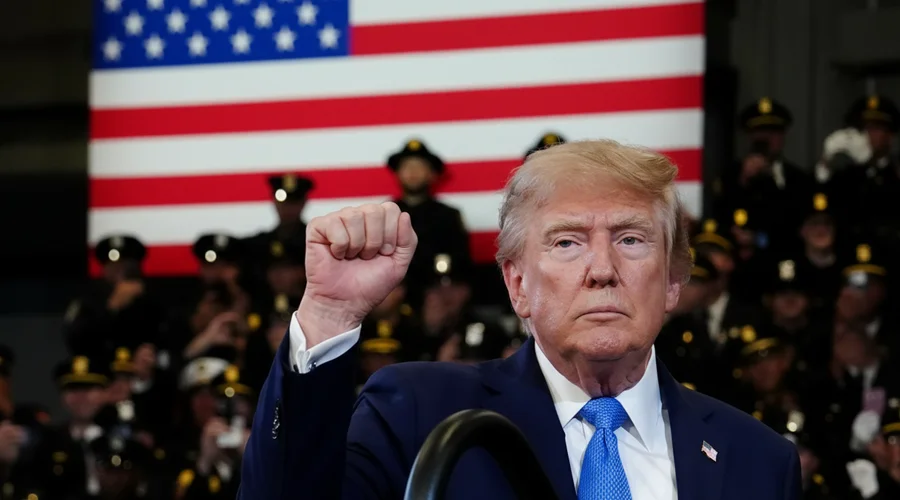
US President Donald Trump publicly endorsed the Mecca Joint Defence Agreement, expressing satisfaction that Middle Eastern nations are seeking enhanced self-defense mechanisms. He conveyed this sentiment on Truth Social, stating, “Very happy to see that Saudi Arabia, Turkey, and Pakistan have recently, and finally, signed the Mecca Joint Defence Agreement. It shows that the Middle East is coming together and how Countries will finally be able to defend themselves in a more meaningful way.” Pakistan's Prime Minister Shehbaz Sharif promptly acknowledged Trump's remarks, attributing the prevention of a potential “nuclear catastrophe in South Asia” to his “courageous and decisive leadership.”
Trump's apparent approval of this independent security arrangement aligns with his consistent political stance, which advocates for allies to increase their defense spending and reduce their reliance on American resources. However, despite the formation of this new collective defense framework by three key US partners, a critical question remains: Can agreements such as the Mecca pact genuinely supplant the deep-rooted dependence of nations like Pakistan, Turkiye, and Saudi Arabia on the United States?
The US Posture and Regional Responses
Analysts suggest that Trump's statement regarding the Mecca pact is not coincidental but rather a continuation of his administration's broader policy agenda. For over a year, the US president has actively encouraged allies to bear a larger share of their defense burdens. A notable instance occurred at the NATO summit in The Hague in June 2025, where member states committed to significantly increasing their defense spending targets, aiming for 5 percent of GDP by 2035, a direct result of sustained pressure from the US.
Further underscoring this strategic shift, Trump also announced a substantial reduction in joint military exercises with South Korea, citing cost concerns and his improved relationship with North Korean leader Kim Jong Un, while simultaneously criticizing Seoul for its perceived lack of support against Iran. Betul Dogan-Akkas, an assistant professor of international relations at Ankara University, views Turkiye's participation in the Mecca pact within this wider context. She argues that the Arab Gulf states have experienced a decline in deterrence since February 28 (referring to the US-Israel conflict with Iran), necessitating a re-establishment of their security without sole reliance on the US. Dogan-Akkas believes that Turkish President Erdogan is signaling Turkiye's capacity to support a regional security complex, particularly as the global hegemon's role is perceived as insufficient.
Conversely, not all experts interpret Trump's reaction as a definitive withdrawal of US influence from the region. Umer Karim, an associate fellow at the King Faisal Center for Islamic Research and Studies, specializing in Gulf and Pakistani affairs, suggests that while the US may not be actively retreating, the limitations of its military presence and its associated liabilities have become more apparent. This, he argues, compels regional actors to diversify their security alliances. Karim anticipates that the US will maintain a presence in the region, albeit in a modified capacity, with local partners assuming greater contributions and aligning more closely to address gaps previously filled by exclusive reliance on the US.
Mansoor Ahmed, an honorary lecturer at the Australian National University, offers a distinct perspective, positing that the Trump administration is implementing a gradual retrenchment strategy to rebuild the US military-industrial base, thereby encouraging allies and partners to take on increased responsibility for their own defense. However, Ahmed does not believe the Mecca pact itself is a direct consequence of this retrenchment. He contends that while the pact indirectly aids US retrenchment, it was conceived and planned independently, primarily as a response to the perceived erosion of US credibility and capability in effectively defending Gulf Cooperation Council (GCC) countries during the US-Iran conflict.
Beyond Security: Strategic and Political Dimensions
For Turkiye, the Mecca pact represents more than just security; it also carries significant strategic and political weight. Dogan-Akkas highlights that Turkiye's primary gain is not merely bolstering its national security, but rather asserting its role as a security provider rather than a consumer. Gokhan Ereli, an international relations expert at Istanbul’s Ibn Haldun University, echoes this sentiment, attributing Turkiye's engagement with non-NATO partners to longstanding skepticism about Washington's reliability. Ereli describes the pact as a “hedge with Turkish characteristics,” characterizing it as “not anti-American so much as post-dependent.”
The Mecca agreement incorporates language akin to NATO's Article 5, stating that an armed attack on one member will be considered an attack on all. However, Turkiye’s Foreign Minister Hakan Fidan has clarified that any state under attack would first need to request assistance and specify the type of aid required, whether intelligence, logistics, or troops. Ahmed points to inherent discretion within the pact, suggesting that each nation will likely retain sovereignty in determining the timing, nature, and extent of military assistance, or indeed if any assistance is needed at all.
Reza Khanzadeh, a Middle East analyst at George Mason University, cites past precedents to suggest that this clause is unlikely to automatically draw signatories into each other's conflicts. He notes that the bilateral Saudi-Pakistan pact of September 2025 did not escalate into a wider conflict after subsequent attacks on Saudi Arabia by Iran and the Houthis. Karim concurs, emphasizing that the commitments are conditional rather than absolute. He views the pact as an alignment that offers additional defense options and resources but does not inherently replace existing capabilities. The practicality of these commitments, Karim explains, would depend on the specific needs of the attacked country, with a hierarchy developing based on needs, resources, platform availability, and the nature of the threat. Despite these nuances, Karim considers the Mecca pact a genuine institutional first in the region since the era of the Baghdad Pact or CENTO.
This inherent ambiguity serves a dual purpose: it allows Riyadh, Ankara, and Islamabad to project unity without directly antagonizing Iran, but it also means the pact, for the foreseeable future, cannot rival the significant US military presence in the region, estimated at around 50,000 troops. Karim remains cautious about the extent to which this gap can be closed. He asserts that the effectiveness and scope of the pact will depend on the security needs of the three states, the depth of their trilateral alignment, and the nature of the threats they encounter. While acknowledging that the pact creates a viable alternative, he concludes that it does not fundamentally replace the structural reliance of Gulf states on the US, but rather adds an additional layer of deterrence.