Lebanon's Landmark Decision on Capital Punishment
In a significant legislative move, Lebanon has formally abolished the death penalty, marking a historic moment as the first country in the Middle East to do so. On Tuesday, a substantial majority of the 128-member parliament cast their votes in favor of discontinuing capital punishment. This legislative change stipulates that all future death sentences will be commuted to life imprisonment with aggravated hard labor, signaling a profound shift in the nation's justice system.
For an extended period, Lebanon had maintained an unofficial moratorium on executions, with no capital punishment carried out since January 2004. Despite this de facto halt, Lebanese courts continued to issue numerous death sentences. By the close of 2025, official statistics from the Lebanese Ministry of Justice’s Directorate of Prisons indicated that 85 individuals were awaiting execution, underscoring the legal limbo that characterized the nation's stance on capital punishment prior to this recent legislative action.
The Global Landscape of Capital Punishment
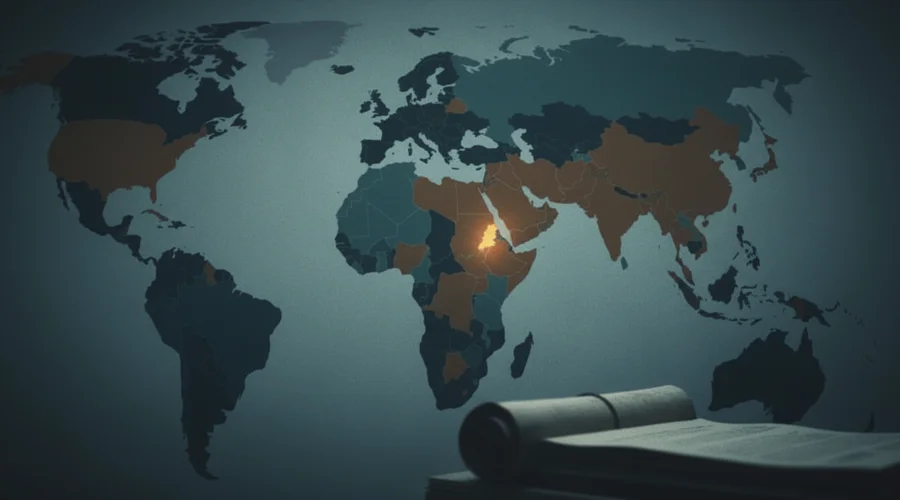
Lebanon's decision aligns with an accelerating global trend towards the abolition of the death penalty. According to the latest comprehensive report by Amnesty International on death sentences and executions, a significant proportion of the world's nations have either legally abolished capital punishment or ceased its practice. As of December, nearly three-quarters of countries worldwide had taken steps to eliminate the death penalty in law or in practice, meaning they have not conducted any executions for at least the past decade.
The global status of the death penalty can be categorized into several classifications:
- Abolition for all crimes: 113 countries have completely removed the death penalty from their legal systems for all offenses.
- Abolition for ordinary crimes only: Nine countries retain the death penalty exclusively for exceptional crimes, such as those committed under military law or in extraordinary circumstances, while abolishing it for common criminal offenses.
- Abolition in practice: 23 countries, while not having formally abolished the death penalty, have not carried out any executions for at least ten years, indicating a practical cessation of capital punishment.
- Retention: 54 countries continue to uphold and implement the death penalty for various crimes.
These distinctions highlight the varied approaches nations take regarding capital punishment, reflecting diverse legal, cultural, and political contexts globally.
Recent Trends in Executions Worldwide
Despite the growing movement towards abolition, the number of recorded executions globally witnessed a substantial increase in 2025. Amnesty International's monitoring data revealed a total of 2,707 executions in 2025, representing a significant 78 percent surge compared to the 1,518 executions recorded in 2024. This notable spike in executions was primarily attributed to activities in Iran, where the number of executions more than doubled, rising from 972 in 2024 to at least 2,159 in 2025.
It is crucial to note that Amnesty International's figures for global executions deliberately exclude what the organization estimates to be thousands of executions carried out in China. The exact number of executions in China remains a state secret, making independent verification and reporting exceptionally challenging. Consequently, the reported global totals, while substantial, do not fully encompass all instances of capital punishment worldwide.
The report also indicated that executions were carried out in 17 countries during 2025. This figure, though reflecting a significant number of nations, is consistent with the historically low number of executing states observed since 2018. This suggests that while some countries have intensified their use of the death penalty, the overall number of countries actively carrying out executions has remained relatively stable at a reduced level in recent years.
The decision by Lebanon to abolish the death penalty underscores a broader international movement towards re-evaluating and ultimately phasing out capital punishment. As more nations align with this trend, the global map of capital punishment continues to evolve, reflecting changing human rights standards and legal philosophies.