Devastation in East Nusa Tenggara
A significant earthquake, measuring 7.7 in magnitude, struck Indonesia's East Nusa Tenggara province on Saturday, leaving a trail of destruction and prompting a large-scale humanitarian response. The seismic event has resulted in dozens of fatalities and widespread damage, displacing thousands of residents and disrupting daily life. As rescue teams intensify their efforts, the focus remains on locating individuals trapped beneath rubble and providing essential assistance to affected communities.
As of late Monday, the death toll from the earthquake had tragically climbed from an initial 54 to 68, according to Berton SP Panjaitan, an official from Indonesia’s disaster mitigation agency. In addition to the fatalities, more than 200 individuals have sustained injuries, necessitating urgent medical attention. The scale of the disaster has prompted a provincial state of emergency, declared on Sunday, which is set to last for 14 days to facilitate coordinated relief and recovery operations.
Communities Cut Off and Awaiting Support
Many inhabitants of Flores island, one of the areas severely impacted, spent Monday searching for missing loved ones and anxiously anticipating the arrival of aid. Numerous communities remain isolated due to damaged infrastructure, hindering the swift delivery of humanitarian supplies. The earthquake inflicted substantial damage on infrastructure, with over 1,300 homes affected across the province. On Flores alone, nearly 250 residences were completely destroyed, rendering them uninhabitable. Public facilities, including educational institutions, healthcare centers, and government offices, also sustained significant damage, further complicating recovery efforts.
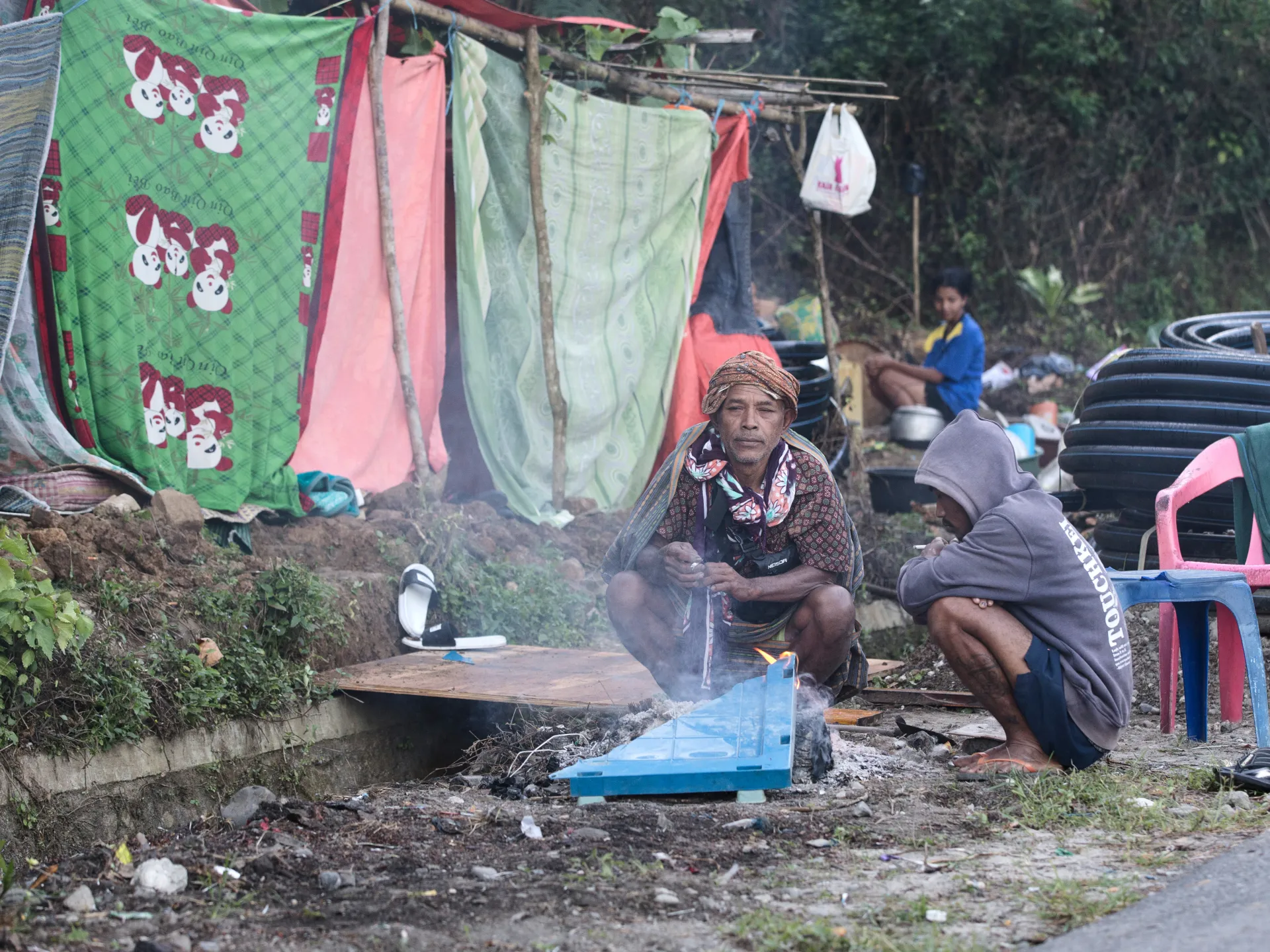
By Monday morning, approximately 12,800 people were unable to return to their homes. These displaced individuals have sought refuge in various temporary shelters established in several towns across Flores. Many spent Sunday night and into Monday camping outdoors, often under makeshift tarpaulin tents, due to the persistent threat of aftershocks. This situation underscores the precarious living conditions faced by survivors, who fear re-entering damaged structures.
Junaidin, a 32-year-old resident of Mbay, described the dire circumstances outside his self-constructed tent, which housed about 30 people. He expressed the sentiment shared by many that their homes were no longer safe, stating, “Our houses are no longer liveable because many have collapsed and are full of cracks, so we can’t go inside any more.”
Echoes of Past Tragedies and Calls for Aid
For many on Flores, the recent earthquake has evoked painful memories of a devastating earthquake and tsunami that struck the island in 1992, claiming the lives of approximately 2,500 people. This historical context amplifies the current sense of vulnerability and the urgency of the relief efforts. Junaidin also voiced frustration regarding what he perceived as a delay in governmental aid. “We’re on our own here,” he remarked, adding, “As for help from the government, there hasn’t been any – no tents, no medicine, no food, no drinking water, nothing.”
In response to the crisis, the Indonesian air force has initiated a significant airlift operation, deploying two Hercules transport planes and a Boeing to deliver 13 tonnes of emergency aid. This aid package includes essential items such as food, clothing, clean water, and medical equipment. Additionally, helicopters are being utilized to transport supplies directly to isolated communities that are difficult to access by ground. The military has also deployed personnel to assist with the distribution of aid in key hubs, ensuring that supplies reach those most in need.
Medical Challenges and Ongoing Rescue Efforts
Rescue teams are actively searching the affected areas for potential victims, even though no reports of missing persons have been officially filed, according to search and rescue official Fathur Rahman. Concurrently, the Indonesian Deputy Health Minister, Benjamin Paulus Octavianus, announced plans to establish emergency field hospitals in several locations to provide immediate medical care for the injured.
Al Jazeera’s Jessica Washington, reporting from Ruteng in East Nusa Tenggara, highlighted the challenges faced by medical staff. A local hospital sustained damage, forcing healthcare providers to quickly set up a tent hospital. While there is an adequate supply of medicine, essential equipment for blood tests and X-rays remains inaccessible, compelling doctors to treat patients under extremely difficult conditions. Washington noted that many elderly patients are exposed to the intense daytime heat and cold evening temperatures, further complicating their medical care.
Indonesia's Seismic Vulnerability
Indonesia's geographical position along the Pacific “Ring of Fire” makes it highly susceptible to frequent earthquakes. This arc of intense seismic activity extends from Japan through Southeast Asia and across the Pacific basin. The country has a history of devastating seismic events, including the 2004 magnitude 9.1 tremor off the coast of Sumatra, which triggered a catastrophic tsunami. That event claimed an estimated 220,000 lives across the region, with approximately 170,000 fatalities occurring within Indonesia, marking it as one of the deadliest natural disasters in recorded history.