Prime Minister Modi Reflects on India's Progress and Future Aspirations
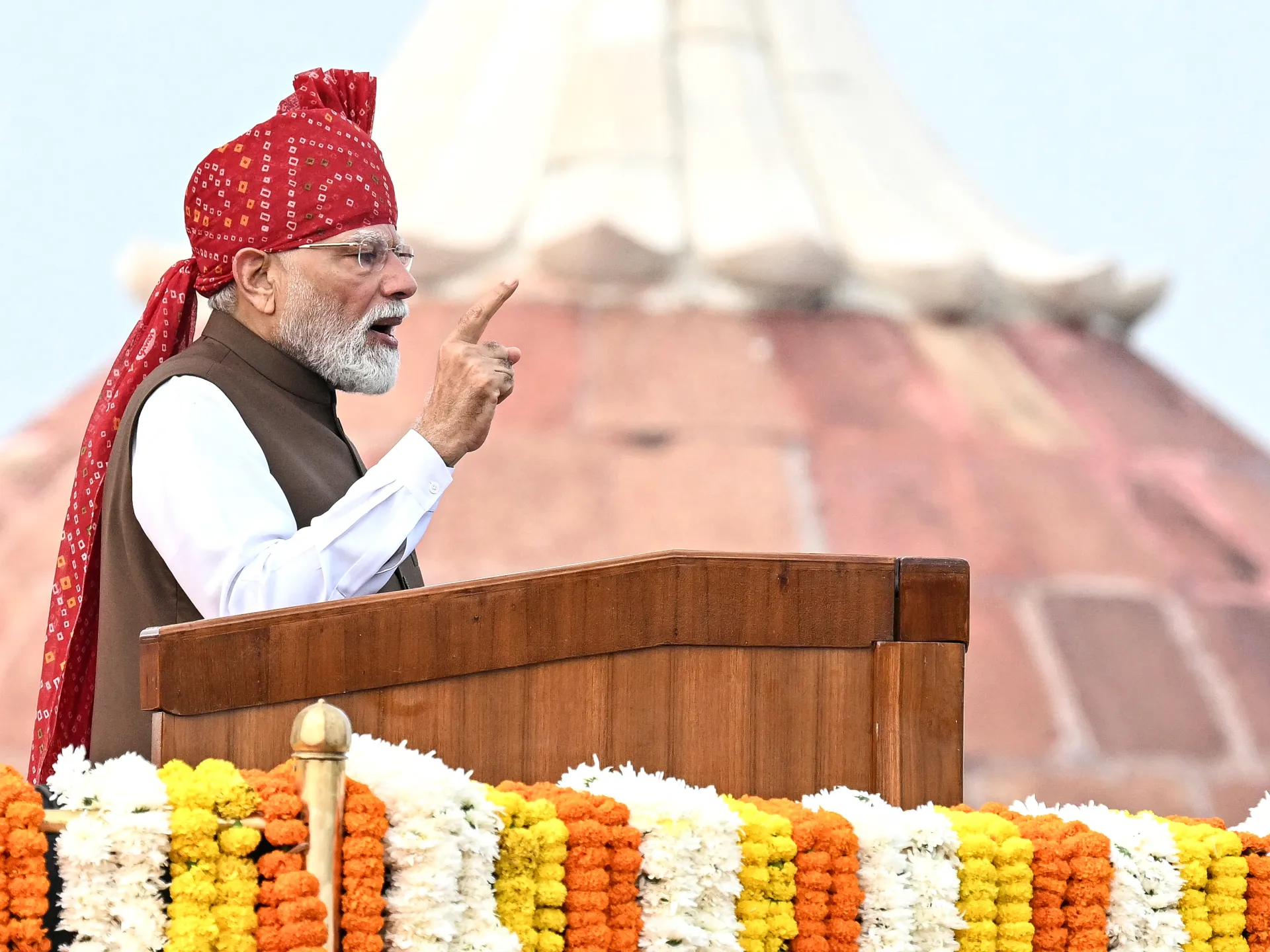
On India's Independence Day, Prime Minister Narendra Modi delivered a comprehensive address, highlighting the nation's advancements and outlining future objectives. Speaking from the historic Red Fort, Modi underscored India's transformation into a rapidly growing economy and reiterated the government's commitment to achieving developed nation status by 2047, coinciding with the centenary of its independence.
Addressing the Naxalite Movement and its Ideological Backers
A significant portion of the Prime Minister's speech focused on the Naxalite movement, an armed rebellion with Maoist influences that has historically challenged state authority across parts of central and eastern India. Modi asserted that India has largely succeeded in quelling the armed faction of this movement, stating, "India has succeeded in getting rid of armed Naxals." He attributed this success to his government's security and development strategies implemented since 2014, which he claimed have drastically reduced Maoist violence. The Prime Minister lamented that the Maoist movement had "destroyed the future" of generations of young people.
However, Modi warned that while the armed rebellion might be largely contained, the nation still faces a threat from its ideological supporters. He specifically referred to "dimagi Naxals" or 'intellectual Naxals,' whom he accused of seeking opportunities to instigate violence. Modi stressed the importance of "identifying and isolating" these individuals. This terminology echoes the previously used and politically charged label "urban Naxal," a term frequently employed by Modi and leaders of his Bharatiya Janata Party (BJP) to categorize activists, academics, intellectuals, and other critics of the government.
Recent Political Climate and Youth Engagement
The Prime Minister's remarks come weeks after a youth-led protest movement, known as the Cockroach Janta Party, presented an unusual challenge to his administration, ultimately leading to the resignation of the education minister. Although Modi did not directly mention these protests, his speech repeatedly emphasized initiatives aimed at young Indians. These initiatives included programs for AI skills training and provisions for free online coaching for competitive examinations, signaling a focus on youth empowerment and development.
Economic Achievements and Future Goals
Modi highlighted India's economic journey over the past decade, noting its transition from what he described as a "fragile" economy to the world's fastest-growing major economy. This economic progress forms a cornerstone of his administration's narrative, reinforcing the government's ambition to elevate India to a developed nation by the 2047 milestone.
Historical Context of the Naxalite Movement
The Naxalite movement originated in 1967 with an uprising in the village of Naxalbari in eastern India. It subsequently evolved into a decades-long armed rebellion, primarily advocating for the rights of landless farmers, the rural poor, and Indigenous communities. The conflict resulted in the deaths of thousands of civilians, rebels, and security personnel over its prolonged duration.
Concerns Regarding Civil Society and Dissent
For several years, human rights organizations have voiced concerns regarding the Indian government's approach to civil society. These groups have accused the government of utilizing anti-terror legislation, sedition-related provisions, and foreign-funding regulations to constrain civil society organizations and target activists, journalists, and groups that express criticism of government policies. The Prime Minister's latest comments about 'intellectual Naxals' are likely to be viewed through this lens by such organizations, potentially fueling further debate about freedom of expression and dissent in the country.