Context of the Controversy
Recent public discourse has seen journalist Tucker Carlson face allegations of antisemitism following his characterization of Israeli Prime Minister Benjamin Netanyahu. The controversy centers on Carlson's use of strong language, which some interpreted as crossing the line into antisemitic territory. Such accusations are often highly sensitive and can ignite significant debate, particularly when they involve prominent public figures and international relations.
The specific comments made by Carlson that drew scrutiny were reportedly highly critical of Netanyahu, with phrases that some deemed inflammatory. In the current political climate, where discussions surrounding Israel, its leaders, and its policies are frequently charged, the precise wording used by commentators is often subjected to intense examination. The debate over whether Carlson's statements were merely critical political commentary or, indeed, antisemitic, highlights the complex nature of free speech and hate speech boundaries.
These discussions are not new. For years, there has been an ongoing dialogue about how to differentiate between legitimate criticism of a government or a leader and rhetoric that veers into prejudice or discrimination against an entire group of people. This distinction is crucial in maintaining both robust public debate and a commitment to combating all forms of bigotry. The incident involving Carlson and Netanyahu is another example of this ongoing societal challenge.
Hunter Biden's Intervention
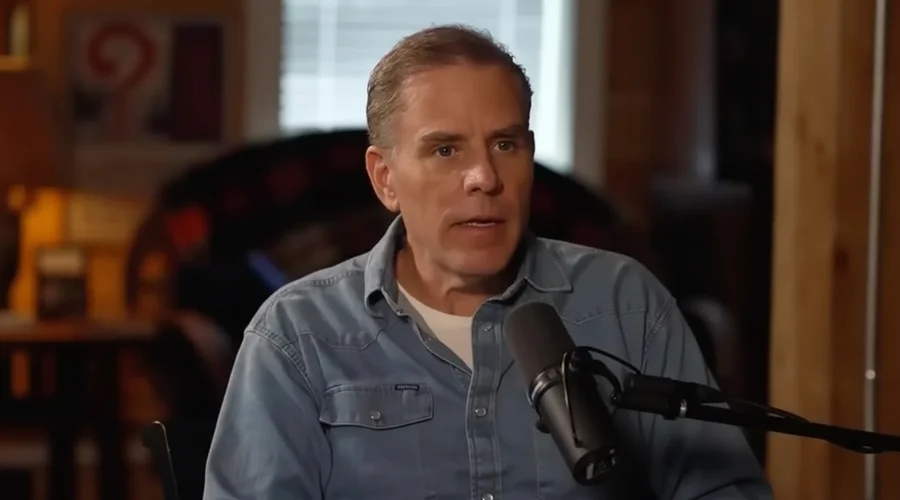
In a notable development, Hunter Biden, son of the sitting U.S. President, weighed in on the matter, offering a defense of Tucker Carlson. Biden's intervention is particularly noteworthy given the often-polarized political landscape in the United States, where figures like Carlson and the Biden family are typically seen on opposing sides of the political spectrum. His comments suggest a nuanced perspective that transcends typical partisan divisions on this specific issue.
Biden's argument hinges on a specific point: if describing Israeli Prime Minister Benjamin Netanyahu as "evil incarnate" is automatically categorized as antisemitic, then he finds himself at a loss for how to engage in further discussion on the topic. This statement implies a concern that the definition of antisemitism might be stretched too broadly, potentially stifling legitimate criticism of political figures, even those from Israel. His remarks suggest a desire to maintain a distinction between criticism of a leader's actions or character and prejudice against an entire ethnic or religious group.
By expressing this viewpoint, Hunter Biden has introduced a different angle to the ongoing debate. His stance suggests that while antisemitism is a serious issue that must be addressed, it is equally important to ensure that accusations of antisemitism are applied judiciously and do not inadvertently suppress critical commentary on political figures. This perspective could be seen as an attempt to de-escalate the rhetoric surrounding the controversy and encourage a more precise understanding of what constitutes antisemitic language.
The Broader Implications
Hunter Biden's defense of Tucker Carlson, irrespective of the political affiliations of either individual, opens up a broader conversation about the parameters of public discourse, particularly concerning international leaders and sensitive geopolitical topics. The incident underscores the difficulty in navigating discussions about Israel and its leadership without inadvertently triggering accusations of antisemitism. This is a challenge faced by commentators, journalists, and politicians globally.
The core of the issue lies in the interpretation of language. What one person perceives as a direct and legitimate critique of a political figure's actions or policies, another might interpret as an attack fueled by underlying prejudice. This divergence in interpretation is often exacerbated by historical contexts, geopolitical tensions, and the deeply personal nature of identity and belonging for various communities.
Furthermore, this episode highlights the role of public figures in shaping and influencing public opinion. When individuals like Hunter Biden comment on such sensitive matters, their words carry significant weight and can influence how the public perceives the legitimacy of accusations like antisemitism. His contribution to the debate may encourage a more careful consideration of the language used in political commentary and the criteria by which such language is judged.
Ultimately, the discussion initiated by Carlson's comments and furthered by Biden's defense serves as a reminder of the ongoing need for clarity, nuance, and a commitment to precise definitions when addressing serious accusations such as antisemitism, while simultaneously upholding the principles of free expression and the right to critique political leaders.