Rebuilding Lives Through Agriculture in Gaza
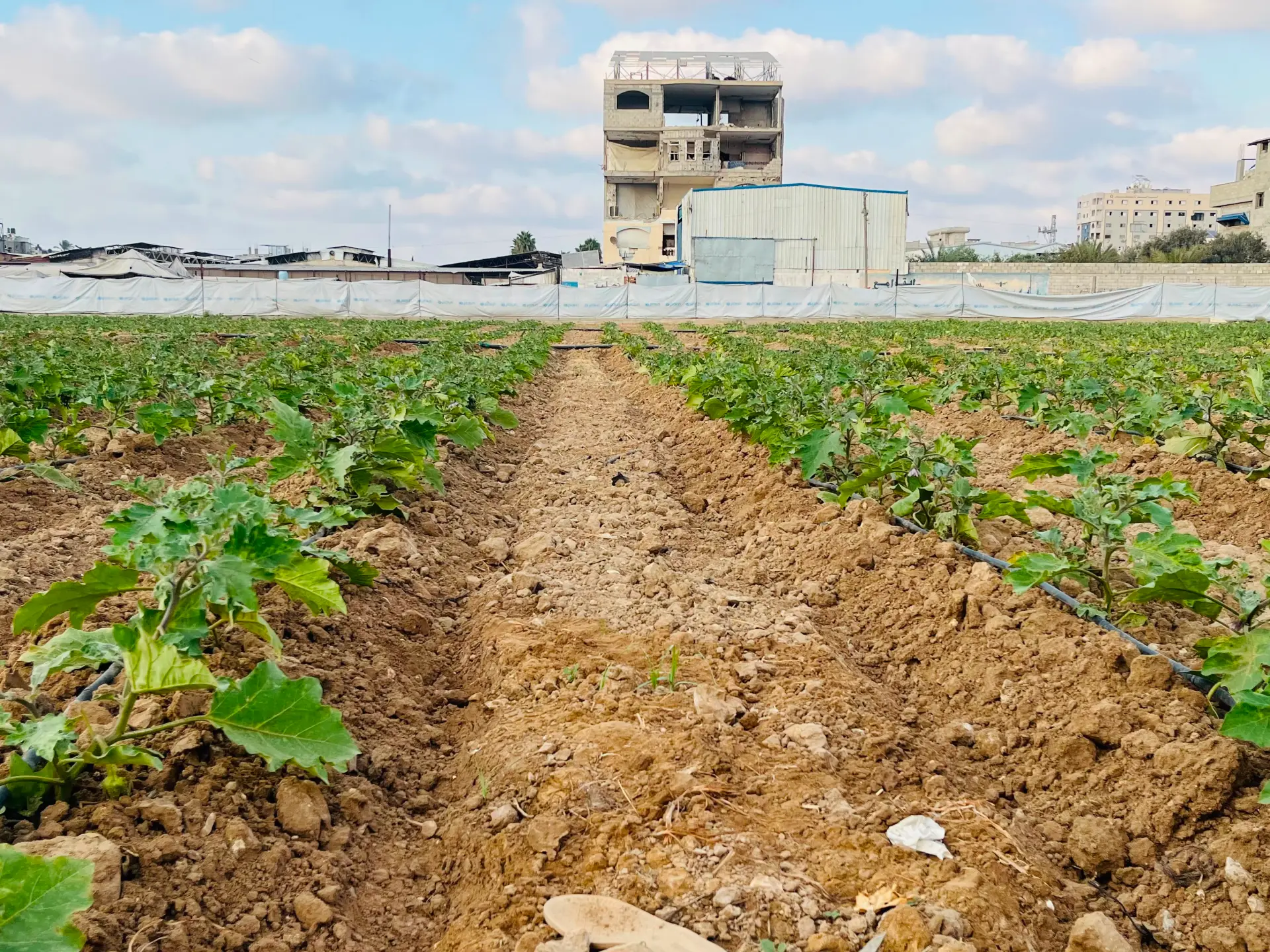
In the heart of Gaza's Nuseirat refugee camp, Mohammad al-Halabi, a 50-year-old farmer, meticulously tends to a 300-square-meter plot brimming with tomato and eggplant seedlings. This small endeavor represents his profound effort to reclaim his agricultural roots, a profession he shared with his father, Marwan, on their family land in northern Gaza's Jabalia.
Al-Halabi's journey as a farmer began in his childhood, cultivating a much larger 40,000-square-meter plot where he grew a diverse range of produce including strawberries, tomatoes, flowers, potatoes, and eggplants. His four children—Mahmoud, 30; Reham, 27; Issa, 24; and Omar, 20—were integral to the family's farming operations, relying on it as their primary source of income. "The land is my life, and I have spent my whole life farming it," al-Halabi expressed, highlighting his deep connection to the soil.
However, al-Halabi's extensive farmland in Jabalia was completely razed by Israeli forces in February 2024, an event he describes as part of a broader campaign of destruction in the area. His former land is now scarred with rubble and remnants of conflict, including what he identified as missile fragments and other weaponry. He believes that considerable rehabilitation will be necessary before the land can be cultivated again. Consequently, al-Halabi shifted his focus to the small plot in Nuseirat, which he began renting after his displacement at the onset of the conflict. Here, he plants whatever seeds he can acquire. "Agriculture is my profession," he affirmed. "Even after being displaced, I couldn’t leave it. I found a small piece of land and planted whatever I could get."
The produce from this small plot, consisting of only a few kilograms of each crop, primarily serves his family's needs, with insufficient surplus for sale. Yet, al-Halabi finds solace and purpose in this modest undertaking. "When I see the plant growing and producing a fruit, I feel that I can still farm," he shared. "The land is small, but it has potential, and hopefully it will produce a crop."
The Extent of Agricultural Damage
Data released by Gaza’s Government Media Office underscores the catastrophic scale of damage to the region's agricultural sector. Over 87 percent of Gaza’s agricultural land has been destroyed, and approximately 8,700 agricultural wells have been rendered inoperable. Furthermore, 7,748 cattle, sheep, and poultry farms have been decimated, and more than 87 percent of greenhouses have sustained damage. Annual vegetable and fruit production has plummeted from an estimated 524,000 tonnes to approximately 20,000 tonnes.
Naser Deeb, the director-general of Agricultural Extension at Gaza’s Ministry of Agriculture, explained that the damage extends beyond crops to encompass farmland, water sources, irrigation networks, wells, and agricultural facilities. Deeb, who has personally assessed numerous damaged agricultural sites across Gaza, noted that extensive rehabilitation is required before production can resume. "Farmers today are facing several problems at the same time," Deeb stated. "Even if a farmer returns to his land, that does not mean the land is ready for cultivation. The soil needs to be rehabilitated, water sources and irrigation systems repaired, and seeds, fertilisers and equipment provided." The ripple effects of these challenges, Deeb emphasized, are impacting farming families and markets throughout Gaza, leading to a scarcity of fresh vegetables and making it increasingly difficult for farmers to restore their livelihoods.
New Beginnings Amidst Adversity
In response to these profound challenges, some farmers are pursuing small-scale initiatives to rebuild. Mohammad Abdul Naser Hassan al-Jadba, a 40-year-old from Sheikh Ajleen in Gaza City, lost his income when his farmland became inaccessible due to its proximity to the "Yellow Line," a boundary controlled by Israeli forces where entry is deemed perilous. Recognizing the extreme danger of attempting to access his original land, al-Jadba opted to rent a small plot in Deir el-Balah. There, he has established a nursery and greenhouse to cultivate tomatoes, eggplants, and peppers.
Al-Jadba's new venture received crucial funding from a Belgian development fund, which enabled him to construct the greenhouse and acquire necessary agricultural supplies. "Before renting the farm, my income was zero," al-Jadba recounted. "Today, I can support my family, and my monthly income has reached around 3,000 shekels [$1,015] a month." This project has also allowed him to employ two farmers on a permanent basis, both of whom were previously unemployed. "For me, this project was not just agricultural support," al-Jadba affirmed. "It was a real opportunity to return to work, regain my source of income and become self-reliant again." These small-scale projects, while modest, offer a glimmer of hope for Gaza's farming community as they strive to reconstruct their lives and livelihoods against immense odds.