Historic Verdict in Syria's Transitional Justice Process
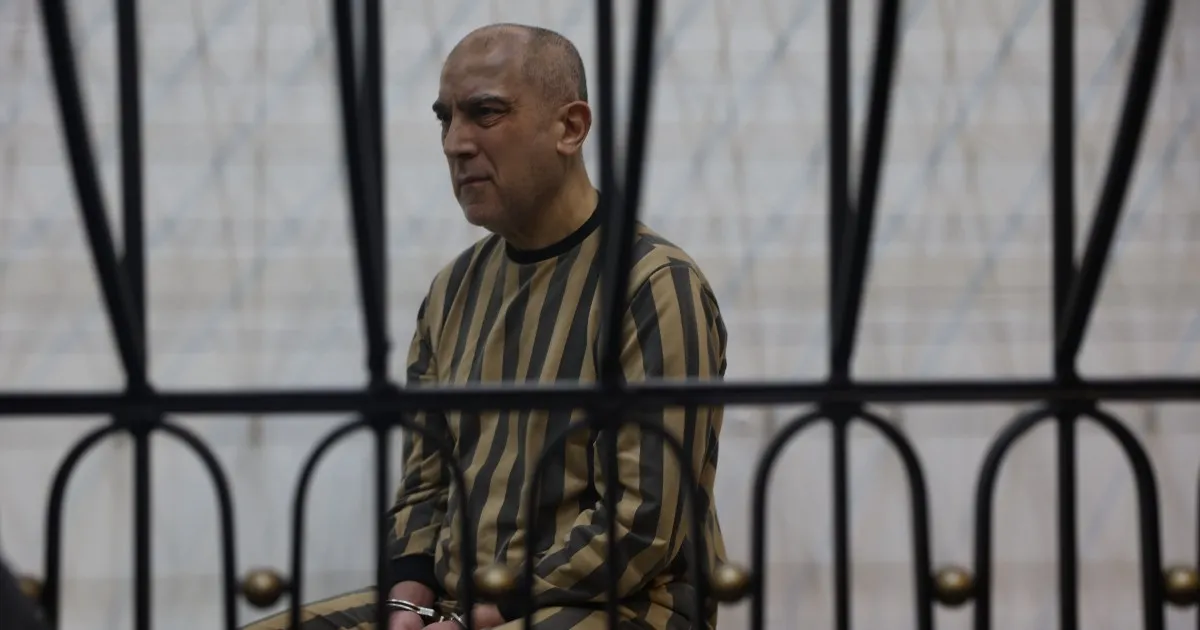
A Damascus court has handed down a death sentence to Atef Najib, a former Syrian security official, for his role in alleged atrocities during the country's 14-year civil war. Najib, widely implicated in a system of murder, torture, and enforced disappearances, was sentenced alongside former Syrian leader Bashar al-Assad and his younger brother, Maher al-Assad, who also received death penalties in absentia for crimes including premeditated murder. The Fourth Criminal Court concluded that actions undertaken by al-Assad's government in Deraa province in 2011 constituted crimes against humanity.
Unlike the al-Assad family members who sought refuge in Russia following the regime's collapse in December 2024, Najib has been in Syrian custody since January 2025. His trial saw him charged with at least 10 offenses, including murder, torture, and responsibility for massacres, with specific emphasis on crimes against humanity linked to the 2011 Deraa crackdown on protestors. This trial represents a crucial moment for Syria's nascent transitional justice system.
The Profile of Atef Najib
Atef Najib, 66, is a first cousin of former President Bashar al-Assad and previously served as the head of political security in Deraa province, located in southern Syria. Bashar al-Assad's government was overthrown in early December 2024, when a coalition of armed opposition groups swiftly advanced on Damascus. Since his ousting, al-Assad has resided in exile in Moscow under close Russian oversight, detached from any formal involvement in Syria's new transitional administration.
Bashar al-Assad's tenure began in 2000, succeeding his father, Hafez al-Assad, who had governed since 1970. Najib joined the Military Academy in Homs in the early 1980s after completing his schooling. Following his training, he assumed leadership of political security in Deraa. While the precise date of his official appointment is not publicly documented, he held this position leading up to and during the initial phase of the Syrian uprising in March 2011. Accused of violently suppressing this uprising, Najib was officially removed from his post by the al-Assad regime in April 2011.
Najib's oversight of political security in Deraa was central to the events that triggered the broader conflict. The arrest and torture of teenagers who had defaced a school wall with anti-government graffiti under his purview became a pivotal catalyst for the widespread protests that ultimately escalated into a devastating civil war.
Najib's arrest occurred in January 2025 by the Ministry of Interior’s general security forces during a campaign targeting remnants of the former government in Latakia province. Reports indicate that Najib had initially fled the country after al-Assad's removal but later returned to Syria. His detention was considered highly significant due to his sensitive security position in Deraa at the onset of the Syrian uprising.
The Court's Findings and Significance
The Fourth Criminal Court in Damascus issued Najib's sentence on Tuesday, concluding the final review and judgment of his case. Closing arguments and his final statement had been heard in the eighth session, with proceedings commencing on April 26. The court determined that Najib was involved in the torture of numerous detainees, including children, and was responsible for many deaths during their detention.
This ruling marks the first judicial decision by a Syrian court against a high-ranking official from the al-Assad era under the current transitional authorities. The fact that Najib is the only co-defendant physically present for trial within Syria, while others were sentenced in absentia, underscores the historical weight of this moment. He was accused of orchestrating a brutal crackdown on anti-government protestors in Deraa during the 2011 uprising, which led to the 14-year civil war. The court ruled that the 2011 massacre in Deraa, for which he was held accountable, constituted a crime against humanity.
Reportedly, 75 plaintiffs filed cases against Najib and provided testimony during the trial, according to an Al Jazeera Mubasher report. This trial has been viewed as a critical examination of Syria's transitional justice system and the new government's commitment to holding former regime officials accountable for abuses. The government of interim President Ahmed al-Sharaa has faced criticism regarding delays in establishing a promised transitional justice process following a war that claimed an estimated half a million lives.
A 2025 report by the Syrian Network for Human Rights indicated that over 181,000 individuals were forcibly disappeared or arbitrarily detained during the conflict, with 90 percent attributed to the al-Assad regime. Experts believe the legal discussions and precedents established in this trial will significantly influence future legal actions against individuals involved in similar crimes. The verdict is thus seen as a barometer for the al-Sharaa government's resolve in delivering justice for past atrocities. Fadel Abdulghany, founder and head of the Syrian Network for Human Rights, emphasized that the trial's true importance lies in the legal foundation and judicial record it will establish for future accountability.
Reports from Damascus indicated that people gathered around the court to hear the verdict, expressing relief and celebrating the decisions in the streets. This public response highlights the deep-seated desire for accountability after more than five decades of the al-Assad family's rule.