
Renewed Strikes Target Ukrainian Facilities
In a recent escalation of military actions, Russia has announced that its forces conducted strikes against a railway station situated at Ukraine's Danube port of Izmail. Additionally, two vessels near Mykolaiv were reportedly hit. These actions coincide with Ukrainian drone operations targeting locations within Russia, specifically a Baltic oil export hub and a warehouse in the vicinity of Moscow.
According to reports from the state news agency TASS, the Russian Ministry of Defence stated that the railway station in Izmail was being utilized for the loading, storage, and transportation of military supplies and fuel intended for Ukraine's armed forces. This assertion was made on Friday. The ministry further indicated that Russian forces engaged two tugboats off the coast of Mykolaiv, alleging that these vessels were involved in escorting cargo ships carrying weaponry to Ukrainian ports.
These developments follow earlier Russian attacks that had already inflicted damage on port infrastructure and led to power outages in Izmail. Izmail holds strategic importance as a key export hub positioned on the Danube River, in close proximity to the Romanian border. The ongoing targeting of such facilities underscores the persistent focus on disrupting logistical and supply capabilities deemed crucial to the opposing side's war effort.
Ukrainian Drones Strike Deep into Russian Territory
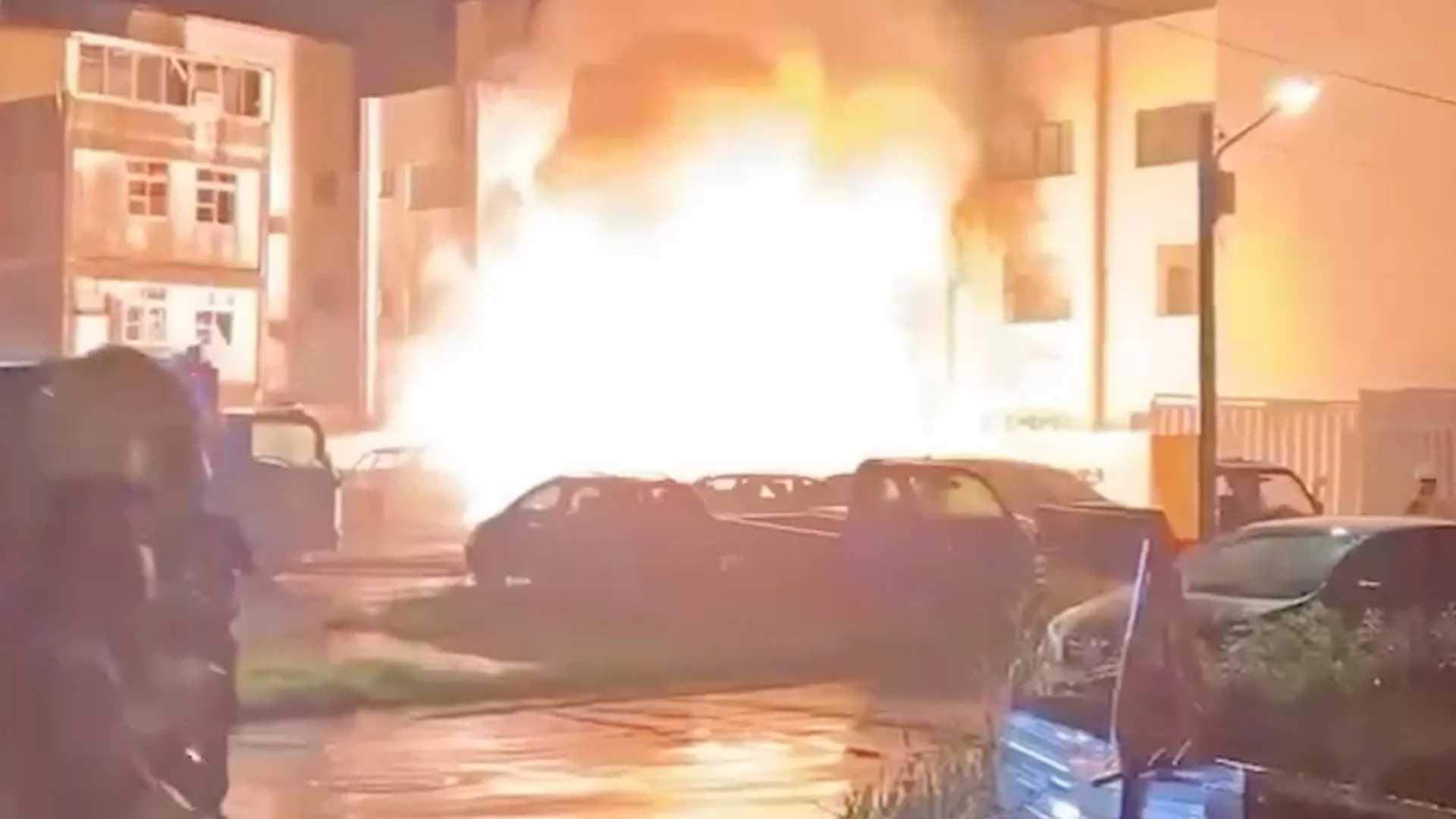
Concurrently, Ukrainian uncrewed aerial vehicles (UAVs) have been active, with Russian authorities confirming a drone attack that resulted in a fire at Ust-Luga. Ust-Luga is a significant Baltic Sea oil export port located in Russia's Leningrad region. Alexander Drozdenko, the regional governor, reported that the fire was successfully brought under control and extinguished, with no casualties reported. He also mentioned that over 50 drones were intercepted and shot down overnight in the area surrounding St. Petersburg.
Ukraine has consistently targeted Russian refineries, ports, and various energy infrastructure components. This strategy aims to increase the economic burden on Moscow in its ongoing military campaign. More than a dozen prominent Russian refineries have reportedly been struck, contributing to domestic fuel shortages within Russia. These attacks highlight a sustained effort by Ukraine to impact Russia's economic capacity and logistical networks.
Further south, in the Tver region of Russia, the governor reported that debris from a drone caused damage to a warehouse wall belonging to the online retail giant Wildberries, situated northwest of Moscow. No injuries were reported in this incident. Facilities owned by Wildberries have reportedly been struck more than 20 times over the past month, indicating a pattern of targeting commercial infrastructure that may be perceived as supporting or being part of the broader Russian economy.
Regional Security Measures and Flight Disruptions
The heightened drone activity has led to various security measures and operational disruptions. Russia's Federal Air Transport Agency, Rosaviatsia, implemented temporary restrictions on flights at all Moscow-area airports. This measure, reported by TASS, was enacted to ensure flight safety amidst the drone threats. Such restrictions underscore the direct impact of these aerial incursions on civilian operations and daily life.
The overnight drone activity also prompted defensive actions and precautionary measures in other parts of the Baltic region. The armed forces of Latvia announced that fighter jets successfully intercepted and shot down a drone that had entered its airspace. This incident highlights the readiness of regional air defenses to respond to unauthorized aerial intrusions. Similarly, Finland temporarily imposed restrictions on maritime movement in certain areas of the Baltic Sea. This was a precautionary step taken to mitigate potential risks associated with drone incidents, indicating a broader concern for regional security and the potential for spillover effects from the conflict.
The continuous exchange of strikes on critical infrastructure by both Russia and Ukraine signifies an ongoing and evolving phase of the conflict. The targeting of railway stations, port facilities, oil export hubs, and commercial warehouses demonstrates a strategic focus on disrupting supply chains, economic capabilities, and logistical support systems. These actions not only contribute to the direct military impact but also have broader implications for regional security, civilian operations, and the economic landscape of the involved nations and their neighbors.