
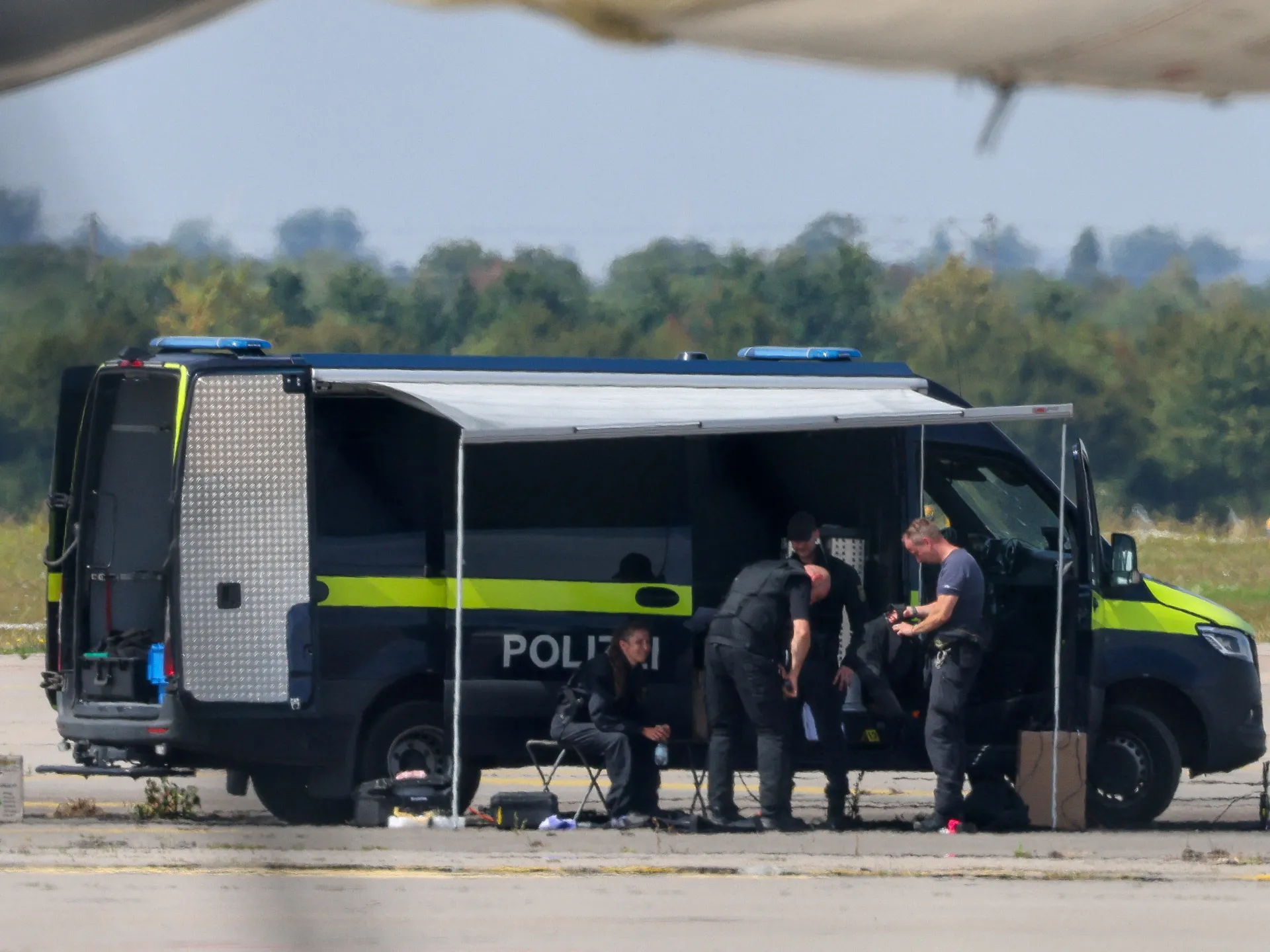
Drone Activity Signals Heightened Danger in Europe
A recent incident involving a quadcopter drone equipped with plastic explosives at Leipzig/Halle Airport in Germany has brought to light a significant escalation in European security concerns. The drone, which reportedly bypassed air defense systems on August 4, struck a Ukrainian cargo plane but failed to detonate. It was discovered hours later on the tarmac, with German media linking DNA evidence from the device to a firebomb attack at the same airport in July 2024.
German Interior Minister Alexander Dobrindt characterized the event as a “new level of danger” for the country, emphasizing the professional nature of the operation without directly naming Russia. Dobrindt suggested the involvement of “possibly foreign powers,” a statement that reflects Germany's historical diplomatic approach towards Moscow.
Allegations of Russian Involvement and Hybrid Warfare
U.S. intelligence agencies reportedly suspect Russian involvement, citing the military-grade explosives found on the drone as indicative of a state actor. The Wall Street Journal suggested that the failed attack might have been a test of NATO's collective defensive resolve.
Lithuanian Defence Minister Robertas Kaunaus voiced a more direct accusation, claiming that Moscow might be planning false-flag operations using captured Ukrainian drones to implicate Kyiv in attacks on critical infrastructure in the Baltic region. Despite his assurance that the threat was not immediate, these concerns have prompted Poland and other Baltic states, which have also experienced drone incursions, to bolster security around their energy facilities and logistical hubs.
Military analysts and drone warfare experts largely concur with the assessment of Russian involvement, viewing these incidents as part of a broader, long-standing hybrid warfare campaign orchestrated by the Kremlin. Since 2024, Russia has allegedly deployed drones into a dozen NATO countries and Ireland, aiming to unsettle governments, create public anxiety, identify weaknesses in air defense, and assess the responsiveness and coordination capabilities of NATO air forces.
Lieutenant General Ihor Romanenko, former deputy head of the General Staff of the Armed Forces of Ukraine, stated that Russian President Vladimir Putin is effectively “testing NATO and showing [member states] how weak they are.”
Vulnerabilities in European Air Defense
According to the International Institute for Strategic Studies (IISS), Russian drone activities have led to airport closures, logistical disruptions, and incursions into sensitive sites, including nuclear facilities and defense installations housing advanced weaponry. The IISS's July report indicated that Russia might be utilizing its “shadow fleet” of oil tankers, which navigate European maritime routes, to launch and recover these drones.
This campaign followed a significant expulsion of alleged Russian spies from European embassies, who were accused of gathering intelligence for Moscow. The IISS concluded that the drone campaign represents “a series of tactical successes for the Kremlin and a strategic failure of allied air defense.” Russia has consistently dismissed these allegations as “scare stories.”
European air defense systems, traditionally designed to counter aircraft and missiles, are reportedly ill-equipped to detect and intercept small drones effectively. Identifying their origin and authorizing an interception is time-consuming, and using expensive fighter jets and missiles to down them is often impractical. The IISS also noted that the Kremlin's campaign has “exposed political fractures” within NATO and highlighted the disparity between the capabilities of European militaries and the political willingness to authorize their use.
Outdated Systems and Strategic Implications
Nikolay Mitrokhin, a researcher at Germany's Bremen University, suggested that the Main Intelligence Directorate (GRU), Moscow's primary foreign intelligence agency, is likely behind the Leipzig incident. He pointed to the GRU's history of global cyberespionage and efforts to disrupt military and maritime logistics in Europe. Mitrokhin observed that the Leipzig operation, from a military perspective, was well-executed in its objective of causing concern across Europe. He concluded that European drone identification and interception systems are “outdated by at least five years,” especially given the rapid advancements in drone warfare observed in Ukraine.
Andrey Pronin, who operates a drone pilot school in Kyiv, emphasized that the primary goal of such drone incursions might not be reconnaissance but rather to test responsiveness and generate political unease. He sarcastically commented on the common European governmental response, suggesting that the aim is to provoke “concerns” or “serious concerns.” Pronin advocates for the destruction of any unidentified flying objects to prevent similar incidents.
NATO's Response Under Scrutiny
NATO's reaction to these drone incidents has been criticized as slow, costly, and overly cautious. While drones have become central to warfare in Ukraine, the Western military-industrial complex is reportedly lagging in developing countermeasures. No NATO member state possesses a substantial number of drone interceptors.
Pronin asserted that European nations are operating under “old NATO doctrines that no longer work,” concluding that “Europe is not ready for a war.” Romanenko highlighted a significant incident on September 10, when nearly two dozen Russian drones entered Polish airspace, prompting the closure of four airports. He contrasted this with Ukraine's ability to down 500 Russian drones on the same day, noting that Poland managed to shoot down only two. Romanenko lamented the apparent indecisiveness, describing it as an “ostrich position” and criticizing the lack of concrete action despite stated conclusions from such events.