Drone Proliferation Reshapes Yemeni Battlefield Dynamics
The protracted conflict in Yemen, now spanning over a decade, is experiencing a notable evolution in its combat methodologies, characterized by the escalating deployment of unmanned aerial vehicles (UAVs) by both Houthi insurgents and the internationally recognized government forces. This surge in drone warfare marks a significant tactical adjustment, moving beyond traditional ground engagements to incorporate more sophisticated aerial capabilities.
Recent weeks have seen a reciprocal exchange of drone attacks. Houthi forces initiated strikes on government military installations and troop concentrations using one-way attack drones, resulting in casualties among government soldiers. In swift response, government-aligned units retaliated with their own remotely operated drones, targeting Houthi combatants on the front lines. This tit-for-tat aerial engagement underscores the increasing prominence of drones in the Yemeni theater.
Government military entities have disseminated visual evidence showcasing their drones tracking targets, deploying munitions, neutralizing combatants, incapacitating armored vehicles, and damaging fortified positions. Marius Bales, a doctoral researcher at the Bonn International Centre for Conflict Studies, commented on this development, stating, “The government side is now acquiring a potentially important tactical capability of its own.” He further suggested that “Reusable, remotely piloted drones may be particularly useful for the day-to-day battle along relatively static front lines, even if they cannot match the Houthis’ strategic strike range.”
Rueben Dass, an associate research fellow at the S Rajaratnam School of International Studies in Singapore, observed that Yemeni government forces have publicized the use of munitions delivered by drones, seemingly from rotary-wing aircraft. Dass indicated that “These drones may have been modified to carry improvised payloads targeting Houthi positions on the ground, similar to use by state and nonstate actors in several other conflict zones.”
Houthi Aerial Superiority and Government Counter-Efforts
The Houthis, who seized the capital Sanaa in September 2014 amidst limited military resistance and subsequently advanced into other regions of Yemen, have historically leveraged drones as a crucial element of their asymmetric warfare strategy. Their advanced drone capabilities have enabled them to conduct surveillance and strike enemy gatherings, command centers, and infrastructure far behind contact lines, while government forces were largely confined to defensive and interception roles.
However, government-affiliated forces have recently announced and showcased drone operations against Houthi strongholds across multiple fronts, including Marib, al-Jawf, Taiz, Hajjah, and al-Dhalea. While the Houthis possess a more established and sophisticated missile and drone infrastructure, experts suggest that government forces do not require complete parity to influence the battlefield significantly.
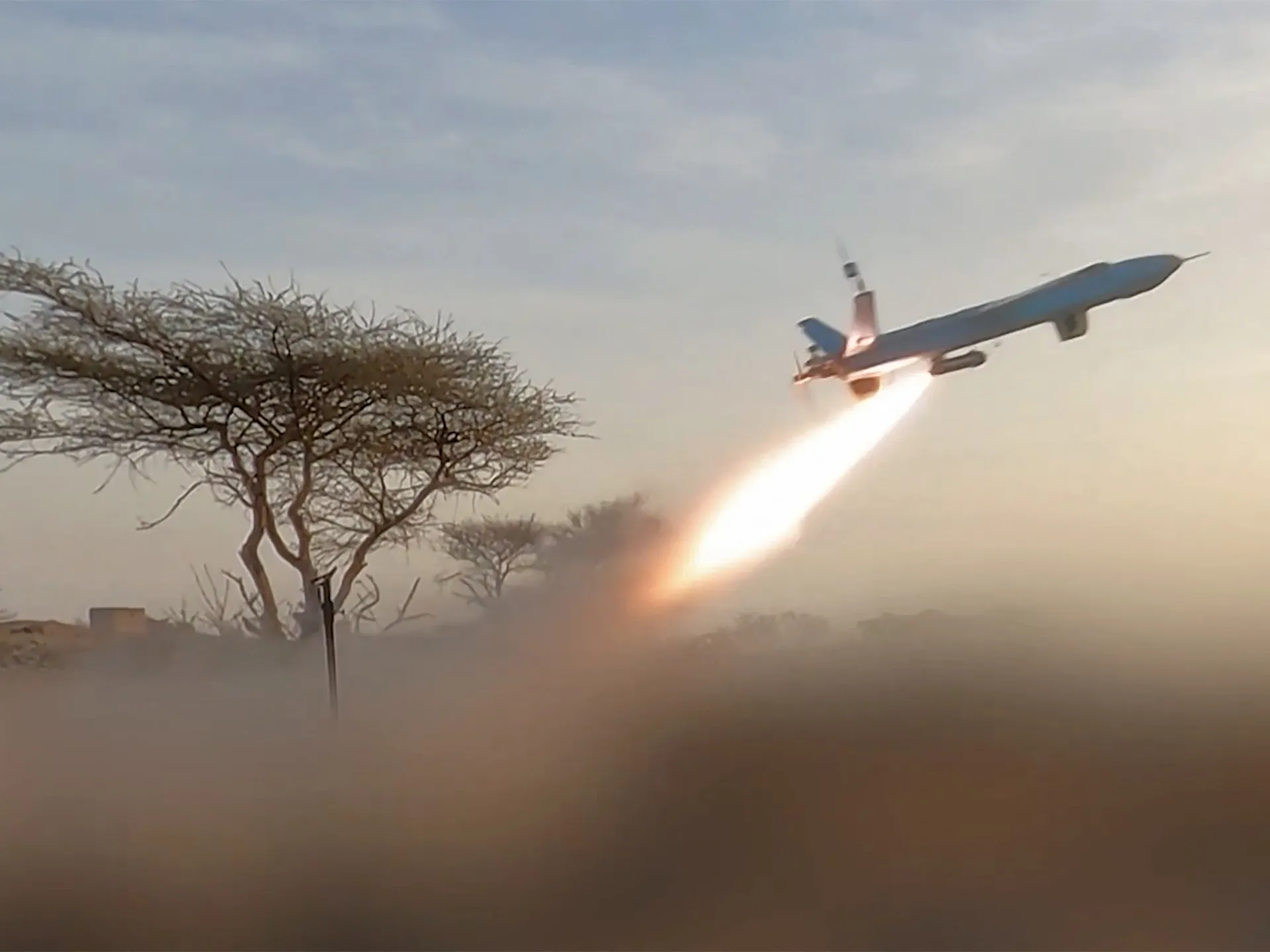
Bales emphasized the Houthis' continued overall superiority in drone technology. “I would still regard the Houthis as having the more sophisticated drone capability overall,” he noted, attributing this to “roughly a decade of operational experience and possess a much broader spectrum of systems.” The Houthi arsenal encompasses a range of systems, from short-range attack drones utilizing reusable platforms to long-range, one-way unmanned aerial vehicles (UAVs) capable of striking targets well beyond Yemen’s borders. Bales also highlighted Iranian technological assistance as a contributing factor to the Houthis’ capabilities, alongside their expertise in modifying and operating these systems. The Houthi inventory includes systems such as the Qasef and Sammad families, and newer designs derived from Iranian technology. For instance, Qasef drones, resembling Iranian-designed Ababil-T drones, can carry 30kg warheads for one-way attacks, while Sammad-3 drones reportedly have a range of approximately 1,500km and can be fitted with 18kg of explosives.
Since their takeover of Sanaa, the Houthis have diversified their array of unmanned aircraft and missiles, incorporating various drones, long-range ballistic rockets, and even kamikaze speedboats. Bales pointed out that the Houthis appear to be adopting tactical innovations observed in other conflicts, such as the use of FPV (first-person-view) drones with fiber-optic control, indicating a continuous evolution in their drone warfare tactics.
Government Adaptation and the 'Ukraine-ization' of Warfare
Last month, the Yemeni government’s Ministry of Defence publicly displayed drones as part of its military equipment for the first time, though specific details regarding their types, ranges, or operational capabilities were not disclosed. These government drones, predominantly remotely operated and reusable, have been conducting operations almost daily. Bales described their utility: “They [drones] can observe a target, attack it by dropping a munition and, if everything works as intended, return for another mission. Recent footage shows them being used against individual fighters, vehicles, trenches, fortified positions and mortar positions.”
A Yemeni researcher specializing in drone use within the conflict, who preferred to remain anonymous, revealed that government military experts have adapted commercially available drones for military applications, modifying them for reconnaissance, target spotting, and munition deployment.
While drone usage is becoming increasingly critical in Yemen, its scale and sophistication are not yet comparable to the conflict in Ukraine. Bales noted, “The difference in scale is enormous. In Ukraine, drones have become an industrialised and ubiquitous component of warfare.” However, he added, “Yemen is beginning to display what we might call the Ukraine-isation of tactical drone warfare: Inexpensive UAVs become an ordinary weapon of small units rather than a specialist capability used occasionally.”
Impact on Houthi Morale and Strategic Implications
Recent weeks have also seen a restructuring of the Yemeni government’s military, consolidating decision-making, with indications that a military offensive against the Houthis remains a viable option. The anti-Houthi coalition now includes the national army under the Ministry of Defence, alongside new formations like the Giants Brigades and the Guardians of the Republic forces. These diverse groups have emerged due to the central government's weakening authority, the rise of independent factions, and support from regional allies.
The government’s expanding drone capabilities could significantly alter the tactical balance, provided their intensity and coordination are maintained, according to Yazeed al-Jeddawy, research manager at the Sanaa Center for Strategic Studies. He observed that footage from various government-aligned armed groups targeting Houthi fighters and positions suggests that drones are no longer a niche capability but a widely adopted operational tool. This increased drone activity could impact Houthi morale by exposing their movements and positions to aerial surveillance and attack. Al-Jeddawy stated, “For years, the Houthis held a clear advantage in using footage of their attacks to project military dominance and undermine the morale of their opponents. Government-aligned forces are now beginning to contest that space.” He added that the volume of footage conveys a message to Houthi fighters that their positions are increasingly exposed, even without a major ground offensive.
Houthi media outlets have reported significant casualties, including field commanders, further highlighting the impact of these aerial campaigns. Al-Jeddawy concluded that “The drone campaign can make the front lines more costly for the Houthis, restrict their movement and gradually weaken their positions.”