
Enhancing Home Safety Before an Earthquake
Earthquake preparedness begins well before any seismic activity occurs. It involves critically assessing your environment, particularly your home, workplace, or school, to identify potential hazards. Items that could fall, shatter, or become projectiles during intense shaking pose a significant risk. Securing tall furniture, such as bookshelves and filing cabinets, to walls is a crucial first step. Heavy or fragile objects should always be stored on lower shelves to minimize their fall distance. Additionally, ensure that large appliances and electronic devices, like televisions, are properly anchored to prevent them from toppling over. Familiarizing yourself with the location of main controls for gas, electricity, and water, and learning how to safely shut them off, is also vital. This knowledge can prevent further damage or hazards, such as fires or floods, in the immediate aftermath of an earthquake. Maintaining a safe distance from windows and other glass fixtures, which can shatter, is also important.
Assembling an Emergency Survival Kit
A well-stocked emergency kit, easily accessible, is indispensable for earthquake preparedness. Earthquakes can disrupt essential services such as power, water, and communication networks for extended periods. Having a ready supply of necessities ensures self-sufficiency and eliminates the need to search for items during a crisis. A comprehensive emergency kit should include: ample drinking water, non-perishable food items, a fully equipped first-aid kit, a flashlight with extra batteries, a battery-powered or hand-crank radio for receiving vital information, a whistle for signaling for help, and any essential prescription medications. Furthermore, it is advisable to include a power bank for mobile devices, copies of important personal documents, a small amount of cash, and sturdy shoes to protect your feet from broken glass and debris, which are common after an earthquake.
Responding During Seismic Activity: Drop, Cover, Hold On
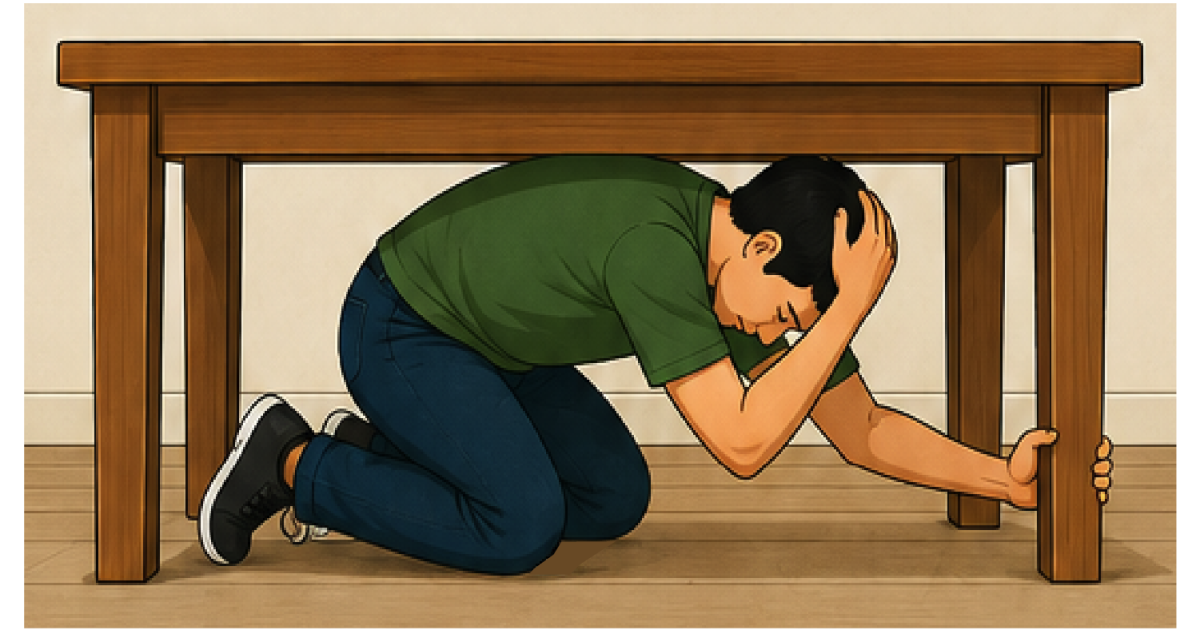
When an earthquake strikes and the ground begins to shake, your immediate actions are critical for your safety. If you are indoors, the primary directive is to remain inside and protect yourself until the shaking subsides. Experts, such as the US Centers for Disease Control and Prevention (CDC), strongly advise against attempting to exit a building during an earthquake. The exterior environment can be extremely dangerous due to falling glass, building fragments, and other debris. Staying put significantly lowers the risk of injury. The recommended safety protocol is 'Drop, Cover, Hold On':
- Drop: Immediately get down onto your hands and knees. This position prevents you from being knocked down by the shaking and allows you to move if necessary.
- Cover: Seek shelter under a sturdy piece of furniture, such as a strong table or desk. Use your arms and hands to protect your head and neck from falling objects. If no sturdy shelter is available, move towards an interior wall, staying clear of windows and other potential hazards.
- Hold On: Maintain your position under your chosen shelter and hold on firmly. Be prepared to move with your shelter if it shifts due to the shaking. Continue to hold on until the ground stops moving.
Situational Responses: Adapting to Your Surroundings
Effective earthquake response is not a one-size-fits-all approach; it depends heavily on your immediate environment and the specific hazards present. Different locations require tailored actions to maximize safety:
- Indoors: Adhere strictly to the 'Drop, Cover, Hold On' procedure.
- In a Store or Office: Move away from shelves and glass displays, protect your head, and stay inside.
- At School: Follow instructions from teachers and staff, and take cover under a sturdy desk or table.
- In a Car: Pull over to a safe location away from bridges, overhead power lines, trees, and other potential falling hazards. Remain inside the vehicle until the shaking stops.
- Outdoors: Move to an open area, clear of buildings, power lines, trees, and anything that could collapse or fall.
- In a Lift: Stay inside the lift until it comes to a complete stop. Once it stops, exit only if it is safe to do so.
Post-Earthquake Actions: Ensuring Continued Safety
The cessation of shaking does not signify the end of danger. The period immediately following an earthquake requires vigilance and careful action. First, assess yourself and those around you for any injuries. Then, survey your surroundings for new hazards. Aftershocks are common and can cause further damage. Earthquakes can also trigger secondary dangers such as fires, gas leaks, structural damage to buildings, broken glass, and downed power lines. If you detect the smell of gas or suspect a damaged gas pipe, evacuate the area immediately and do not attempt to turn the gas back on yourself. If electrical wiring appears damaged, avoid contact and follow local emergency guidelines for shutting off power. Remain prepared for aftershocks by being ready to 'Drop, Cover, Hold On' again if shaking resumes. During the aftermath, use your mobile phone judiciously. Prioritize text messages or data services over phone calls to prevent overloading communication networks, keeping lines open for emergency services. Conserve battery life by reducing screen brightness, closing unnecessary applications, and utilizing a power bank if available. Staying informed through official channels and being ready to assist others, once your own safety is assured, are crucial steps in the recovery process. Proper preparation and a composed response can be life-saving during and after an earthquake.