India's River Interlinking Project Stirs Controversy Over Displacement and Compensation
The Ken-Betwa river interlinking project, a monumental undertaking aimed at transferring water from the Ken River to the Betwa River in central India, is facing significant criticism regarding its impact on local communities. While heralded as a solution to water scarcity, the project’s flagship component, the Daudhan Dam, is set to submerge ten settlements within and around the Panna Tiger Reserve, displacing an estimated 7,000 families. Concerns are mounting over the alleged disregard for legal protections concerning compensation and rehabilitation, particularly affecting women.
The 'Chita Andolan': A Symbolic Protest
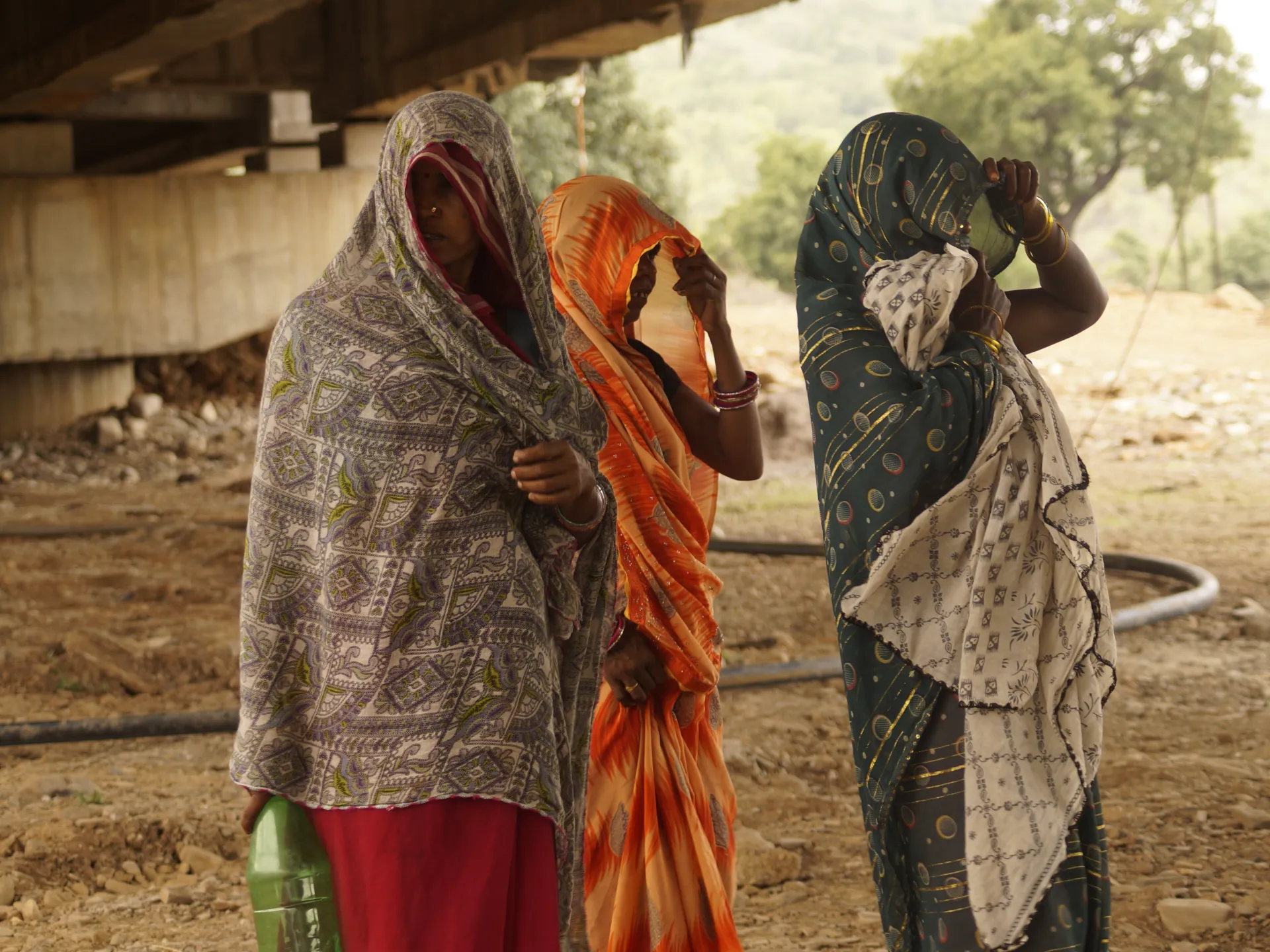
In a poignant display of desperation, approximately 30 women from Kupi village in Madhya Pradesh recently staged a unique protest known as the 'Chita Andolan,' or funeral pyre protest. Gathering under a bridge over the Barna River, these women symbolically lay on unlit pyres. This powerful act was intended to represent the dire consequences of displacement without proper compensation: a life stripped of home, land, and future. Fifty-year-old Gyan Rani Gond, a participant in the protest, conveyed a deep sense of frustration and anger as she joined the demonstration. The protest was punctuated by slogans like "Inquilab Zindabad" (long live the revolution) and "Nyay do ya maar do" (give us justice or kill us), echoing the community's demand for fairness.
Challenges Faced by Displaced Families
Gyan Rani belongs to the Gond tribe, one of central India's indigenous communities, heavily reliant on the forest for their livelihood. Her family, like many others, owns agricultural land and two homes. While her husband and elder son received rehabilitation payments totaling approximately $13,000, Gyan Rani, her 18-year-old daughter Muliya, her elder son's wife, and her deceased younger son's widow, Pooja, received no independent compensation. This exclusion is a significant point of contention, as the family argues that the existing payment is insufficient to rebuild their lives. One of their homes has already been demolished, leaving only rubble, with the second house also under threat.
Gyan Rani articulated the profound sense of injustice felt by her family: “Me, my daughter, and my daughter-in-law Pooja should be compensated. They have broken our house. Two houses. One is already broken. One is about to be broken.” She further questioned the government's actions, stating, “If the government cannot give us compensation, then they should send us to another country. Because we have voted. We are citizens of this country. We voted for this government. Where is our right?”
Legal Protections and Their Implementation
India's Right to Fair Compensation and Transparency in Land Acquisition, Rehabilitation and Resettlement Act (LARR), 2013, was enacted to safeguard displaced communities. Crucially, Section 3(m) of this act includes an explanation stipulating that every adult, irrespective of gender, should be treated as a separate family unit for compensation purposes. This provision theoretically entitles individuals like Pooja, Muliya, and Gyan Rani to independent compensation. However, activists and affected families claim that in practice, officials often apply only the main text of Section 3(m), which defines a family more conventionally as a person, their spouse, and dependent minor children. This selective interpretation reportedly leads to the exclusion of adult women, especially those without land titles or whose names are not explicitly on government lists, from receiving individual compensation.
The Ken-Betwa project is the first of 30 planned river interlinking initiatives under India's National Perspective Plan. Campaigners express concern that if this narrow interpretation of the law persists, women displaced by future projects across the country could face similar injustices and exclusions.
Official Responses and Ongoing Challenges
A Right to Information request in April 2025 revealed that no affected family had been fully rehabilitated. While the government claims this has since changed, with Madhya Pradesh Revenue Minister Karan Singh Verma stating in July 2026 that all eligible families in Panna and Chhatarpur districts had received compensation and rehabilitation, protests continue. Allegations that compensation was deposited into agents' accounts rather than directly to affected families prompted the prime minister's office to request a report from the state government. Following an 18-day hunger strike by protest leader Amit Bhatnagar, the Chhatarpur district administration ordered a new verification of affected families, acknowledging potential omissions.
Despite these developments, construction of the Daudhan Dam has pressed on. Families whose homes have been demolished are largely fending for themselves, using whatever compensation they received to independently seek new land and construct homes. Many report that the compensation was insufficient to adequately rebuild their lives, and formal resettlement by the state has yet to occur for many.
Pooja's Plight: A Widow's Struggle
The story of 21-year-old Pooja Gond further highlights the systemic issues. Widowed after her husband's death and later losing her infant son, Pooja has not received any compensation. Officials informed her that her name was not on the compensation list and allegedly demanded a substantial sum of 100,000 Indian rupees ($1,050) to add it. Despite repeated efforts, traveling to Kishangarh and the district headquarters in Chhatarpur, and spending her own money on these journeys, her pleas have gone unanswered. "Bina paise ke koi baat nahi sunta," she states quietly, meaning, "Without money, nobody listens."
Pooja's family witnessed one of their homes demolished without warning, with officials reportedly ignoring their pleas to stop. They have since moved into their second, smaller mud house, which is also slated for demolition. With traditional tribal art adorning its walls, this house represents the last vestige of their former life. Pooja remains uncertain about where she will go next, but her desire to stay close to the forest, a source of livelihood and cultural connection, remains strong.
The experiences of these women underscore a critical disconnect between legal provisions designed to protect vulnerable populations and the practical implementation of these laws on the ground. As India pursues large-scale development projects, ensuring equitable and just compensation for all affected individuals, particularly women, remains a significant challenge.