Incident Overview
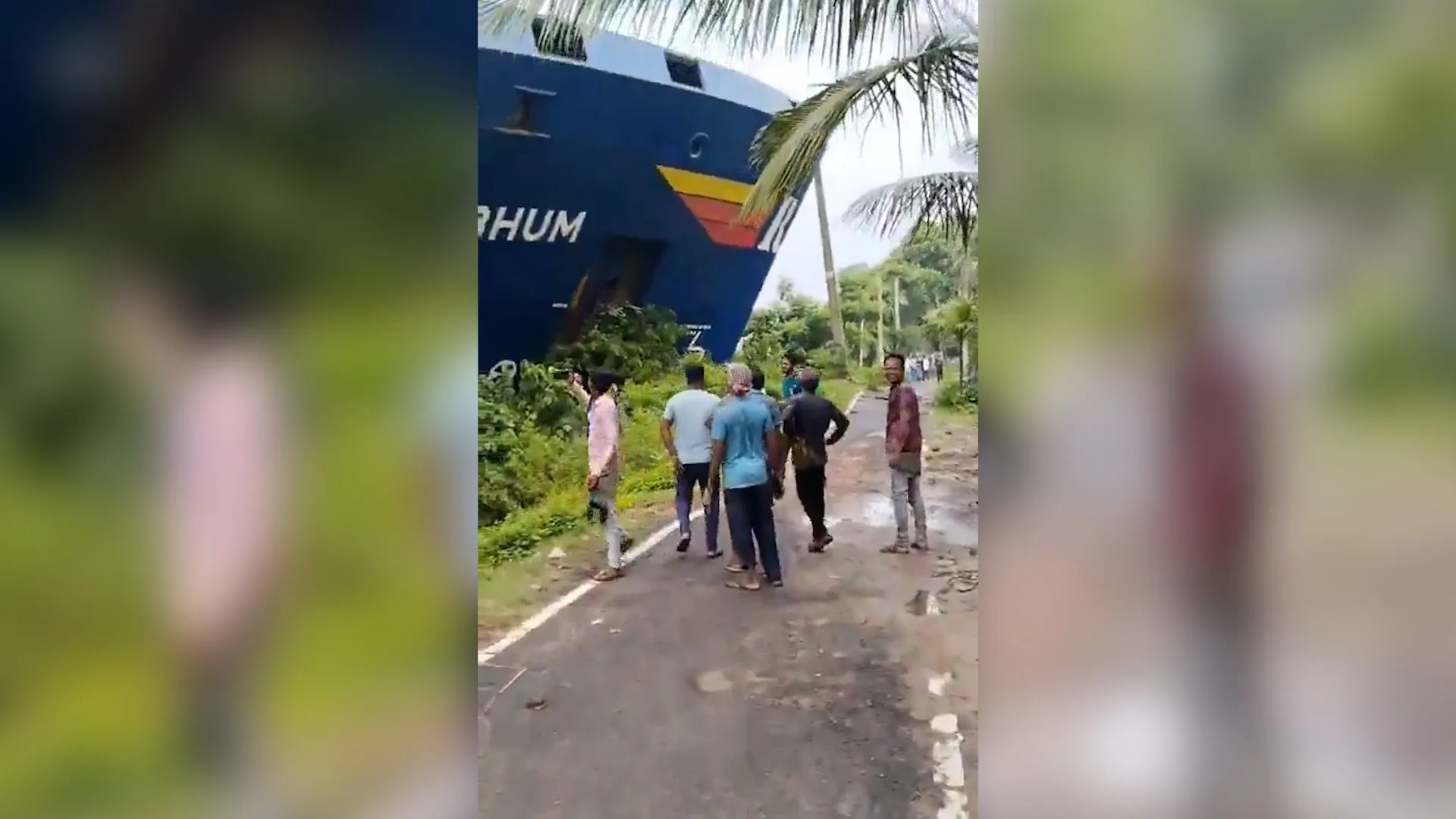
A maritime incident occurred on the Hooghly River in eastern India involving a container ship registered under the Singapore flag. The vessel reportedly experienced a steering system failure, resulting in its impact with the riverbank. The incident took place as the ship was proceeding towards its destination, the port of Kolkata.
Vessel Details and Operational Context
The ship involved in the collision is a container vessel, a type of cargo ship designed to transport goods in standardized intermodal containers. Its registration under the Singapore flag indicates compliance with Singaporean maritime laws and regulations, and it falls under the jurisdiction of the Maritime and Port Authority of Singapore for certain operational aspects. The Hooghly River, a distributary of the Ganges River, is a vital waterway for commercial shipping in West Bengal, India, connecting the populous city of Kolkata to the Bay of Bengal. Navigating this river presents unique challenges due to its currents, varying depths, and the presence of numerous riverine traffic and infrastructure.
Circumstances Leading to the Collision
Preliminary reports suggest that the primary cause of the incident was a malfunction in the ship's steering mechanism. Steering systems are critical components of any vessel, enabling the crew to control its direction and maintain a safe course. A failure in this system can lead to a loss of control, particularly in confined waterways or areas with strong currents, such as the Hooghly River. The precise nature of the steering failure – whether it was mechanical, electrical, or human error related to its operation – will likely be a key focus of subsequent investigations.
Potential Ramifications of the Incident
Collisions of this nature, even without immediate reports of severe damage, can have several potential consequences. For the vessel itself, there is the risk of structural damage to the hull, propulsion systems, or other critical components, which could necessitate repairs and lead to significant delays in its operational schedule. Such delays can result in financial losses for the shipping company and disruption to supply chains, as container ships are integral to global trade. There is also the potential for environmental impact, particularly if the collision results in a breach of the hull and leakage of fuel or other hazardous materials into the river. The Hooghly River supports a diverse ecosystem and is a source of livelihood for many local communities, making environmental protection a significant concern.
Furthermore, incidents on navigable waterways can affect river traffic. Depending on the extent of the damage and the position of the vessel, it might impede the movement of other ships, leading to congestion and further delays for commercial and passenger vessels. The safety of the crew on board is always a paramount concern in any maritime incident. While initial reports did not detail casualties, the well-being of the personnel involved would be a primary focus during and after such an event.
Investigation and Regulatory Response
Following a maritime incident of this type, a thorough investigation is typically initiated by relevant authorities. In this case, both Indian maritime authorities, given the incident's location, and Singaporean authorities, due to the vessel's flag state, would likely be involved. The purpose of such an investigation is to ascertain the exact sequence of events, identify the root causes of the steering failure, evaluate the actions taken by the crew, and determine if any regulatory breaches occurred. The findings of these investigations are crucial for preventing similar incidents in the future, often leading to updated safety protocols, maintenance requirements, or navigational guidelines.
The investigation would involve examining the ship's logbooks, maintenance records, voyage data recorder (VDR) information, and interviewing the crew members. Expert analysis of the steering system components would also be a critical part of understanding the mechanical or technical aspects of the failure. The outcome of the investigation could lead to recommendations for improvements in ship design, operational procedures, or crew training, reinforcing maritime safety standards globally.
Broader Context of Maritime Safety
This incident underscores the continuous challenges inherent in maritime operations, particularly in busy and complex waterways. Despite advancements in navigation technology and safety protocols, mechanical failures and the unpredictable nature of marine environments can still lead to accidents. The global shipping industry is constantly working towards enhancing safety measures, including regular inspections, crew training, and the implementation of advanced monitoring systems. However, incidents like the one on the Hooghly River serve as reminders of the critical importance of vigilance, robust maintenance practices, and effective emergency response mechanisms in ensuring the safety of maritime transport and protecting the marine environment.