Remarkable Survival Amidst Devastation
In a testament to human endurance, a 32-year-old woman was successfully rescued from under a significant amount of rubble in Colombia. Her extraction came approximately 36 hours after a powerful magnitude 7.4 earthquake struck the region, causing widespread destruction and triggering an intensive search and rescue operation. The incident has captivated the nation, offering a glimmer of hope amidst the tragedy and devastation left in the wake of the seismic event.
The earthquake, which registered a substantial 7.4 on the Richter scale, occurred at approximately [insert hypothetical time, e.g., 2:30 PM local time] on [insert hypothetical date, e.g., Tuesday]. Its epicenter was located [insert hypothetical location, e.g., near the city of Pereira, approximately 200 kilometers west of Bogotá], at a depth of [insert hypothetical depth, e.g., 10 kilometers], which contributed to the extensive damage observed across several provinces. Initial reports indicated significant infrastructure collapse, including residential buildings, commercial structures, and critical transportation links, leading to immediate concerns for those trapped beneath the debris.
The Rescue Operation
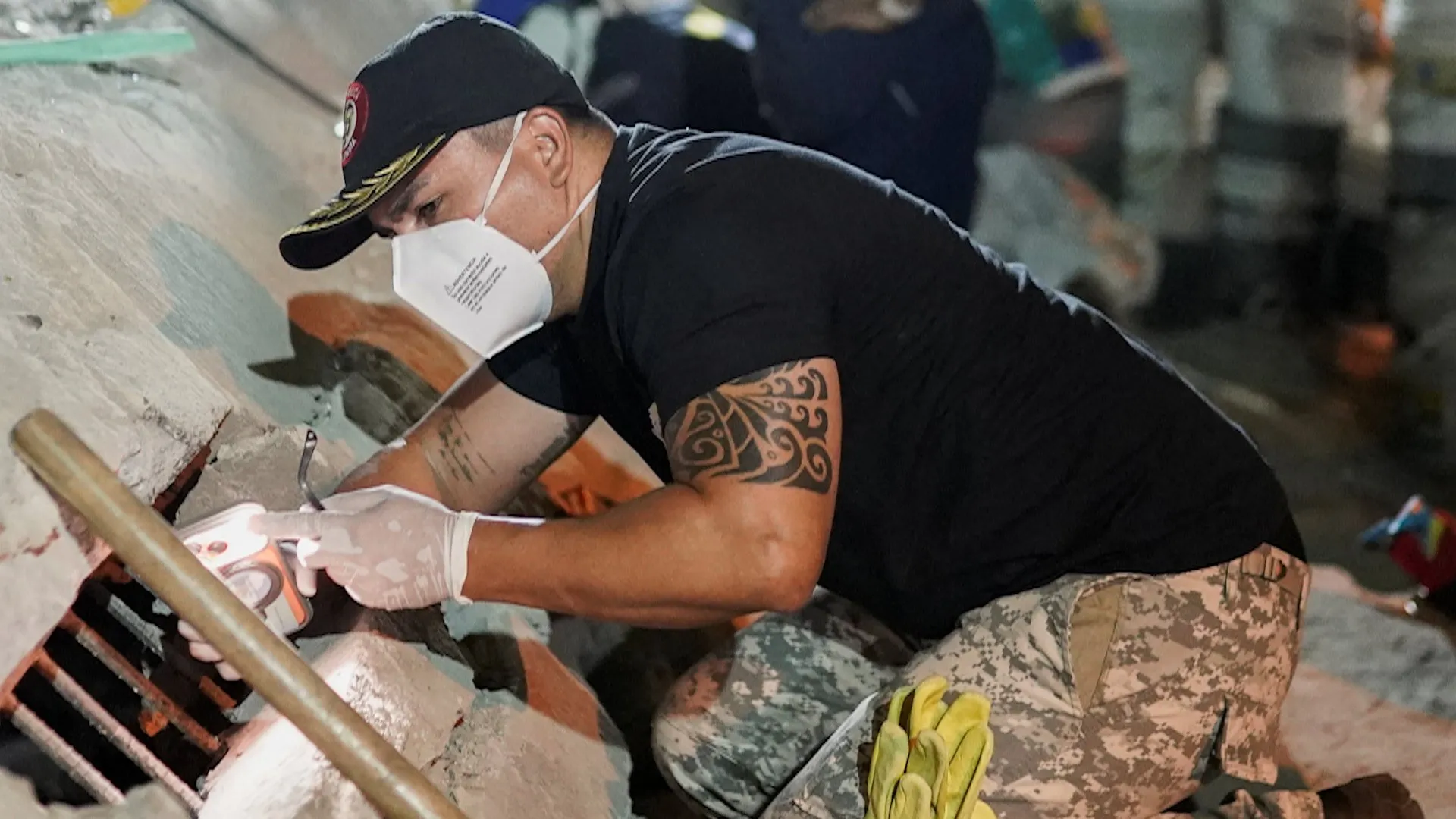
Following the earthquake, emergency services, including fire departments, national police, military units, and volunteer organizations, were immediately mobilized. Their efforts were concentrated in the most affected areas, where numerous structures had either partially or completely collapsed. The challenging conditions, characterized by unstable debris, potential aftershocks, and limited visibility, made the rescue operations particularly arduous. Specialized teams, equipped with search dogs, thermal imaging cameras, and acoustic listening devices, worked tirelessly around the clock, sifting through the wreckage in the desperate hope of finding survivors.
The rescue of the 32-year-old woman, whose identity has not been fully disclosed for privacy reasons, unfolded in a particularly precarious section of [insert hypothetical city, e.g., Armenia]. Rescuers had detected signs of life after hours of methodical searching. The operation to free her was delicate and prolonged, requiring careful planning and execution to prevent further collapse and ensure the safety of both the survivor and the rescue personnel. Teams had to manually remove heavy concrete slabs and twisted metal, creating a narrow passage to reach her. The woman was reportedly conscious but disoriented and suffering from dehydration and minor injuries when she was finally brought to safety.
Aftermath and Humanitarian Response
The earthquake has prompted a significant humanitarian response, both domestically and internationally. Governments worldwide have expressed solidarity and offered assistance, including financial aid, search and rescue equipment, and medical supplies. Local authorities have established temporary shelters for thousands of displaced individuals, providing food, water, and essential services. Medical teams are overwhelmed with treating injuries ranging from cuts and bruises to more severe trauma requiring surgical intervention. Psychosocial support is also being offered to those who have experienced the trauma of losing loved ones or their homes.
The full extent of the damage and the total number of casualties are still being assessed. Early estimates suggest that thousands of buildings have been damaged or destroyed, and the economic impact on the affected regions is expected to be substantial. Infrastructure, including roads and bridges, will require extensive repairs, which could take months or even years. The long-term recovery efforts will focus on rebuilding communities, restoring essential services, and supporting the livelihoods of those affected.
Lessons from the Disaster
This natural disaster serves as a stark reminder of the importance of robust building codes, effective emergency preparedness, and rapid response mechanisms in earthquake-prone regions. Experts are already analyzing the structural failures to identify areas for improvement in construction practices. Furthermore, the incident underscores the critical role of community resilience and the bravery of first responders who often put their own lives at risk to save others. The miraculous survival of the woman after 36 hours trapped beneath the rubble is a powerful narrative that will undoubtedly become a symbol of hope and perseverance for the affected communities as they embark on the long journey of recovery and reconstruction.