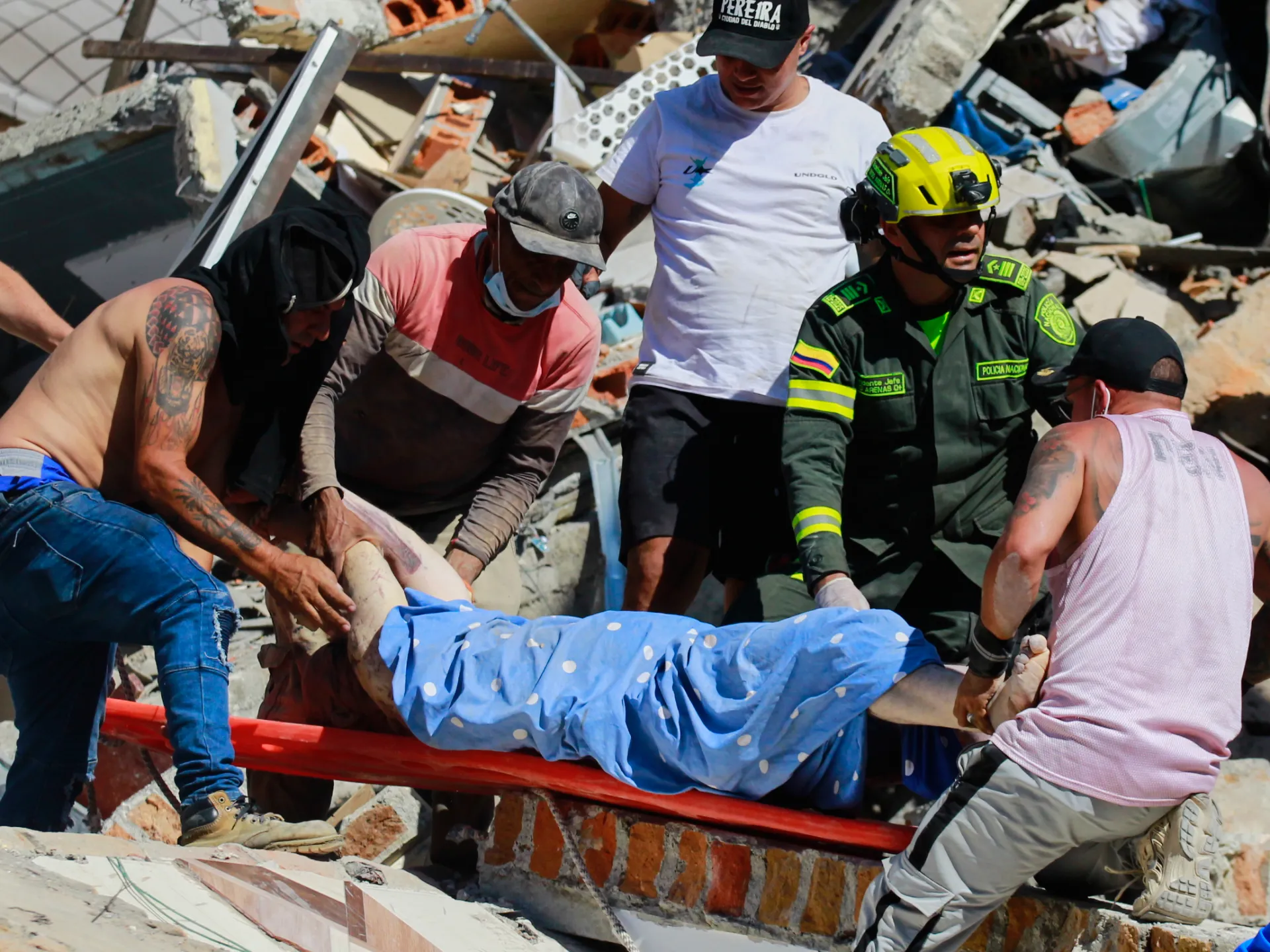
Devastation Strikes Western Colombia
Western Colombia is grappling with the aftermath of its most powerful earthquake in this century, a magnitude 7.4 tremor that has claimed at least 132 lives and left a trail of widespread destruction. Emergency services, alongside military personnel and volunteers, are engaged in an urgent search for survivors amidst the rubble of collapsed structures, particularly in the heavily affected cities of Cali and Pereira. The Choco region, situated west of these urban centers, has also experienced significant impact, though the full extent of the damage there remains unclear due to its remote nature.
Rising Casualties and Extensive Damage
The initial death toll of 132 is expected to climb as rescue teams gain access to more isolated areas. Newly elected President Abelardo de la Espriella, who assumed office just days before the disaster, faces a significant challenge in coordinating the national response. In Cali, a city of approximately 2.2 million residents located 280 kilometers (175 miles) southwest of Bogota, dozens of fatalities have been confirmed. President De la Espriella initially reported 35 deaths in Cali, where numerous buildings are either precariously leaning or completely destroyed, forcing residents to evacuate into the streets.
Further north, in the Risaralda region where Pereira is situated, authorities have confirmed at least 40 deaths. The Choco region has reported nine fatalities, Caldas two, and Antioquia one, a 73-year-old individual. The number of injured has also escalated, with De la Espriella reporting approximately 700 injuries in Valle del Cauca alone, up from an initial estimate of 87.
The human toll is compounded by the staggering number of missing persons. Citizen-run websites reported over 2,700 individuals unaccounted for by Monday night, a figure that highlights the scale of the emergency, though it does not represent officially confirmed missing persons. Infrastructure damage is also extensive, with around 1,600 buildings damaged or destroyed. This includes significant architectural losses, such as the towers of a historic cathedral in Manizales. A particularly critical situation unfolded at one of Cali's hospitals, where several upper floors, including those dedicated to pediatric care, collapsed. This incident trapped some patients and necessitated the treatment of approximately 600 others on the rubble-strewn streets outside, as reported by hospital director Irne Torres Castro to Caracol television.
Intensified Search and Rescue Operations
President De la Espriella has declared rescuing those trapped under debris as the government's top priority. Approximately 1,000 security forces members were deployed to Cali by Tuesday morning following reports of looting. Curfews were implemented in Cali and Pereira on Monday night to maintain order. The president emphasized a unified national effort, stating, "Our intention is to cooperate in any way necessary. Here, there are no distinctions or ideological divisions when it comes to defending our people or showing solidarity."
Search and rescue operations have continued without pause, with soldiers, emergency workers, firefighters, volunteers, and relatives tirelessly sifting through collapsed structures. In Cali, volunteers formed human chains to manually remove concrete, bricks, and other debris. Rescuers have been observed repeatedly pausing to listen for any sounds indicating life beneath the rubble. Notable rescues include two women and two children pulled from a collapsed building by firefighters. In Pereira, rescue workers have established contact with a boy trapped inside a bakery, while cranes are being utilized to dismantle unstable sections of damaged buildings.
The remote and challenging terrain of the Choco region has complicated rescue efforts. Engineers, rescue workers, and search dogs have been dispatched to the area, which remains largely inaccessible by conventional means, making a full assessment of the destruction difficult. The city of San Jose Del Palmar, a community of 4,800 people approximately 400 kilometers (250 miles) west of Bogota, was identified as the earthquake's epicenter by the United States Geological Survey. President De la Espriella has confirmed the mobilization of the "entire military and police apparatus" to support the response.
Aftershocks and Broader Implications
Colombia's Geological Service reported 21 aftershocks by late Monday, with authorities cautioning that further tremors are possible. Camila Gomez, Deputy Director of Programs for Colombia and Venezuela at the International Rescue Committee, highlighted the existing vulnerabilities of the affected region, stating, "This is the largest earthquake that Colombia has experienced in two decades." She underscored the urgent need for health and education services, noting that at least 50 educational facilities have been impacted.
National and International Response
In response to the crisis, Colombia has declared a national state of emergency. President De la Espriella visited Quibdo, the capital of Choco, and Cali, promising rental subsidies for those whose homes were damaged or destroyed. Nighttime curfews were also enacted in Armenia and Manizales. To address concerns about potential looting, additional police and military personnel were deployed to Cali. Hospitals in five cities were placed on red alert, and airport operations in Pereira, Manizales, Quibdo, Armenia, Cartago, and Buenaventura were suspended for structural inspections.
Civilian involvement has been crucial, with many bringing food and supplies and assisting rescue teams. Carmen Yasmin Garcia, a 43-year-old Cali resident volunteering with rescue efforts, recounted her group freeing seven people from a collapsed building, though four others and a dog remained trapped. "A moment ago, there was scratching, but now we can’t hear anything. We still have faith that the dog is alive and we can get these people out," Garcia stated, appealing for more volunteers and tools. Cultural events, including the Petronio Alvarez Music Festival in Cali and professional football matches, have been postponed.
Internationally, the United States has pledged $15.5 million in emergency aid for shelters, food, and other relief efforts. U.S. Secretary of State Marco Rubio affirmed Washington's readiness to support Colombia. The European Union has activated its Copernicus satellite service to assist rescue operations. Leaders from El Salvador and Mexico, including President Nayib Bukele and President Claudia Sheinbaum, have also offered immediate support, including rescue teams, medical personnel, and supplies, drawing on their recent experience with similar natural disasters.