Logistical Obstacles Hamper Humanitarian Efforts in Gaza
The journey of humanitarian aid into Gaza is fraught with complexities, extending far beyond the initial entry points. While international attention often focuses on the number of trucks permitted to cross borders, the subsequent distribution within the Strip faces severe, often insurmountable, challenges. These obstacles mean that vital supplies, including food, medicine, and fuel, frequently fail to reach the individuals and communities most desperately in need.
Deteriorating Transportation Infrastructure
Before the current conflict, Gaza's transportation and aid infrastructure relied on approximately 1,200 vehicles. However, a recent assessment by the Euro-Med Human Rights Monitor indicates a drastic reduction in operational capacity. A significant number of these vehicles, estimated at over 150, have been either damaged beyond repair or completely destroyed. The remaining fleet operates under extreme duress, often patched together using salvaged parts and innovative, yet unsustainable, repair methods.
Mechanics and drivers within Gaza are resorting to extraordinary measures to keep these critical vehicles moving. This includes cannibalizing parts from non-functional trucks and siphoning fuel from damaged ones. One driver lamented, "With these hands, I save one truck and let it go so that another can come and take its place." This testament highlights the precarious nature of the transport system, where essential components like tires, engine oil, and spare parts are in critically short supply. The lack of these basic maintenance items further compounds the difficulty of sustaining even the limited number of vehicles currently in service, severely impacting their longevity and reliability.
The Perilous Path to Distribution
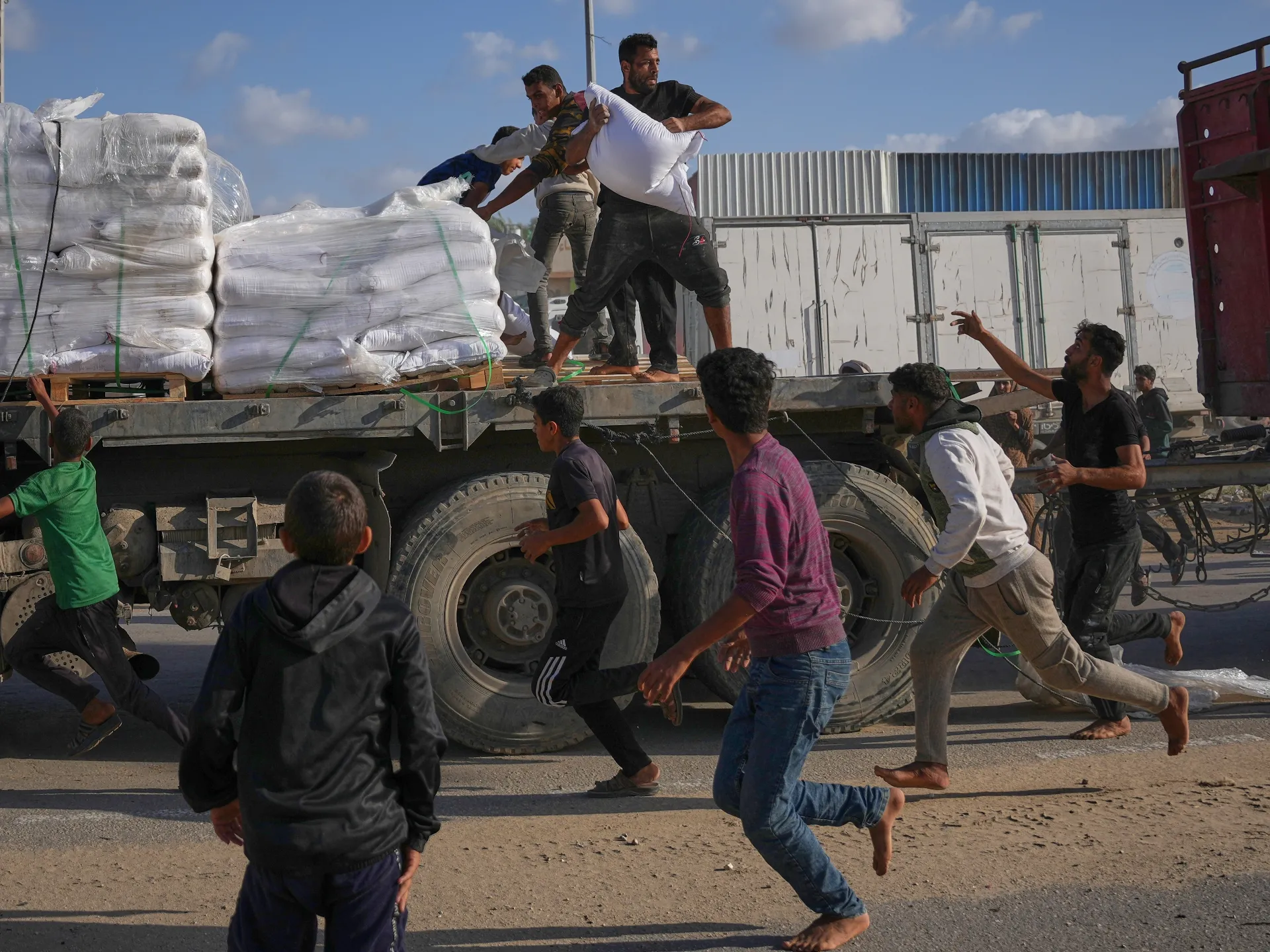
Once aid trucks successfully pass through inspections at crossings like Rafah and enter Gaza, they face a treacherous journey to distribution centers and warehouses. The primary routes, such as Salah al-Din Street or the Philadelphi Corridor leading to the main coastal highway, al-Rashid Street, are often impassable due to extensive damage. The widespread destruction across the enclave means that every stage of the journey is susceptible to delays or complete blockage.
A breakdown of a single aid truck can render its entire cargo inaccessible, exacerbating the scarcity of supplies. With a reduced number of operational vehicles, the strain on those still functioning intensifies, leading to more frequent mechanical failures. Moreover, vehicles operating without adequate tires, or those facing obstructions or fuel shortages, are either forced to carry reduced loads or become entirely immobile. This creates a bottleneck in the distribution pipeline, where the limited capacity of the transport network becomes a critical choke point for aid delivery.
The number of vehicles that can reach Gaza is limited by the crossings, but the number of vehicles that can get from a crossing to the distribution centres is limited by the state of the damaged roads, traffic, fuel and the health and morale of the drivers.
Risks to Humanitarian Workers
Beyond the logistical and mechanical challenges, aid drivers in Gaza confront profound personal risks. The dangers are manifold, ranging from the general hazards of operating in a besieged territory to direct threats from armed forces. The tragic case of Ahmed Isleem, a Palestinian aid driver reportedly killed by Israeli forces while attempting to deliver assistance, underscores the perilous environment in which these individuals operate. His father, Naser Isleem, shared poignant images and videos of his son with his family, illustrating the profound personal cost borne by those striving to deliver aid.
Ahmed's story is not an isolated incident; many aid workers have faced similar fates, highlighting the extreme dangers they encounter daily. These risks not only endanger lives but also severely impact the morale and availability of drivers, further complicating aid distribution efforts. The current system of transporting goods in Gaza places an unacceptable burden on these brave individuals, making their journeys to distribution centers the most vulnerable point in the entire aid chain.
The Critical Bottleneck: Internal Distribution
While global attention often fixates on the sheer volume of aid trucks entering Gaza, a more critical limitation lies in the ability of these trucks to reach their intended recipients within the enclave. The journey from the crossing points to internal distribution centers is severely hampered by damaged roads, traffic congestion, fuel scarcity, and the physical and psychological toll on drivers. These factors collectively create a significant bottleneck, ensuring that even if aid enters Gaza, its effective dispersal to those in dire need remains a formidable challenge.
Ultimately, the effectiveness of humanitarian aid is not solely measured by its entry into a conflict zone but by its successful delivery to the population. In Gaza, the complex interplay of damaged infrastructure, a crippled transport fleet, and the extreme risks faced by aid workers means that many people requiring food, medicine, and fuel will continue to wait, often in vain, for essential supplies to reach them.