Widespread Demolitions Erase Palestinian Homes in Jericho
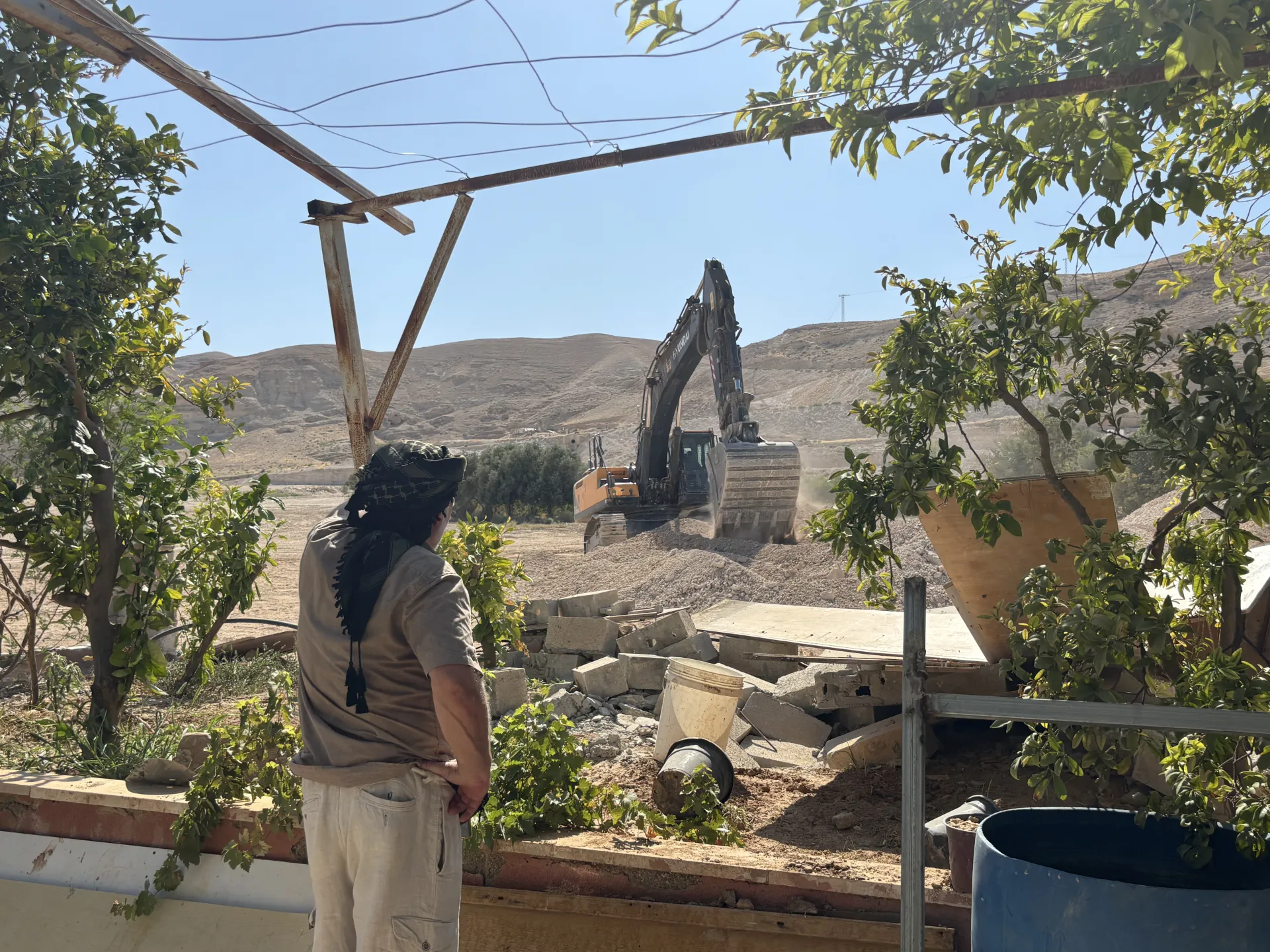
In the southwestern region of Jericho, an area that once featured Palestinian residences nestled amidst orchards and swimming facilities, the landscape has been transformed into leveled ground. What remains are remnants of homes, reportedly buried in pits and subsequently smoothed over. Only fragmented water pipes and mounds of debris, awaiting further concealment by an Israeli settler's excavator, offer clues that habitation once existed.
Khalil al-Razim, 60, a Jerusalem native who has spent his summers in Ein al-Duyuk for over a decade, questioned the concealed nature of these actions. Adjacent to his property, a two-meter-high pile of rubble obstructs the entrance to his neighbor Mohammad Salah's home. Salah, accompanied by one of his four children, now resorts to climbing his own fence to access his residence.
Six months prior, in February, the area experienced its initial wave of settler aggression. During this period, homes were demolished, properties damaged, and residents reportedly subjected to assault and robbery. A settler, utilizing a bulldozer, began dismantling fences and structures, including portions of Salah's home. This summer, similar activities resumed, ostensibly to 'clear' the debris from previous attacks. However, the Israeli excavator continued its work, depositing rubble directly in front of Salah's house.
Salah recounted his interaction with the settler, asking how he was expected to enter his own home. The settler's alleged response indicated a disregard for Salah's predicament, stating, 'That's not my problem, how you get into your house. Can't get into your house? Go around another way from here. This land is not coming back to you.'
Ongoing Operations and Lack of Official Orders
Since July 19, settler-operated excavators have been a near-daily presence, purportedly for 'clearing waste' but engaging in more extensive damage. Locals and legal documents from the Israeli state identify Hanan Herbst as the settler orchestrating these actions, consistently accompanied by soldiers during his visits. Residents report that no official demolition order has ever been presented, which could be challenged legally.
Salah described the situation as 'thuggery' and 'brute force,' asserting a lack of legitimate legal process. Residents, legal professionals, and state court filings suggest a subversion of standard legal procedures, effectively blurring the distinction between settler aspirations and state authority. This, they argue, grants Israeli authorities significant leeway to settlers within Palestinian neighborhoods.
Attempts to reach Israeli authorities for comment were unsuccessful. Herbst, when contacted by phone, reportedly disconnected the call upon learning of the caller's affiliation with Al Jazeera and has not responded to subsequent contact attempts.
The Rise of Armonot Farm and the February 'Pogrom'
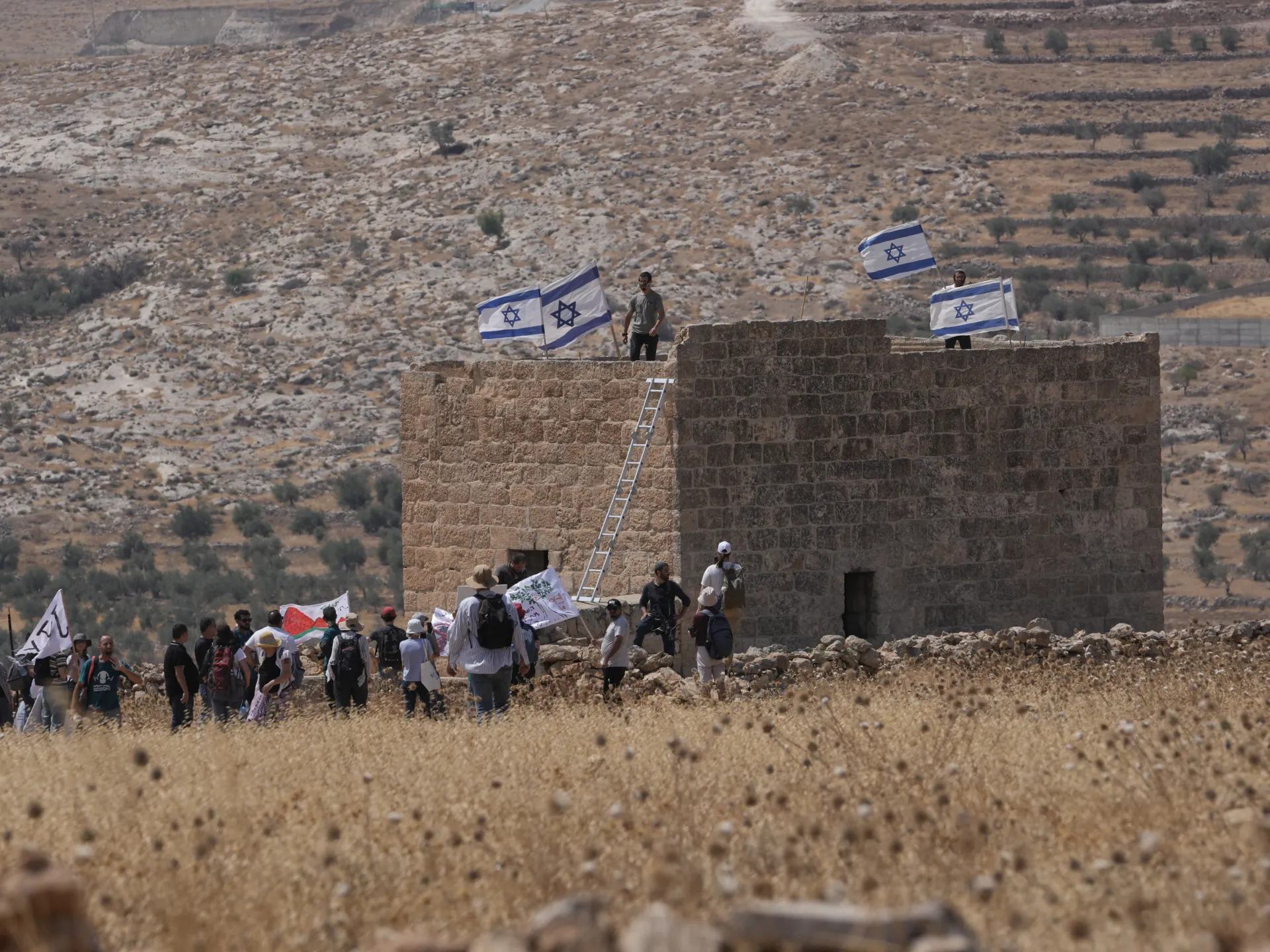
Herbst is associated with Armonot Farm, an Israeli settler outpost established without authorization on a ridge overlooking Ein al-Duyuk in the summer of 2024. Initially considered illegal even under Israeli regulations, the Israeli cabinet formally recognized it as a settlement, named Daya, in late March.
The Palestinian neighborhood, locally known as Stih, is situated mere meters from the ancient ruins of the Hasmonean and Herodian winter palaces. This archaeological site has been designated by the Israeli government as a key location for a planned network of 'Judeo-centric' heritage parks across the West Bank.
On February 10, Heritage Minister Amichai Eliyahu posted a video from the ruins, holding an Israeli flag, declaring that 'Any place built on the heritage of the Jewish people, we will destroy it.' Residents reported that within hours of this post, dozens of masked settlers descended from Armonot and other outposts. Activists and residents have characterized this eight-hour event as a 'pogrom.' Two Palestinian communities were affected: a Bedouin group near the ruins, comprising approximately one hundred individuals from the Kaabneh tribe, and a neighborhood of mostly villa-style homes belonging to Palestinian families, including those of Salah and al-Razim.
Ali Kaabneh, a 40-year-old Bedouin herder, was inside his home when the February 10 assault began. He described being forced out of his house with his wife by stone-throwing settlers, along with 13 other families. He reported that his 150 sheep scattered, and his licensed tractor was taken to the settlement. Thirteen homes in the Bedouin compound were demolished that day, and three homes in the neighboring community were completely destroyed, according to Hussein Taha, a long-term resident. Many Bedouin families have since been living in the partially destroyed remains of their homes or without shelter.
The 'Clearing Waste' Justification and State Complicity
Following the February events, there was a period of relative calm, though settlers reportedly continued to engage in theft of property and uprooting of trees. Residents attempting to repair damaged walls were reportedly prevented by Herbst.
Behind the scenes, developments continued. In March, the Israeli military issued a seizure order for a strip of Palestinian land to create an access route to the archaeological site. This order was not delivered to affected residents until weeks after its issuance. Israeli NGOs Emek Shaveh and Kerem Navot have noted a significant increase in such orders, which they argue predominantly serve settler interests rather than security concerns.
The calm concluded on July 19, when Herbst arrived with a bulldozer, ostensibly to bury rubble from the February attack, but subsequently caused damage and destruction far beyond this scope. The walls of four homes were destroyed or damaged on the first day, according to Taha. When residents and Israeli solidarity activists contacted police, the military, the Palestinian District Coordination and Liaison Office (DCO), and the Civil Administration, they initially received denials of knowledge. By the afternoon, the official narrative shifted, according to Yael Sela, co-founder of the Palestine Solidarity co-op: an unnamed 'high-ranking' military figure had authorized the work to 'clear waste.'
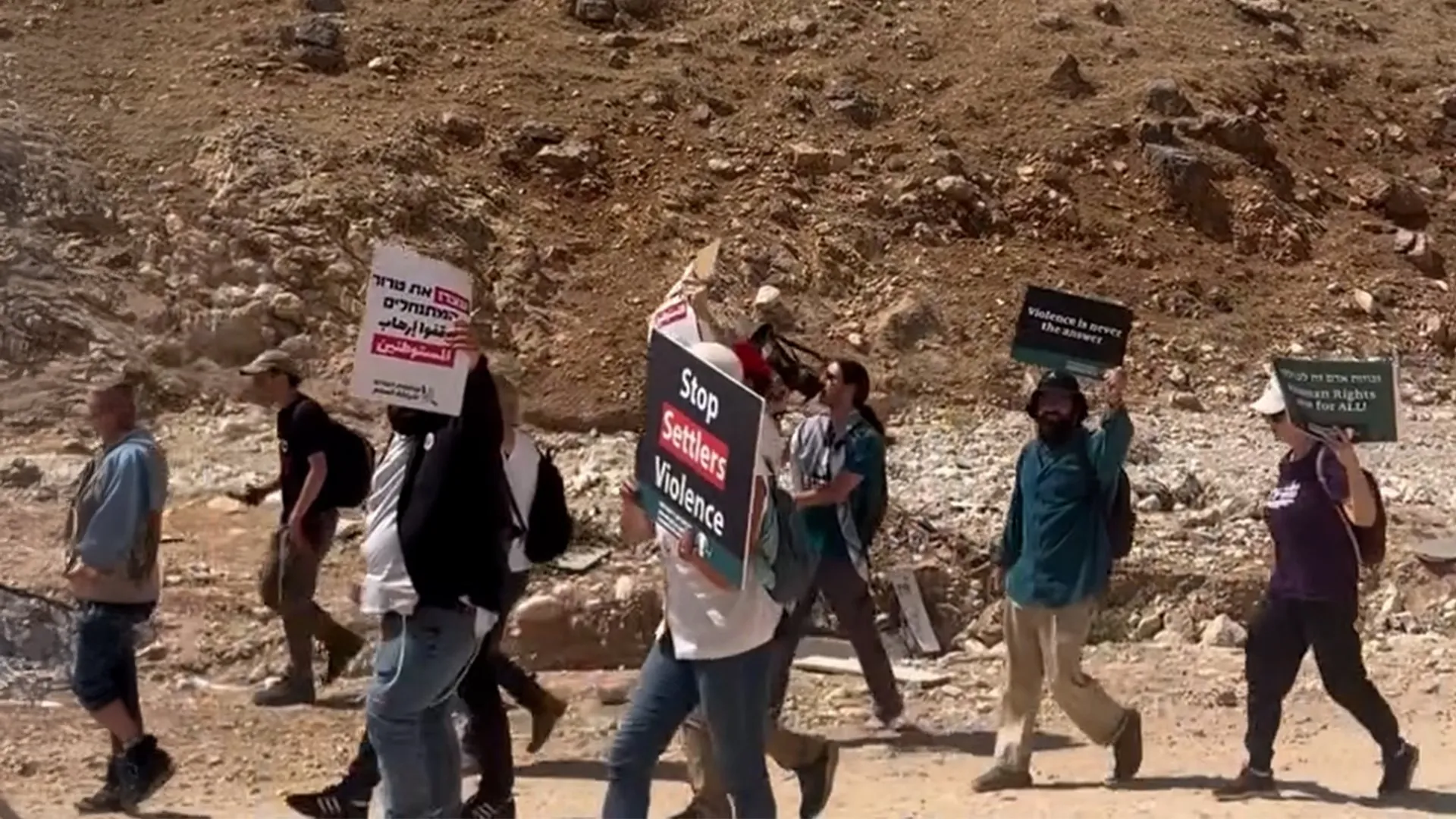
In the subsequent weeks, residents and activists report that bulldozers have demolished or damaged additional homes, alleys, orchards, and gardens, and dug pits to bury debris within the residential area. Soldiers escort Herbst and restrict activists, citing an ambiguous 'closed zone,' with no official order produced for locals. Activists attempting to document the site have been arrested.
Lawyer Tawfiq Jabareen filed for an emergency injunction at Israel's High Court on July 23 and again on July 29, as demolitions intensified. The state's response on July 30, a filing obtained by Al Jazeera, detailed an arrangement where the state deputized settlers to carry out demolitions and land appropriation.
The filing revealed a state-backed agreement from March 2025 between Herbst and the Settlement Division of the World Zionist Organization for agricultural use of 'state land.' Following the February settler attack, in May, the Binyamin Regional Council requested the Civil Administration to allow Herbst to clear 'building waste' from 'previous demolitions,' without specifying the demolitions were settler-initiated. The Civil Administration approved, and the Jordan Valley Brigade commander, Colonel Gilad Shriki, approved a military escort for Herbst.
Despite existing Israeli court injunctions protecting some Palestinian homes from demolition, residents and activists assert that instructions for Herbst not to damage structures or trees and to stay within allocated areas have been violated under military escort. Jabareen, who petitioned against the army, the settler, and the state prosecution, stated that 'the army circumvented the court's decision and sent the settler to do the demolishing instead.'
He further noted that 'The Prosecution claims the [Settlement Division of the World Zionist Organization] leased the land to the settler, even though the Civil Administration itself had barred the settler from demolishing any building or any tree.' Jabareen concluded that 'the army and the Civil Administration are now in the settlers' grip, and there's no longer any real difference between them. The law and court rulings mean nothing to them. They believe imposing facts on the ground is stronger than any court decision.'
Displacement and Uncertain Future
Across the razed land, only small strips of common vegetation remain. The state's initial response suggests Herbst intends to cultivate the cleared land soon. The state maintains that the ground is state land, now allocated to Herbst for agricultural use, though no map or boundary of this allocation has been provided, according to Sela.
Hussein Taha commented that 'The purpose of this act of destruction was to terrorise the Bedouin community, and to create the impression that this was an empty area with nobody living there – only piles of demolished concrete. Then this 'kind settler' wants to come and 'clean up' the area, cultivate it, and benefit from it, because he supposedly loves agriculture and green gardens.'
For al-Razim, whose family acquired land here over a decade ago, these events are reminiscent of his experiences in Silwan, occupied East Jerusalem, where settlers have historically displaced Palestinian families through a legal system offering limited recourse. His son's rented home in Silwan was also demolished by authorities.
The traditional land ownership system in the area often involves undivided family inheritance, making it difficult to register under rules requiring proof that many families cannot produce. Al-Razim noted, 'They know there's no tabu [land deed] for it. But [they tell us to] bring proof. So they exploit that gap.' Unable to safely access their home and fearing settler attacks, Salah has moved his wife and four children to a rented apartment in Bethlehem, costing 2,000 shekels ($667) per month, despite his inability to find work there.