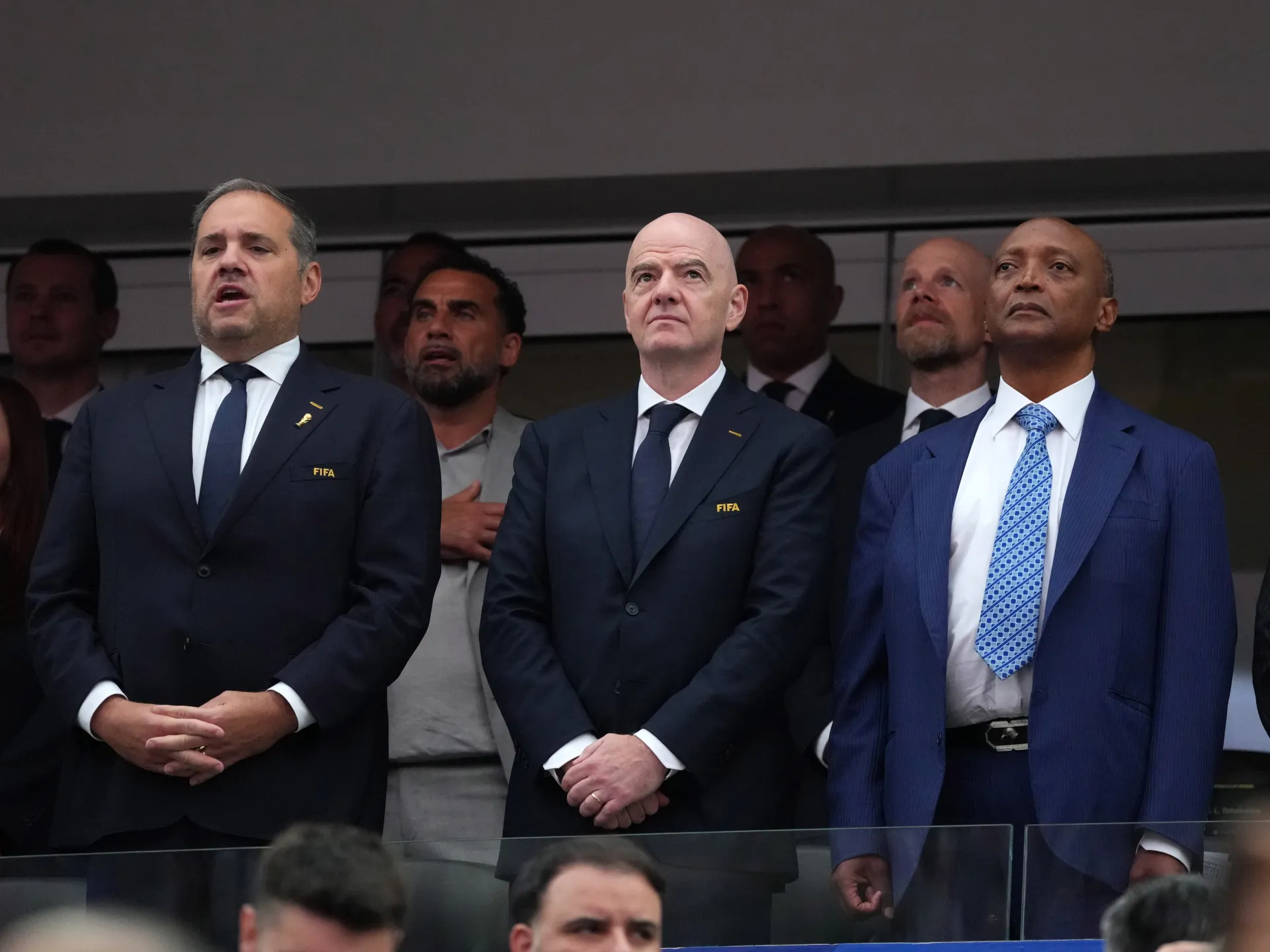
Infantino's Leadership Under Scrutiny
FIFA President Gianni Infantino is currently facing significant pressure regarding his leadership, with various football federations and confederations expressing concerns. The controversy primarily stems from his proposals to sell stakes in the World Cup to private investors, a plan that has drawn widespread criticism and led to calls for his resignation. However, the President of the Confederation of African Football (CAF), Patrice Motsepe, maintains that any decision regarding Infantino's tenure must be made through the established electoral process.
The Call for an Election
Motsepe, who also serves as a FIFA vice-president, emphasized the importance of adhering to FIFA's internal procedures. He stated that if there are grievances against Infantino or any other official, the proper course of action is to follow the established protocols, which include elections. "If you want to take him out, go for elections; let the 211 member associations decide. Do that and the vote will express whether they've got confidence in him or not," Motsepe remarked, underscoring the democratic right of member associations to determine leadership.
His comments come as Infantino prepares for re-election in March of next year. Motsepe highlighted that the electoral cycle provides an appropriate forum for members to cast their votes and express their confidence, or lack thereof, in the current leadership. He questioned the rationale behind bypassing this process, suggesting that allowing the elections to proceed is the most equitable approach.
Mounting Opposition and Withdrawals of Support
The opposition to Infantino has intensified, particularly from influential football bodies. The governing bodies of European football (UEFA), North and Central America (CONCACAF), and Asia (AFC) collectively voiced their disapproval in a joint letter. This letter reportedly accused Infantino of placing himself above the collective authority that entrusted him with his position, implying a breach of trust due to perceived deception. These confederations are believed to be advocating for Infantino's resignation prior to the upcoming re-election.
Adding to the pressure, several national football associations have publicly withdrawn their support for Infantino. The Football Association of Ireland (FAI) recently announced its decision to rescind a previous letter of support, citing "significant concerns regarding governance, transparency and the lack of meaningful consultation." The FAI acknowledged FIFA's support for Irish football but stressed that recent events necessitated a reevaluation of their stance. This follows similar withdrawals of support from the English FA and the Welsh FA, further isolating Infantino within certain segments of the global football community.
CAF's Stance and Dialogue Efforts
Despite the growing chorus of criticism, CAF has consistently backed Infantino. Motsepe reiterated this support, while also acknowledging that there have been issues that need addressing. He mentioned that Infantino has expressed apologies and indicated that certain matters could have been handled differently. Motsepe believes that while there are legitimate concerns, the proposals related to the World Cup sell-off talks would ultimately be submitted to FIFA members for final approval, suggesting that no rules were definitively breached in the initial discussions.
In an effort to foster dialogue and understanding, Motsepe engaged in discussions with UEFA President Aleksander Ceferin in Salzburg. These talks took place amidst threats from UEFA to boycott the World Cup and Club World Cup in protest against Infantino's proposed schemes. Motsepe emphasized the importance of hearing all perspectives and allowing for a proper forum for discussion. "Everybody has a right to be heard. Let's have a hearing, and a proper forum," he stated, advocating for open communication to resolve disputes.
Regional Divides in Support
The situation highlights a clear division in support for Infantino across different regions. While European and some other federations have expressed strong opposition, a contingent of six Arab federations, including Qatar, Morocco, and Egypt, publicly reaffirmed their backing for the FIFA President. This divergence in opinion underscores the complex political landscape within international football governance, where regional alliances and interests often play a significant role in shaping support for leadership figures.
As the March election approaches, the debate over Infantino's leadership is expected to intensify. The calls for his resignation from some powerful confederations contrast sharply with the insistence from CAF and others that the democratic process of an election must be respected. The ultimate decision on Infantino's future will rest with the 211 member associations of FIFA, whose votes will determine whether he continues to lead the global football organization.