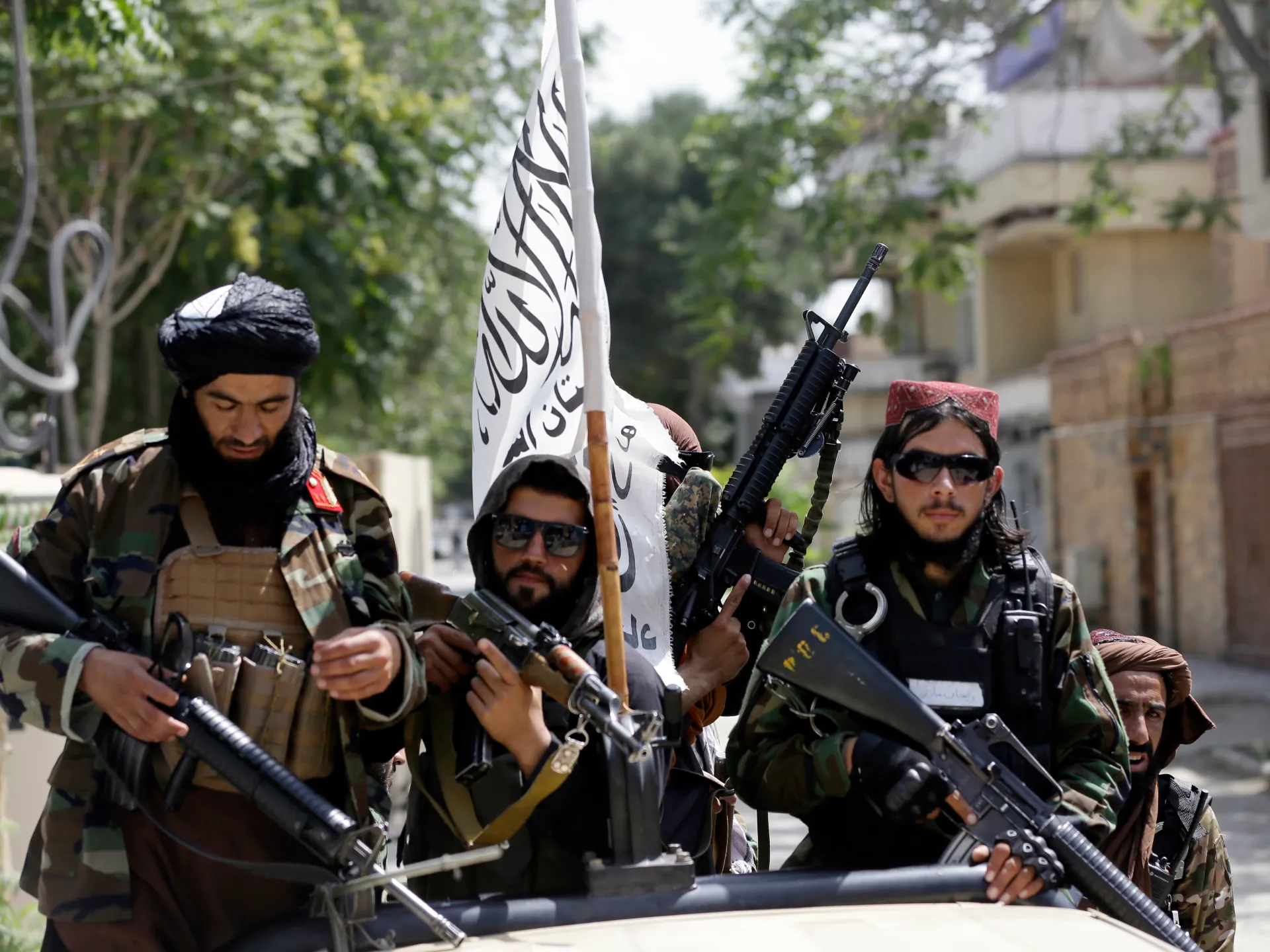
A Transformed Capital: Kabul Five Years Later
Five years ago, the Taliban re-entered Kabul, marking the end of a nearly two-decade period following the collapse of their initial government after the U.S.-led invasion. The departure of American and allied forces was characterized by disorder and a devastating bombing that claimed the lives of nearly 200 Afghans. Today, Kabul presents a notably different picture. The city, once scarred by reinforced walls and congested with armed convoys, is now perceived as cleaner and calmer, with residents gradually adapting to a new way of life. This anniversary offers an opportune moment to assess the Taliban’s accomplishments, shortcomings, and potential future trajectory.
Security and Stability: A Notable Achievement
During their first period of rule from 1996 to 2001, a significant challenge for the Taliban was their inability to control the entirety of Afghanistan. Provinces that resisted their authority subsequently served as bases for the U.S. and its allies during the conflict. The current Taliban administration appears to have learned from this past experience, now exercising control over the entire country and largely maintaining a state of relative security and safety. This is a remarkable feat, particularly considering the substantial threat posed by the Islamic State – Khorasan Province (ISKP) during the final years of the previous government. The Taliban has considerably weakened ISKP, and as of now, faces no major insurgent challenges. Afghans can now traverse parts of the country that were previously inaccessible, without the constant fear for their lives. This represents a significant improvement for a nation where even movement within its capital was fraught with danger.
Economic Resilience Amidst Challenges
The economic landscape is more intricate. For two decades prior to the Taliban's return, Afghanistan's economy was heavily reliant on international aid, while corruption and instability undermined its foundations. An economy so deeply dependent on foreign assistance was inevitably going to suffer when a substantial portion of that external support vanished abruptly. Despite the immense shock of 2021, the Taliban has managed to sustain the Afghan economy, which appears to have reached a state of low equilibrium. Enhanced security has facilitated increased economic activity, including the extraction of natural resources. Returning refugees have brought in capital and, in some instances, business investments. Improved tax collection and customs duties have boosted domestic revenues, while Afghans living abroad continue to send billions of dollars in remittances. Better diplomatic relations and increased trade with neighboring countries, particularly those in Central Asia, have also provided support. The Taliban government is also pursuing large-scale infrastructure and development projects, such as the Qosh Tepa Canal, the Turkmenistan–Afghanistan–Pakistan–India (TAPI) gas pipeline, and extensions of electricity transmission networks with Uzbekistan. Numerous roadwork and construction projects across the country offer a degree of hope to ordinary Afghans. However, the Taliban government remains opaque regarding public finances and has shown reluctance to consolidate state institutions. This, to some extent, limits its capacity to address deep-seated structural issues such as accountability and corruption effectively.
Social Policies: A Source of Alienation and Isolation
The Taliban's most significant failures lie in its social policies. The past five years have seen a series of decrees that restrict the rights of women and girls, solidifying Afghanistan's reputation as the most extreme example of gender exclusion globally. The inability of Afghan girls and women to access formal modern education beyond the sixth grade is a detriment to society and an economic loss. The repercussions of these policies are becoming increasingly evident. Afghanistan is experiencing a shortage of female doctors, teachers, and other professionals. This creates a clear contradiction: the Taliban leadership maintains that schools are not sufficiently safe or appropriate for girls, even as the country increasingly requires women to fill essential roles for which they cannot receive adequate training. The overall quality of education has also declined, with insufficient attention paid to retaining qualified educators. Concurrently, religious schools have proliferated and appear to be the government’s preferred educational model. While religious education holds a legitimate place in Afghan society, it cannot serve as a complete substitute for a comprehensive modern education system.
Central to these policies is the expanding influence of moral policing, an ideology that asserts the state's right to regulate aspects of life traditionally considered private by citizens. This has not only altered daily life for Afghans but has also widened the chasm between the government and significant segments of its population. The Taliban has also failed to create a more inclusive government that incorporates other groups within Afghan society. Even within the movement itself, Supreme Leader Hibatullah Akhundzada has sidelined prominent figures. Many individuals who played key roles in negotiating and signing the Doha agreement have since been removed from influential positions or marginalized. The resulting centralization of power has impeded effective governance and allowed the vision of a relatively small group surrounding the supreme leader to dominate. Internationally, the Taliban has also struggled to secure the recognition it had hoped for. While there have been periods of engagement, and neighboring and European countries maintain practical relations with Kabul, formal recognition remains elusive. As long as restrictions on women's education and rights persist, Afghanistan is likely to remain isolated from much of the international community.
The Path Ahead: Accumulating Grievances
For the time being, the Taliban appears to maintain a firm grip on power. There is no discernible military threat, the political opposition remains deeply fractured, and the international community lacks both the desire and the resources for another attempt at regime change in Afghanistan. Consequently, the greater danger to the Taliban may stem from a less immediate source: the gradual accumulation of public grievances. A government can withstand opposition for an extended period. However, it becomes vulnerable when ordinary citizens feel so alienated that they become indifferent to external forces, whether foreign powers or domestic insurgents, seeking to undermine the regime. Therefore, the Taliban's current stability should not be misconstrued as a permanent political resolution. Five years after its return, the movement has secured control of Afghanistan but has yet to address the fundamental question of what kind of state it intends to construct. International isolation and growing public alienation are conditions ripe for potential disaster. Some within the Taliban recognize this predicament. The crucial question is whether those who acknowledge the necessity for change will ultimately be willing to challenge the concentration of power that has brought the movement to this juncture. A shift is inevitable.